
Partition Horrors Remembrance Day Observed Across India With Tributes, Exhibitions
The Ministry of Culture observed Partition Horrors Remembrance Day on August 14 with commemorative programmes in Delhi, Amritsar and Kolkata, remembering the immense suffering, displacement and loss caused by the Partition of India.
In New Delhi, the main observance was held at Central Park, Connaught Place, featuring a Partition Horrors Exhibition with archival material, photographs, maps and personal narratives. The exhibition was inaugurated by Delhi Minister Ashish Sood and witnessed visits by school students. A short documentary on the history, heritage and contributions of displaced and Partition-affected communities was also screened.
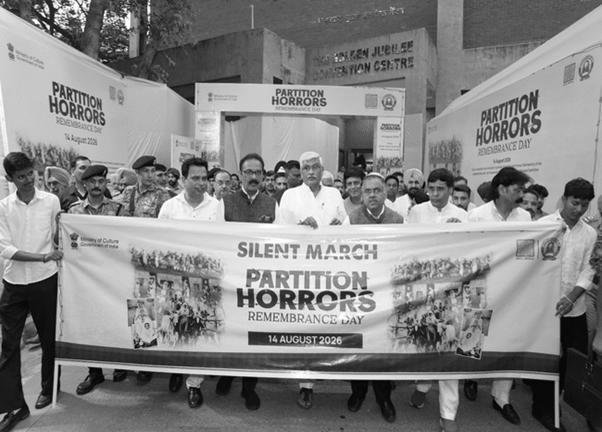
A poetry collection titled “Dehri Bahi Videsh” was released during the programme. The event concluded with a Silent March around Central Park, while exhibition material was also made available at railway stations and other public spaces.
In Amritsar, the observance at Guru Nanak Dev University featured a Silent March involving hundreds of students and citizens. Union Culture and Tourism Minister Gajendra Singh Shekhawat addressed the gathering, stressing the need to preserve memories of those who suffered and draw lessons of unity, harmony and peace. A theatrical presentation of “Jis Lahore Nai Dekhya O Jamyai Nai” and a special Partition exhibition were also organised.
Kolkata hosted a two-day programme at the Newtown Convention Centre in collaboration with the West Bengal government. The exhibition, “The Partition of India: Memory, Loss and Resilience,” was visited by more than 1,000 students. The programme highlighted Bengal’s experiences of displacement, migration and rehabilitation and concluded with a candlelight march.
The IGNCA also organised programmes across the country, including survivor testimonies in Jammu and Kashmir, a student procession in Bengaluru and a Padayatra and poetry gathering in Ranchi.
The observances sought to preserve Partition memories while encouraging unity, social harmony and human dignity, with a message that the lessons of history should guide future generations.