
Parliamentary Panel to Scrutinize Coaching Centres, AI, and Higher Education Governance
The education landscape in India is set for a comprehensive review as the Department-Related Parliamentary Standing Committee on Education, Women, Children, Youth and Sports has outlined an ambitious agenda for the year 2025-26. Amid rising alarm over student mental health and academic pressure, the panel has decided to place the controversial coaching centre industry under intense scrutiny, alongside major policy initiatives such as the integration of Artificial Intelligence (AI) and the government's push for a single higher education regulator.
The Shadow of Coaching Centres and Student Stress
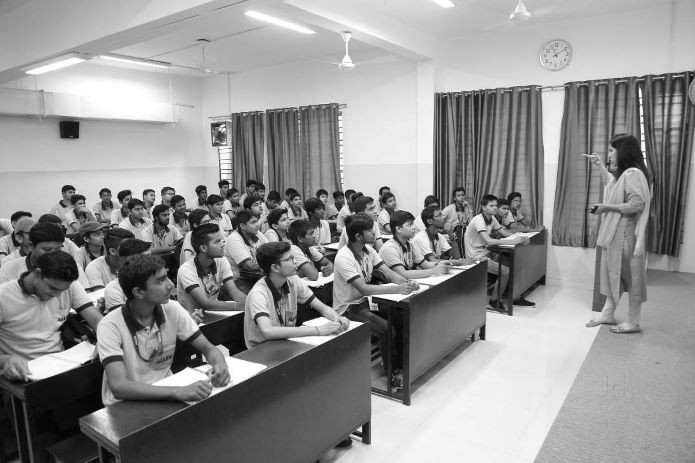
The committee's top priority stems from a mounting national crisis: the proliferation of coaching centres and the resultant social issues, notably rising student suicides. The panel will launch a detailed review of the scale of these centres, their necessity in supporting students for competitive examinations like JEE and NEET, and the effectiveness of existing legislation to regulate them. Incidents of students ending their lives due to study pressure, particularly in hubs like Kota, Rajasthan often dubbed the "coaching capital of India"—have brought the issue to a head.
This review is concurrent with the work of a nine-member panel set up earlier by the Ministry of Education to examine related issues, including the emergence of "dummy schools" and the fairness of entrance examinations. By focusing on mental health support for students in higher education and the social impact of the coaching ecosystem, the parliamentary committee aims to address the root causes of academic stress and propose systemic reforms that prioritize student well-being.
Navigating the Future - AI and School Systems
Beyond the immediate crisis in competitive exam preparation, the parliamentary panel will look forward by examining the profound impact of Artificial Intelligence (AI) and emerging technology on education and student outcomes. As the government seeks to modernize learning, the panel's findings will be crucial in formulating policies that integrate technology responsibly into classrooms and curriculum design.
Crucially, the committee has also scheduled a review of the PM Schools for Rising India (PM-SHRI) scheme for 2025-26. This scheme, which aims to transform over 14,500 government schools into model institutions aligned with the National Education Policy (NEP) 2020, will be assessed for its implementation and effectiveness in elevating the quality of school-level education. Furthermore, the committee will review the current practices and policies regarding school closure and assess the functioning and performance of the National Council of Educational Research and Training (NCERT), the apex body for curriculum and textbook development.
Unifying Higher Education Regulation
A major legislative development also features prominently on the panel’s agenda: the government's push to establish the Higher Education Council of India (HECI). The Ministry of Education will be asked to detail its efforts toward creating this single regulatory body, a concept first proposed in the NEP 2020. A bill to set up the HECI is already listed for introduction in the upcoming Winter session of Parliament, commencing on December 1.
The HECI is intended to streamline the governance of higher education by replacing three existing regulators: the University Grants Commission (UGC), which oversees non-technical higher education; the All India Council for Technical Education (AICTE), which manages technical education; and the National Council for Teacher Education (NCTE), the regulator for teacher education. By consolidating these functions, the HECI aims to simplify processes, enhance accountability, and focus on regulation, accreditation, and setting professional standards across the sector.
A Broad Mandate for Inclusive Education
The panel’s comprehensive agenda extends to other critical areas of social and academic policy. It will review the study of Indological academic traditions and its impact on the current education system, ensuring that India’s deep intellectual history is properly integrated. Additionally, the committee will scrutinize efforts to promote education for linguistic and religious minorities, review policies to popularize library access for students and literate adults, and assess the implementation of reservations for SC, ST, OBC, and EWS communities in student and faculty positions across central government-funded higher education institutions.
This wide-ranging review, covering everything from the psychological pressure on students in coaching centres to the future regulatory structure of higher education, signals a crucial phase of reform for India’s education sector, aiming to make it more equitable, technologically advanced, and student-centric.