
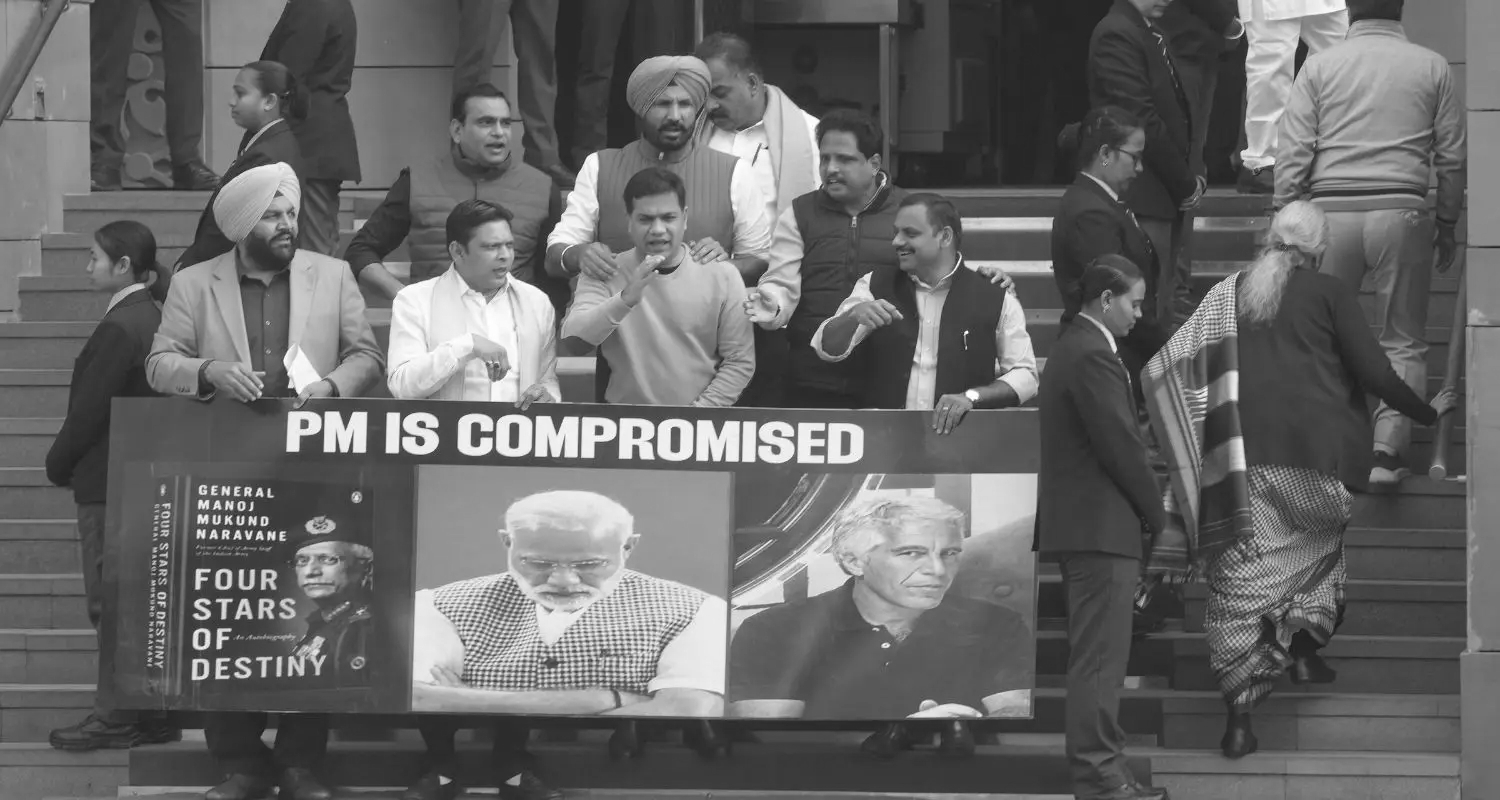
Parliament Showdown: Suspension of 8 MPs Sparks Democratic Rights Debate
A fresh political confrontation has unfolded in Parliament after eight opposition Members of Parliament were suspended from the Lok Sabha for the remainder of the ongoing Budget Session , intensifying debate over parliamentary discipline, democratic rights, and the space for dissent inside the House. The controversy drew sharp reactions from opposition leaders, including Tamil Nadu Chief Minister M. K. Stalin, who condemned the move and accused the Union government of avoiding questions raised by Leader of the Opposition Rahul Gandhi on national security . Stalin maintained that Parliament’s core function is to hold the government accountable and that suspending elected representatives weakens democratic discussion on issues of national importance.
The standoff began during proceedings linked to the Motion of Thanks to the President’s Address, when Gandhi attempted to cite an unpublished memoir of former Army Chief General M. M. Naravane while raising concerns about the India–China border situation. The Chair disallowed the reference, stating it did not conform to House rules , which led to protests by opposition members. The disruptions included slogan-shouting and members moving toward the Well of the House , actions described by the presiding officer as “unruly behaviour,” following which a motion was adopted to suspend eight MPs seven from the Congress and one from the Communist Party of India (Marxist) under Rule 374 of the Rules of Procedure and Conduct of Business in the Lok Sabha.
The suspension is not limited to a single sitting but applies to the entire remainder of the Budget Session, which spans multiple sittings over several weeks. During this period, the suspended MPs cannot enter the Lok Sabha chamber, lobbies or galleries, attend parliamentary committees , submit notices, list business, or move motions. They are also barred from voting in committee elections and are not entitled to receive daily allowances for the duration of the suspension. The action will automatically lapse once the session concludes unless the House decides to revoke it earlier through a fresh motion.
The political fallout has been immediate, with opposition leaders portraying the episode as part of a broader struggle over free speech and the right to question the government on national security and foreign policy. The ruling side, however, has argued that maintaining order and decorum is essential for the functioning of Parliament and that disruptions cannot be justified regardless of the subject being raised. The developments have once again underscored a recurring tension in India’s parliamentary democracy the challenge of balancing robust debate and opposition scrutiny with procedural discipline as protests and heated exchanges continue during a crucial legislative session.