
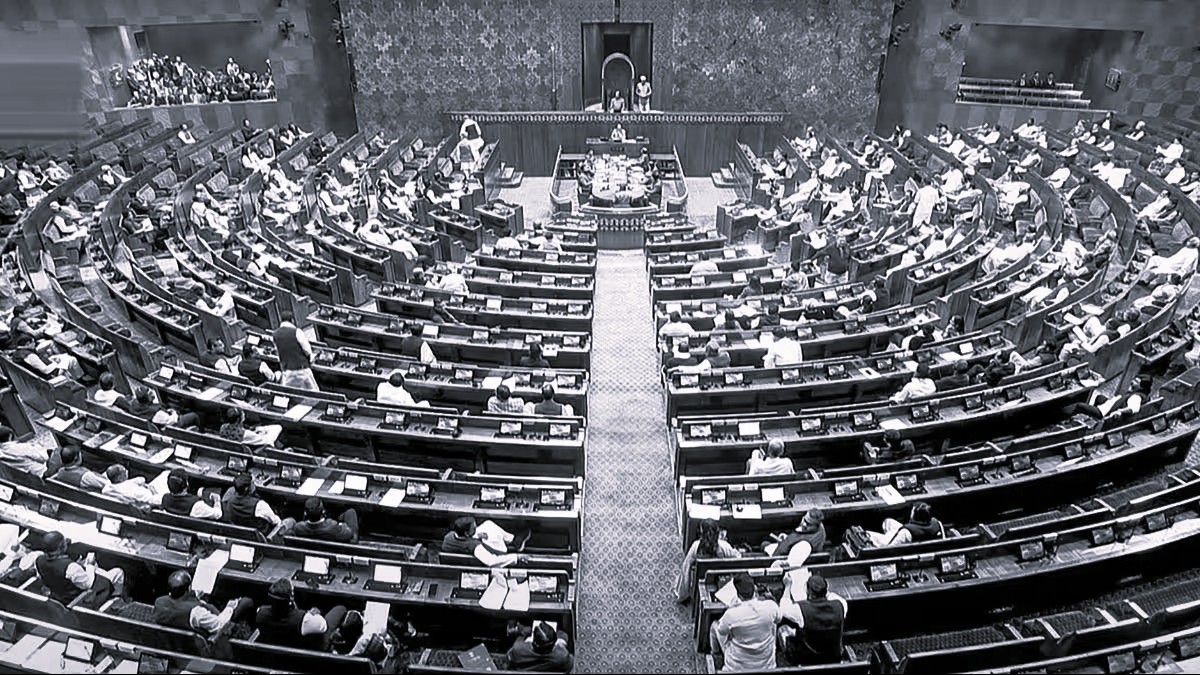
Parliament Faces Adjournments as Government Pushes Ambitious Legislative Agenda
The Winter Session of Parliament opened under a flurry of protests and repeated adjournments, immediately signaling a turbulent fortnight ahead. Opposition lawmakers rose in unison, demanding a debate on the Special Intensive Revision of electoral rolls, arguing that these urgent political reforms should take precedence over other business. Their insistence triggered disruptions on the very first day, resulting in multiple adjournments and drawing attention to the underlying tension between governance and parliamentary scrutiny. The opening proceedings turned into a spectacle of slogans, walkouts, and short-lived sessions, highlighting the challenges of conducting substantive legislative business in a highly charged political environment.
Despite the uproar, the government pressed ahead with its agenda. The conflicting priorities between opposition demands and the government’s legislative schedule underscored the fragile balance Parliament faces between debate and delivery. Lawmakers and citizens alike were left to question whether meaningful deliberation would give way to a hurried passage of bills.
Session Details: Tight Timeline and Legislative Ambition
The Winter Session is scheduled to run from December 1 to December 19, spanning fifteen sittings across both Houses. This compressed timetable has drawn criticism from various quarters, as a shorter session reduces the available time for discussion, scrutiny, and amendments. The government, however, has outlined an ambitious agenda, planning to complete discussions on multiple economic, regulatory, and social bills despite the tight schedule. With media reports suggesting that as many as thirteen bills are slated for discussion, the session promises a packed calendar that tests both parliamentary efficiency and patience.
The short span of the session has led to questions about whether Parliament can maintain its role as a deliberative body. Repeated interruptions by opposition protests further diminish the hours available for debate, forcing a tension between urgency and careful scrutiny. Compared with the last Winter Session, which spanned more than twenty sittings and still delivered limited legislative output, the 2025 session faces even greater pressure to achieve meaningful progress.
Key Legislation on the Agenda
The government’s legislative agenda this session focuses heavily on reforms in taxation, regulatory frameworks, corporate governance, and institutional oversight. Central to the plan is the Central Excise Amendment, which seeks to replace the GST compensation cess on products such as tobacco and pan masala with structured excise duties. Alongside this, the Health Security and National Security Cess aims to impose additional levies on “sin goods,” signaling a broader approach to revenue reform.
In parallel, the Securities Markets Code is expected to consolidate multiple finance laws into a unified regulatory framework, simplifying governance in the capital markets. Amendments to insurance and corporate laws aim to streamline regulatory requirements and enhance ease of doing business. The Atomic Energy Bill seeks to regulate private sector participation in nuclear energy, potentially reshaping India’s energy policy. Higher education also features prominently with a proposed regulatory authority intended to oversee universities and institutions across the country. Together, these bills indicate a government strategy focused on structural reforms across multiple critical sectors.
Early Progress Amid Disruptions
Despite the disruptions, the government managed to introduce some bills on the opening day. The Central Excise Amendment and the Health Security and National Security Cess Bills were tabled, alongside a state-specific amendment to the Manipur Goods and Services Tax. A few of these measures even proceeded toward passage amid the din, demonstrating the government’s determination to maintain momentum on its legislative program. The initial moves indicate a deliberate strategy to push high-priority bills early, hoping to secure passage before political turbulence hampers proceedings further.
However, the early introductions also reveal a key challenge: the quality of debate remains uncertain. Frequent adjournments and vocal opposition interventions threaten to reduce discussions to formalities, raising concerns about whether bills will receive the detailed scrutiny that democratic process demands.
Missing Voices and Unaddressed Social Concerns
While economic and regulatory reforms dominate the session’s agenda, a number of pressing social issues have been sidelined. Topics such as welfare policies, healthcare reforms, labor protections, and citizen-centric initiatives have not found mention, leaving gaps in parliamentary attention that many consider critical. Opposition calls for debates on these issues are being overshadowed by a focus on taxation and structural reform, raising broader questions about priorities in lawmaking. The truncated schedule and frequent interruptions exacerbate this imbalance, creating a scenario where Parliament’s capacity to address the full spectrum of citizen concerns is limited.
Lessons from the Past Winter Session
Looking back at the previous Winter Session provides perspective on the challenges of parliamentary productivity. The last session, despite having a longer calendar, witnessed limited output, with only a handful of bills being passed and many proposals remaining pending or referred to committees. Productivity metrics indicated that much of the scheduled time was consumed by debate over procedural issues and interruptions, rather than substantive deliberation on legislation. This comparison underscores the critical challenge facing the 2025 session: achieving meaningful reform in a compressed timetable while navigating political contention.
The Road Ahead: Balancing Speed and Deliberation
As the session unfolds, its outcome will be judged not merely by the number of bills introduced or passed, but by the depth of debate and scrutiny afforded to each measure. If the government succeeds in passing key economic and regulatory bills swiftly, it could achieve significant policy reforms. However, the risk remains that hurried procedures will compromise transparency and democratic accountability. Missing social policy debates highlight the tension between economic priorities and citizen-centric governance.
The Winter Session stands as a test of parliamentary resilience, reflecting the delicate balance between efficient governance and the deliberative role of the legislature. The fortnight promises a high-stakes contest between speed and scrutiny, with implications not only for regulatory and economic reforms but also for the functioning of India’s parliamentary democracy itself. Observers and citizens alike will watch closely to see whether Parliament can uphold its role as a forum for debate while delivering on an ambitious legislative agenda.