
Parliament clears bill to hike tobacco excise duty
Parliament on Thursday approved the Central Excise (Amendment) Bill, 2025, paving the way for the government to impose a higher excise duty on tobacco and related products once the GST compensation cess expires. The Rajya Sabha passed the legislation by voice vote, returning it to the Lok Sabha, which had cleared it a day earlier.
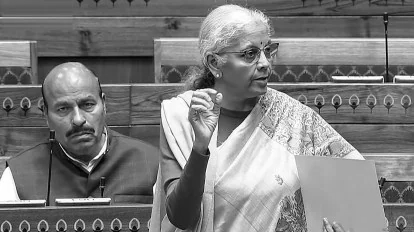
Replying to the debate, Finance Minister Nirmala Sitharaman highlighted the fiscal necessity of the amendment and responded to concerns from members. She noted that the government is actively encouraging farmers to transition away from tobacco toward alternative cash crops.
“This is being done in Andhra, Bihar, Karnataka, Madhya Pradesh, Maharashtra, Odisha, Tamil Nadu, Telangana, Uttar Pradesh and West Bengal. In these states, more than one lakh acres of land are shifting from tobacco cultivation to other crops,” she said. Sitharaman also assured that tobacco products would continue to be taxed as demerit goods at 40% under the GST regime.
The bill, once enacted, will allow the Centre to revise excise duties currently supplemented by the GST compensation cess, which is levied on cigarettes, chewing tobacco, cigars, hookah and scented tobacco products. Presently, tobacco attracts 28% GST plus a variable cess. The proposed structure includes an excise duty of 60–70% on unmanufactured tobacco, 25% or ₹5,000 per 1,000 sticks for cigars, and ₹2,700–₹11,000 per 1,000 sticks for cigarettes, depending on length and filter type. Chewing tobacco is proposed to be taxed at ₹100 per kg.
The scale of the tobacco economy underscores the significance of the new legislation. India’s annual tobacco production is estimated at 800–870 million kg, according to the Tobacco Institute of India (TII). Around 4.5 lakh hectares of land are under tobacco cultivation, as per the India Brand Equity Foundation (IBEF). The sector supports nearly 45.7 million people, including about 6 million farmers, according to ETRetail.
State-wise production data shows that Andhra Pradesh remains India’s top producer with around 160 million kg annually, accounting for about 22% of national output, according to States Insights. Kisan India notes that the state has recorded higher seasonal yields in certain years. Karnataka produces roughly 64 million kg, while Telangana contributes an estimated 50–80 million kg, representing 6–10% of India’s tobacco output. Uttar Pradesh accounts for approximately 120 million kg, close to 15% of national production.
With significant excise revisions now on the horizon and crop diversification efforts underway, the government aims to balance public health considerations with the economic realities of millions dependent on the tobacco value chain.