
Parking gets costlier in Delhi as pollution curbs tighten
As Delhi’s air turns toxic once again, authorities have enforced Stage-II of the Graded Response Action Plan (GRAP) , a structured framework designed to combat escalating air pollution levels through graded emergency measures. Implemented under the Commission for Air Quality Management (CAQM) , GRAP activates four progressive stages, Stage I (Poor) , Stage II (Very Poor) , Stage III (Severe) , and Stage IV (Severe+) , each introducing stricter curbs such as construction bans, vehicle restrictions, and traffic controls depending on the Air Quality Index (AQI).
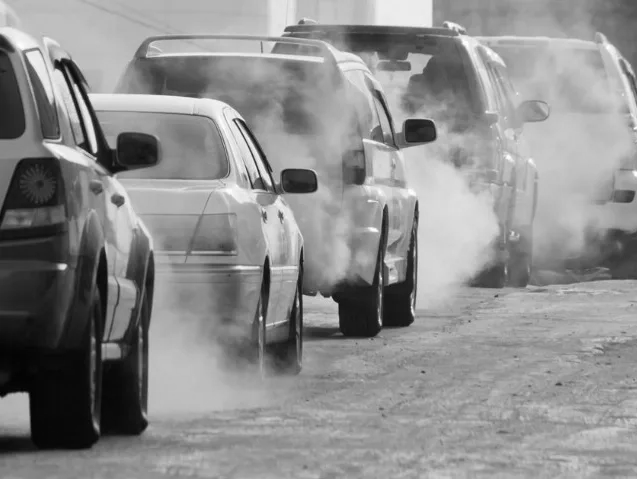
In line with these measures, the New Delhi Municipal Council (NDMC) has announced a two-fold increase in parking fees across the national capital to discourage the use of personal vehicles and promote public transport. The move is aimed at reducing the number of vehicles on the road , thereby cutting down vehicular emissions , which remain one of the largest contributors to Delhi’s poor AQI .
Under the revised structure, effective immediately, four-wheeler parking charges have been raised from ₹20 to ₹40 per hour , while two-wheelers will now pay ₹20 instead of ₹10 . For buses, the rate has doubled from ₹150 to ₹300 per hour . Indoor parking charges have also gone up, car parking from ₹10 to ₹20 , and scooter parking from ₹5 to ₹10 per hour .
NDMC clarified that the new rates will remain in force until GRAP Stage-II is revoked , and that on-street parking and monthly pass holders are exempt as their existing rates are already higher.
The decision follows the GRAP Sub-Committee meeting on October 19 , which reviewed Delhi’s deteriorating air quality. The Air Quality Index (AQI) had risen from 296 to 302 within three hours, placing it in the “Very Poor” category (AQI 301–400) . Forecasts from the India Meteorological Department (IMD) and IITM predict further deterioration in the coming days.
Meanwhile, the CAQM has issued another major directive aimed at reducing vehicular emissions. Starting November 1, 2025 , non-BS-VI commercial goods vehicles registered outside Delhi will be banned from entering the capital . Only CNG, LNG, EV, or BS-VI diesel vehicles will be allowed entry. Essential service vehicles have been granted temporary relaxation till October 31, 2026 , after which full compliance will be mandatory.
With other major cities like Mumbai, Lucknow, Kolkata, and Hyderabad also witnessing a sharp decline in air quality, experts suggest that states across India should adopt similar GRAP-like frameworks , or implement stricter pollution control strategies . A uniform, graded approach could ensure faster, coordinated responses before air quality reaches hazardous levels.
As Delhi braces for another smog-laden winter, these steps mark a crucial attempt to rein in vehicular emissions. But environmental experts insist that long-term progress depends on civic responsibility and consistent enforcement , not just short-term crisis measures each year.