
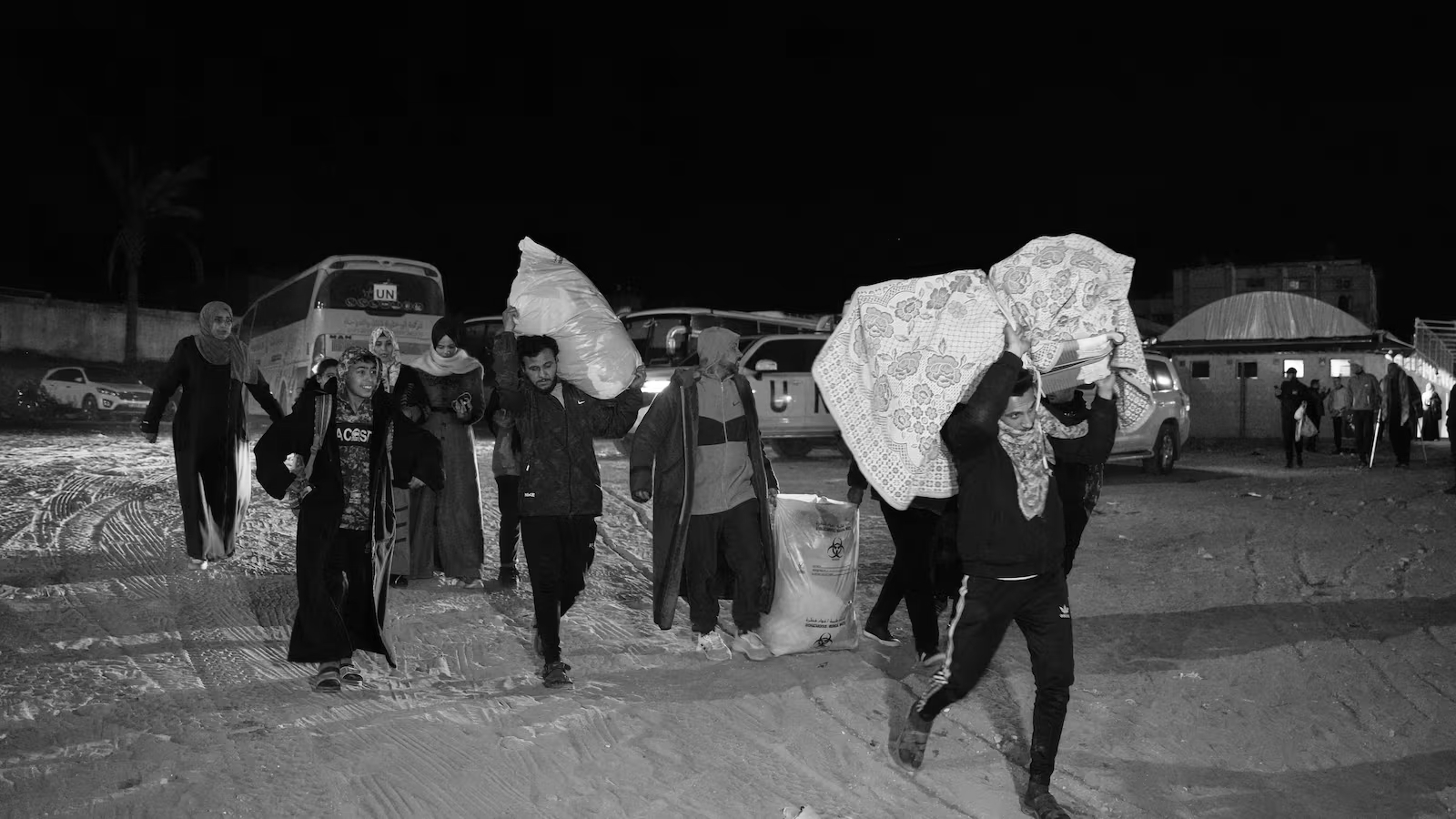
Palestinians attempt to use Gaza's Rafah Border crossing amidst delays
Palestinians gathered on both sides of the Rafah crossing between Gaza and Egypt on Sunday, hoping to cross after the border reopened last week for the first time since May 2024 under a fragile US-backed ceasefire that halted the war between Israel and Hamas. The reopening, however, has remained severely limited , leaving thousands of desperate patients stranded and uncertain.
The crossing resumed operations after a two-day closure caused by coordination failures , security disputes, and procedural confusion among Israeli, Egyptian, Palestinian, and European Union officials. The partial reopening followed sustained diplomatic pressure from Washington and came after Israel retrieved the body of the last hostage held in Gaza , clearing a major condition for implementing this phase of the ceasefire. The move also coincides with Prime Minister Benjamin Netanyahu’s planned visit to Washington , where Iran and broader regional security are expected to dominate discussions.
Despite expectations that 50 patients per day would be allowed to leave, progress has been slow. Over the first four days, only 36 medical patients and 62 companions crossed into Egypt, according to United Nations data , even as Palestinian health officials estimate that nearly 20,000 people , including more than 3,000 children, urgently require medical evacuation. The World Health Organisation has warned that over 900 patients have died while waiting for permission to leave Gaza, describing the current pace of evacuations as dangerously inadequate.
At a Red Crescent hospital in Khan Younis, families of wounded Palestinians assembled early Sunday before travelling towards Rafah. Among them was Amjad Abu Jedian , injured by an Israeli sniper in July 2024 while working in the Bureij refugee camp. His mother, Raja Abu Jedian, said repeated delays prevented his departure until the World Health Organisation confirmed his name on Sunday’s evacuation list. “We want them to take care of the patients during their evacuation,” she said. “We want the Israeli military not to burden them.”
Those who managed to cross earlier described hours-long delays , invasive searches, prolonged questioning, and alleged mistreatment by Israeli authorities and an Israeli-backed Palestinian armed group, Abu Shabab , operating near the crossing. Human rights groups said such treatment has intensified the trauma of patients already weakened by months of war and deprivation.
Operational hurdles have further slowed movement. Israeli authorities enforced a strict ‘one-out, one-in’ rule , requiring each medical evacuation to be matched by a permitted returnee, causing extensive backlogs. Transport shortages, baggage restrictions, and layered security screenings left ambulances and patients waiting for hours, sometimes overnight, in harsh conditions.
On the Egyptian side, small groups of Palestinians also gathered hoping to return to Gaza, many seeking to reunite with surviving relatives after months of separation. However, only a handful were permitted entry, prolonging uncertainty and displacement.
Before the war, Rafah served as Gaza’s only crossing not directly controlled by Israel and functioned as a vital humanitarian lifeline. Israel seized the Palestinian side of the terminal in May 2024, imposing even tighter controls. Although the reopening is seen as a symbolic step forward in the ceasefire process, humanitarian agencies warn that the current scale of operations remains far from sufficient to address Gaza’s deepening medical catastrophe.