
Pakistan's Open Secret: The US Role in Imran Khan's Fall Is Finally on Paper
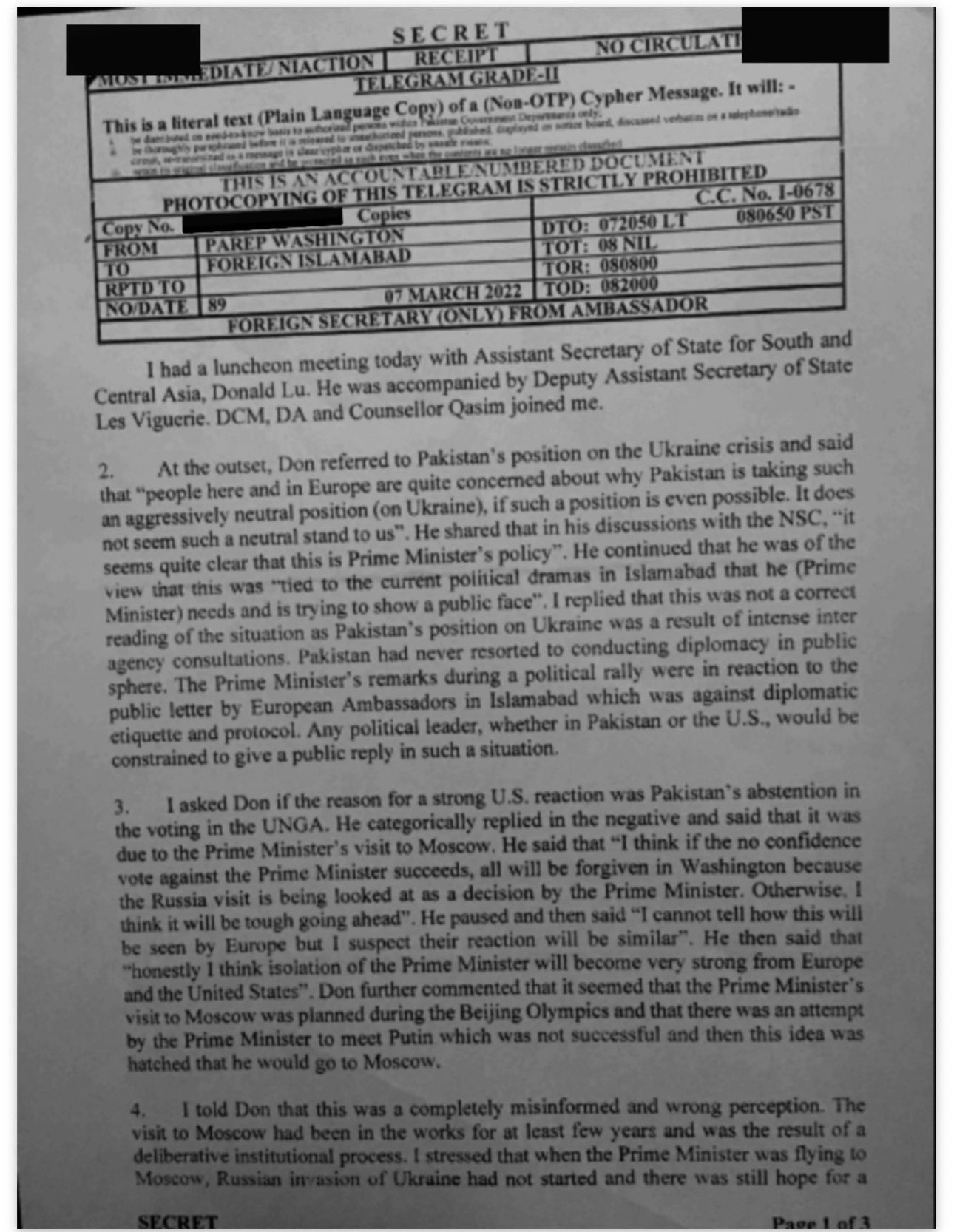
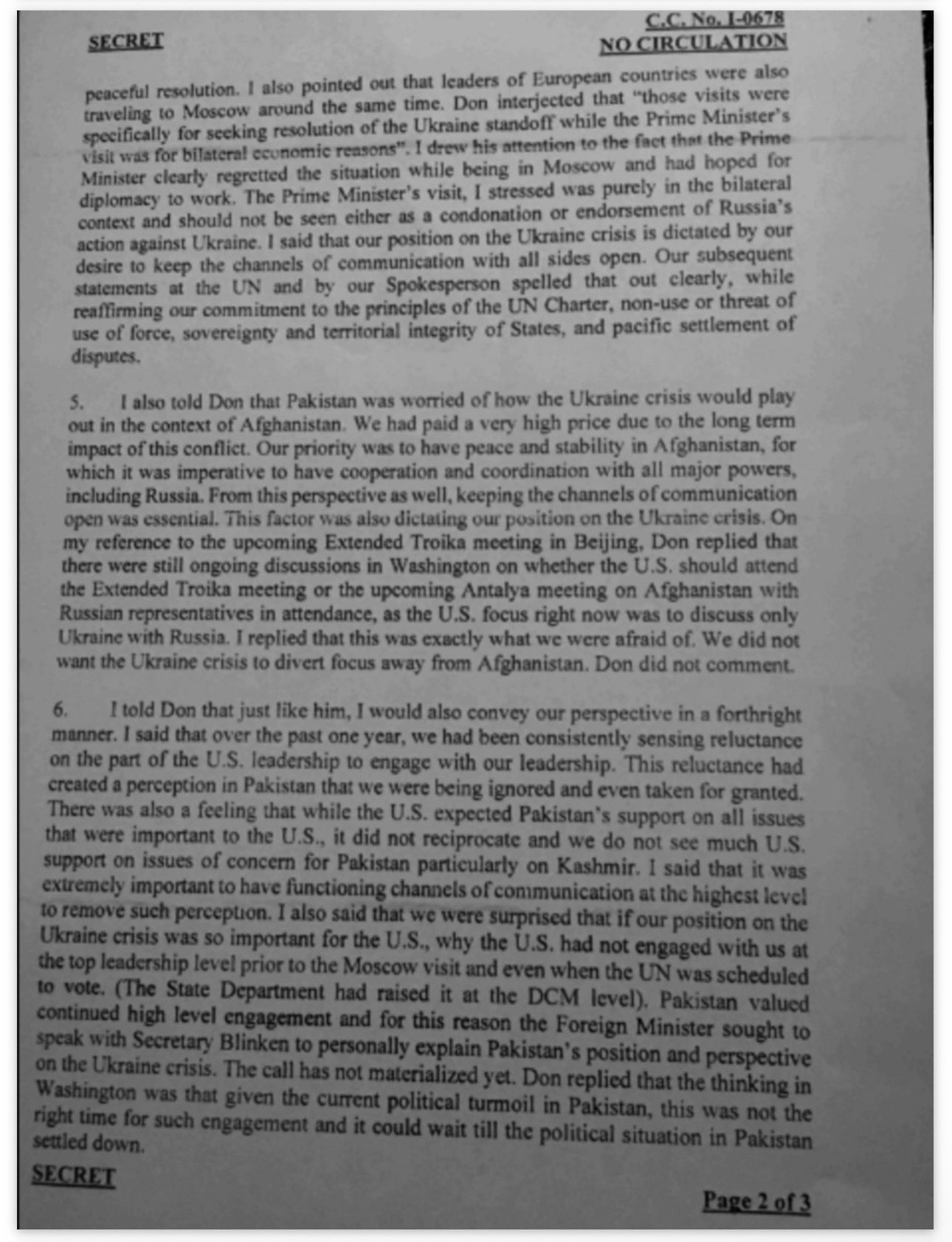
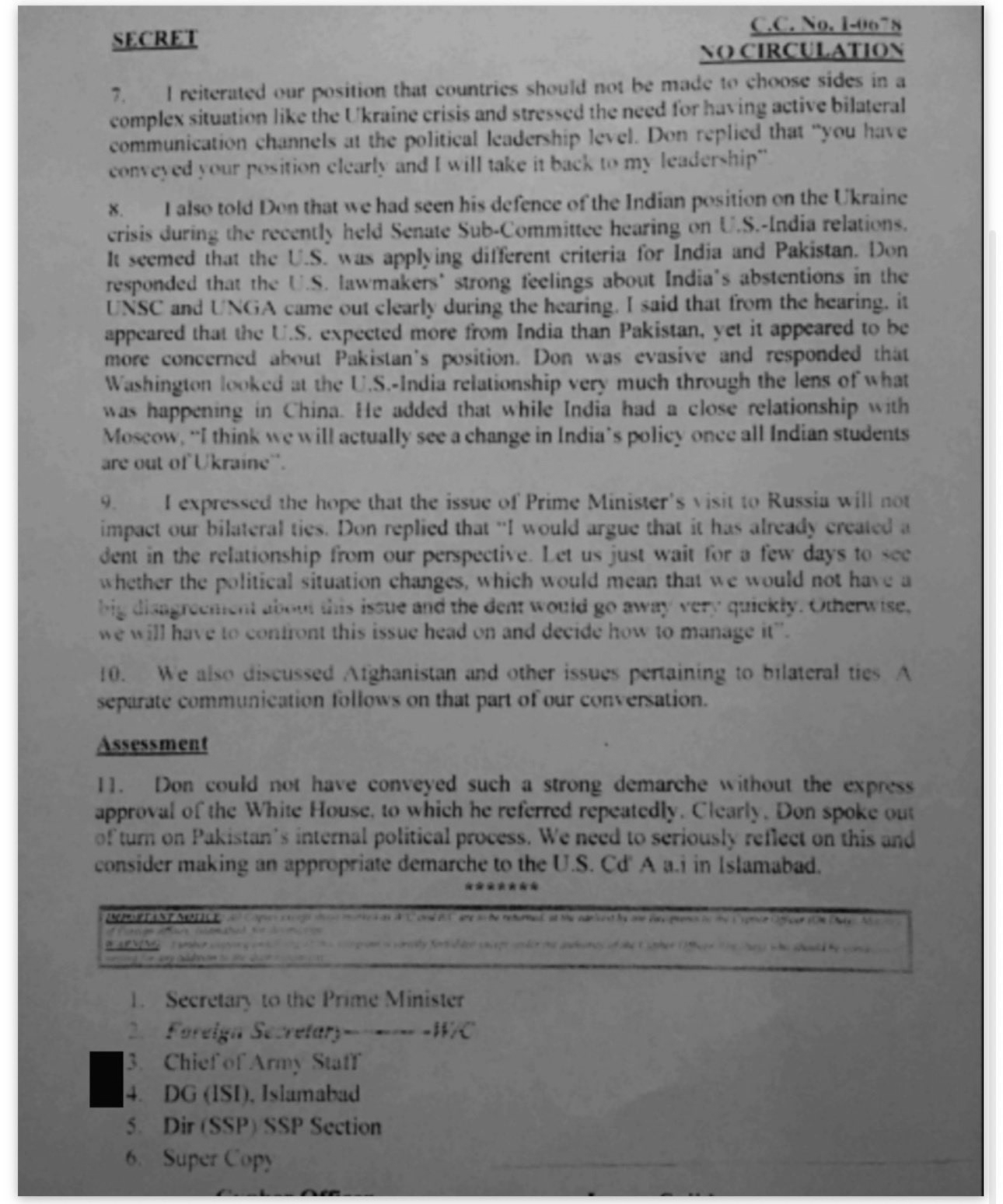
A classified Pakistani diplomatic cable has resurfaced and this time, it has been published in full. Cable I-0678, stamped "secret" and marked "no circulation," dated March 7, 2022, was released by US investigative outlet Drop Site News . It documents what may be the most explosive conversation in Pakistan's recent political history, and it has reignited the 'Lettergate' controversy that has haunted Islamabad ever since.
The document contains details of a meeting between then Pakistani Ambassador to the US Asad Majeed Khan and American diplomat Donald Lu, the US Assistant Secretary of State for South and Central Asian Affairs, a conversation that took place barely a month before Imran Khan lost a no-confidence vote in Pakistan's parliament and his government collapsed.
What Lu allegedly said that afternoon was unambiguous. According to the full transcript, Lu told the Pakistani ambassador: "I think if the no-confidence vote against the Prime Minister succeeds, all will be forgiven in Washington because the Russia visit is being looked at as a decision by the Prime Minister ." The cable further warned that if the no-confidence vote did not succeed, Pakistan could face increasing isolation from both the US and Europe.
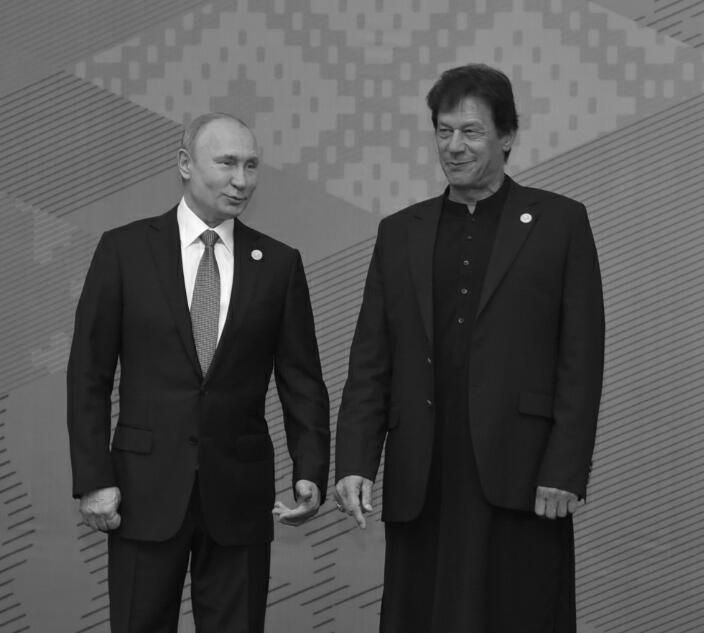
The Moscow visit was the breaking point. On February 24, 2022, the very day Russian forces crossed into Ukraine, Khan was in Moscow meeting President Vladimir Putin on a previously scheduled trip. US National Security Adviser Jake Sullivan had personally contacted Pakistan's national security leadership before the visit, urging them to convince Khan to cancel. Khan ignored the warnings. Washington did not forget.
The fraying had begun even earlier. In June 2021, CIA Director William Burns had travelled to Pakistan to meet Khan, reportedly waited an entire day, and left without a meeting, Khan's office having told Burns by phone that the Prime Minister would only speak directly with President Biden, who had repeatedly declined contact.
The Drop Site report also implicates Pakistan's own military establishment as a co-conspirator. In July 2021, the generals quietly hired a former CIA Islamabad station chief as a lobbyist in Washington, without informing Khan's government, conducting foreign policy independently of the elected prime minister. After Khan was removed, the new military-backed government pivoted swiftly toward Washington, began supplying ammunition for the Ukrainian war effort, and cooled its relationship with China as work on CPEC slowed.
Khan remains imprisoned following multiple convictions that his supporters say are politically motivated. Drop Site News also reported that Donald Trump privately urged Pakistan's army chief, Field Marshal Asim Munir, to "resolve" Khan's detention during discussions last year. Munir, the same man Khan had sacked as ISI chief in 2019 has since promoted himself to Field Marshal and consolidated unprecedented control over Pakistan's nuclear command.
Pakistani officials internally viewed Lu's remarks as serious at the time, believing such messaging from a senior US official would have required approval from higher authorities in Washington. The US State Department has consistently denied involvement. Pakistan's National Security Committee had previously ruled there was no evidence of a foreign conspiracy.
The cipher's reappearance comes as Pakistan positions itself as a quiet diplomatic intermediary between Washington and Tehran amid the ongoing West Asia conflict, a delicious irony, given that it was Khan's refusal to be Washington's instrument that allegedly set all of this in motion.