
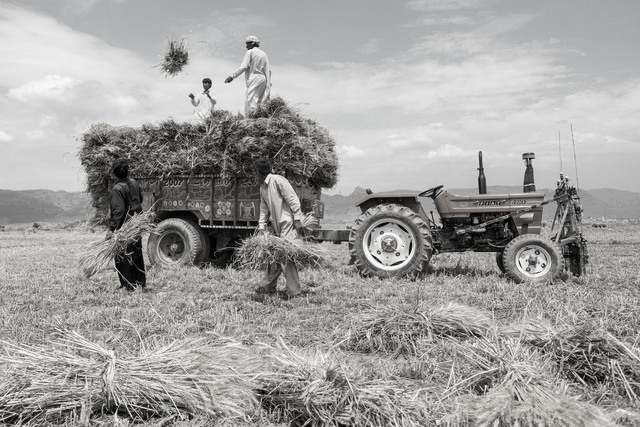
Pakistan's agriculture sliding into crisis amid soaring production costs and policy neglect
Pakistan’s agriculture sector, once the backbone of its economy, is collapsing under the combined weight of soaring production costs, deepening debt, and worsening climate disasters. Employing nearly 40 percent of the workforce and contributing about one-fifth of GDP, the sector has long sustained the country’s rural majority. Yet, fertiliser, pesticide, fuel, and electricity prices have skyrocketed, while crop prices continue to fall, leaving farmers unable to recover even basic costs. Years of inflation, poor governance, and shrinking state support have pushed thousands into poverty. Pakistan’s broader crisis has only compounded their suffering - the nation reels from bombings, earthquakes, and political instability, while surviving from one international bailout to another.
Debt is now strangling rural Pakistan. Only about 15 percent of farmers have access to formal loans, forcing most to depend on informal lenders such as landlords, shopkeepers, and commission agents who impose high interest rates and demand premature crop sales. This has locked countless farmers into cycles of dependency and despair. Fertiliser costs, especially Diammonium Phosphate (DAP), have surged to nearly PKR 14,700 per 50kg bag, forcing farmers to cut back on its use and further degrading soil quality. Experts have urged Pakistan to adopt cheaper, organic alternatives like compost and biogas slurry, but government initiatives to promote such methods remain minimal. Similarly, irrigation powered by costly diesel continues to drain farmers’ earnings, even though solar-powered systems could offer long-term relief, an opportunity the government has yet to act upon.
Suffering lies growing public anger. Across Pakistan, families accuse both local and global leaders of betrayal. Failed dam systems, delayed relief, and unfulfilled climate promises have left people feeling abandoned. The devastation extends beyond flooded fields, contaminated water, destroyed food stocks, and outbreaks of disease have turned survival into a daily struggle. Meanwhile, Pakistan’s political class remains preoccupied with financial bailouts and short-term fixes, offering neither accountability nor long-term recovery plans. As problems grow more erratic and temperatures rise, experts warn that Pakistan’s struggle is no longer about rebuilding farms, it is about national survival.
Without urgent reform, Pakistan risks losing its agricultural base and with it, the livelihoods of millions. True revival demands fair crop pricing, accessible credit, renewable energy investment, cooperative marketing, and a comprehensive climate resilience strategy. But above all, it requires compassion and political will. Pakistan’s farmers, battered by debt, disasters, and neglect, cannot endure another season of promises unkept. In a nation living from bailout to bailout, it is the people, especially those who feed it, who continue to pay the highest price.