
Pakistan’s 27th Amendment Shifts Power from Ballot to Barracks
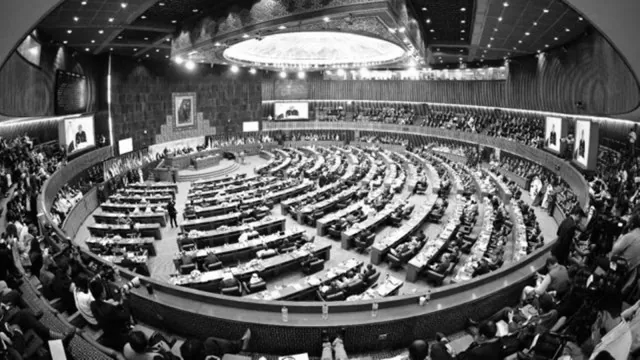
Pakistan’s National Assembly has passed the Constitution (Twenty-Seventh Amendment) Bill, 2025, in a landmark shift critics say could transform the country’s governance from an electoral model to one dominated by military command.
Under the amendment, Chief of Army Staff Asim Munir will be elevated to the newly created post of Chief of Defence Forces (CDF), constitutionally empowered to command all three services Army, Navy, and Air Force. The position of Chairman Joint Chiefs of Staff Committee (CJCSC) will be abolished, consolidating military authority under the CDF.
A striking provision grants lifelong legal immunity to officers elevated to five-star ranks, including Field Marshal, Marshal of the Air Force, or Admiral of the Fleet. These officers will retain their rank, privileges, and uniform indefinitely and can only be removed through a parliamentary impeachment-style process. Reports indicate that this provision could effectively place Munir above any political or judicial challenge.
The amendment also restructures Pakistan’s judiciary. Cases of constitutional importance will be moved from the Supreme Court of Pakistan to a newly established Federal Constitutional Court (FCC), whose judges are appointed by the government, raising concerns about judicial independence.
Opposition voices alarm
Critics argue the amendment represents a fundamental shift rather than a minor constitutional adjustment. By placing the military chief in a constitutionally elevated role with lifelong immunity, civilian oversight is significantly weakened. The creation of a government-appointed court system diminishes the Supreme Court’s authority, while legal immunity for five-star officers shields them from accountability in ways no elected official can claim. As one constitutional lawyer warned, “Democracy does not survive where impunity is made a constitutional right.”
Internal pushback
Several political and civil society actors across Pakistan have voiced strong opposition to the 27th Amendment. The Pakistan Tehreek-e-Insaf (PTI) has condemned the bill as undemocratic, arguing that it was pushed through Parliament without adequate time for legislative review or debate. Regional parties such as the Muttahida Qaumi Movement–Pakistan (MQM-P) and Jamiat Ulema-e-Islam–Fazl (JUI-F) have also expressed alarm, warning that the proposed changes undermine provincial rights and erode judicial autonomy. Meanwhile, lawyers’ groups and bar associations have sounded the alarm that the amendment could effectively end judicial independence, entrenching the military’s dominance in governance and pushing Pakistan toward direct or indirect military rule.
Significance
Observers say the amendment signals a shift from governance by votes to authority by ranks, entrenching military command constitutionally and potentially reshaping Pakistan’s power balance permanently.