
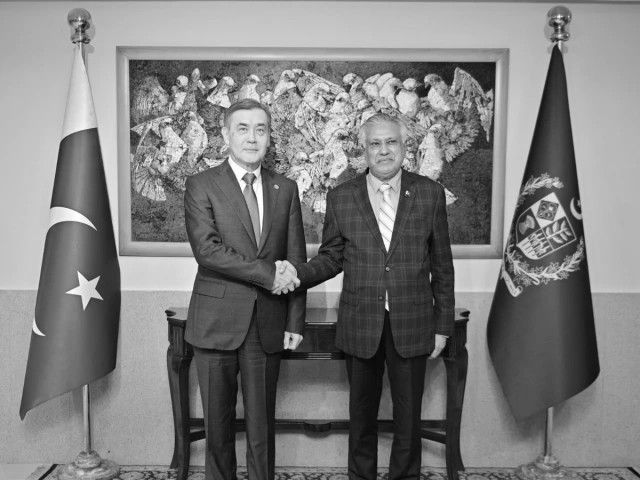
Pakistan Takes SCO Helm: What Islamabad Wants From Its 2026–27 Chairmanship
Prime Minister Shehbaz Sharif’s visit to Kyrgyzstan comes as Pakistan prepares to assume the Shanghai Cooperation Organisation (SCO) Council of Heads of State chairmanship for 2026–27, giving Islamabad an opportunity to shape its agenda.
Founded in 2001 by China, Russia, Kazakhstan, Kyrgyzstan, Tajikistan and Uzbekistan, the SCO has expanded into a 10-member Eurasian organisation. India and Pakistan joined in 2017, Iran in 2023 and Belarus in 2024. The grouping spans East, Central and South Asia, giving it strategic weight.
Security remains the SCO’s core pillar. Members cooperate against terrorism, extremism, separatism, drug trafficking and other transnational threats. Its Regional Anti-Terrorist Structure provides a mechanism for security coordination. Yet the SCO is not a NATO-style military alliance and does not provide collective defence.
Its economic role is growing. The organisation promotes trade, investment, energy, digital cooperation and infrastructure, while road, rail and logistics networks could connect landlocked Central Asian economies with major markets and ports. For Pakistan, this makes the SCO relevant to its push for Central Asian connectivity.
During its chairmanship, Islamabad could prioritise regional connectivity, trade facilitation, energy cooperation, counterterrorism and Afghanistan-related stability. Digital cooperation, tourism, education and people-to-people exchanges could receive attention. The chairmanship is a coordinating role, not unilateral control, as SCO decisions depend on consensus.
Pakistan’s engagement with Kyrgyzstan adds a bilateral dimension. Sharif’s talks with President Sadyr Zhaparov are expected to address trade, investment, energy, connectivity, education and tourism. Bilateral trade remains modest, underscoring scope for expansion through business links, infrastructure and investment.
Connectivity is particularly strategic: Pakistan’s access to the Arabian Sea could complement Kyrgyzstan’s position in Central Asia, potentially supporting north-south commercial links. Education and tourism can deepen people-to-people ties, while energy cooperation could create benefits.
The wider challenge is political. India-Pakistan tensions and differing priorities among China, Russia and other members can constrain consensus. For Islamabad, the test will be whether its tenure produces tangible progress rather than declarations strengthening the SCO’s role as a platform for security, economic cooperation and Eurasian connectivity.