
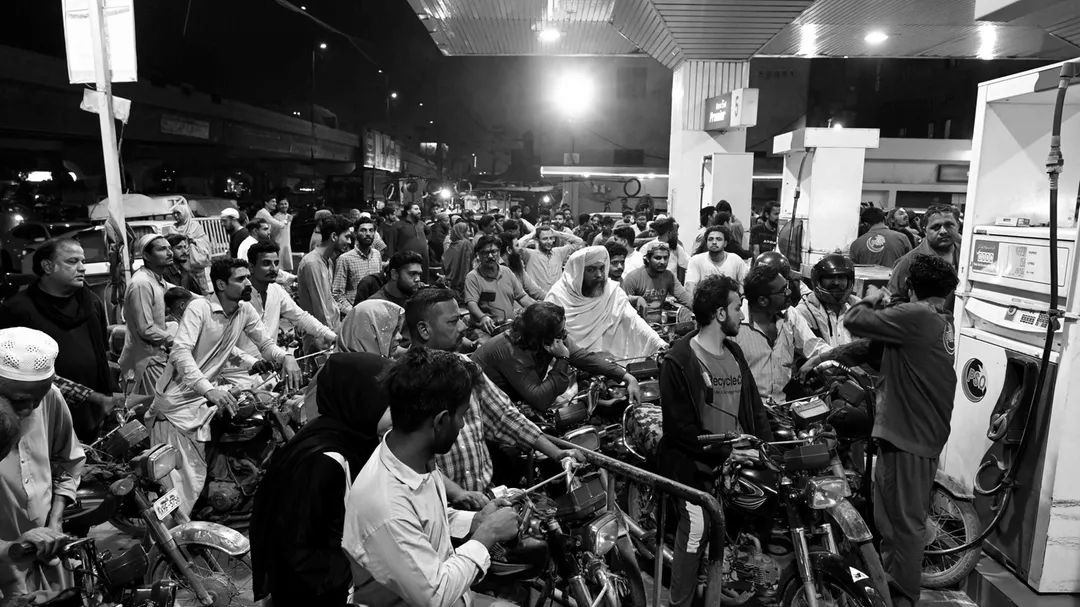
Pakistan hikes fuel prices by record PKR 55 as Israel-Iran conflict jolts oil markets
Pakistan has sharply increased petrol and diesel prices as tensions from the escalating Israel-Iran conflict send shockwaves through global energy markets, raising concerns about disruptions to oil shipments through the Strait of Hormuz , a critical maritime route for global fuel supplies.
In an overnight decision, the government raised petrol and high-speed diesel prices by PKR 55 per litre , marking the largest single fuel price increase in Pakistan’s history. Following the revision, the ex-depot price of petrol has climbed to PKR 321.17 per litre , up from PKR 266.17, while high-speed diesel now costs PKR 335.86 per litre , compared with the earlier PKR 280.86.
The steep hike comes just days after the government’s previous price revision on March 1 , when petrol was increased by PKR 8 per litre and diesel by PKR 5.16 per litre , bringing prices to PKR 266.17 and PKR 280.86 respectively. However, the latest surge far exceeds previous adjustments and reflects the growing volatility in global energy markets.
Officials said the increase was driven by rising international oil prices and fears of supply disruptions as tensions escalate across West Asia . Much of the world’s oil, including shipments bound for Pakistan, passes through the Strait of Hormuz , making the country vulnerable to any instability in the region.
Petroleum Minister Ali Pervaiz Malik said the conflict has created uncertainty across the entire region, affecting energy supply chains and pushing up global fuel costs. He noted that Pakistan would now review petroleum prices on a weekly basis to respond quickly to fluctuations in international markets.
Deputy Prime Minister and Foreign Minister Ishaq Dar said global oil prices have surged by 50 to 70 per cent since the crisis intensified, forcing governments to reassess domestic pricing policies. He added that authorities attempted to minimise the burden on consumers while maintaining economic stability.
Meanwhile, Prime Minister Shehbaz Sharif chaired a high-level meeting to review the country’s petroleum reserves and preparedness. Officials informed the meeting that Pakistan currently holds adequate fuel stocks to meet national demand.
Sharif also directed provincial administrations to take strict action against hoarding and artificial shortages . Petrol stations found involved in such practices could face closure, licence cancellation, and legal proceedings .
Authorities are also planning a digital monitoring system to track petroleum movement across the country and ensure uninterrupted supply . Despite earlier discussions on fuel conservation measures , including remote work and distance learning, the government has decided to maintain normal activities for now while closely monitoring developments in the ongoing regional conflict.