
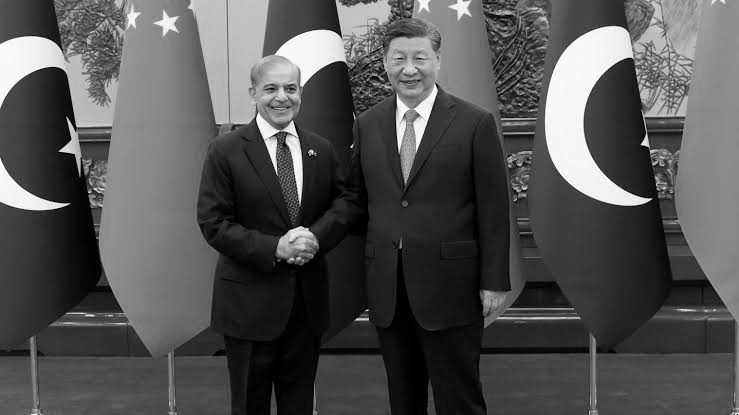
Pakistan Bans Taiwan Airlines Over One-China Policy, Goes Further Than Beijing
Pakistan has barred Taiwanese airlines from its airspace to support Beijing’s One-China policy, taking a step that even mainland China has not taken. The decision comes as Pakistan grapples with inflation, rising fuel costs, debt obligations and political instability, underscoring the strategic importance of its relationship with China.
Pakistan Defence Minister Khawaja Asif confirmed the restriction in an interview with Bloomberg News on Wednesday. “The aviation division follows the One China policy — only mainland China is allowed,” he said, adding that Pakistan had permitted only Chinese airlines to fly over its territory.
The restriction has affected Taiwan’s two major carriers, China Airlines and EVA Airways, which have stopped flying over Pakistani airspace since October 25, according to flight-tracking data cited by Bloomberg. At least a dozen flights between Asia and Europe have been rerouted over Russia since October 25, increasing journey times and operating costs.
The move is particularly notable because China itself allows Taiwanese airlines to fly over its territory. Beijing considers Taiwan part of China, while Taiwan governs itself and rejects Beijing’s sovereignty claim. Pakistan’s reported restriction therefore goes further than mainland China’s approach to Taiwanese commercial aviation.
Pakistan’s economic vulnerabilities provide important context. Its dependence on imported fuel leaves it exposed to international energy-price shocks. Prime Minister Shehbaz Sharif said that the country’s oil import bill had surged from $300 million to $800 million amid the Middle East conflict. Fuel shortages and higher energy costs have added pressure on households and businesses, while inflation continues to strain living standards.
Pakistan is also operating under an International Monetary Fund (IMF)-supported economic programme that requires fiscal discipline and reforms. Meanwhile, the imprisonment of former prime minister Imran Khan, tensions between his Pakistan Tehreek-e-Insaf party and the government, and continuing security challenges have deepened the country’s political difficulties.
Against this backdrop, China remains a crucial economic and military partner. Chinese investment has funded infrastructure projects under the China-Pakistan Economic Corridor, part of President Xi Jinping’s Belt and Road Initiative. China is also Pakistan’s largest supplier of military equipment. Nearly 30 per cent of Pakistan’s external debt has been reported as owed to China, making Chinese financing and debt rollovers important to Islamabad’s financial stability.
Pakistan severed official relations with Taiwan in 1951 in favour of ties with Beijing. Its latest aviation restriction reinforces that longstanding alignment as Islamabad continues to rely on Chinese financing, investment and defence cooperation. However, there is no publicly established evidence that the ban was imposed specifically to secure Chinese financial assistance.
The decision demonstrates how firmly Pakistan is backing Beijing on Taiwan, even as it confronts economic strain and political uncertainty at home.