
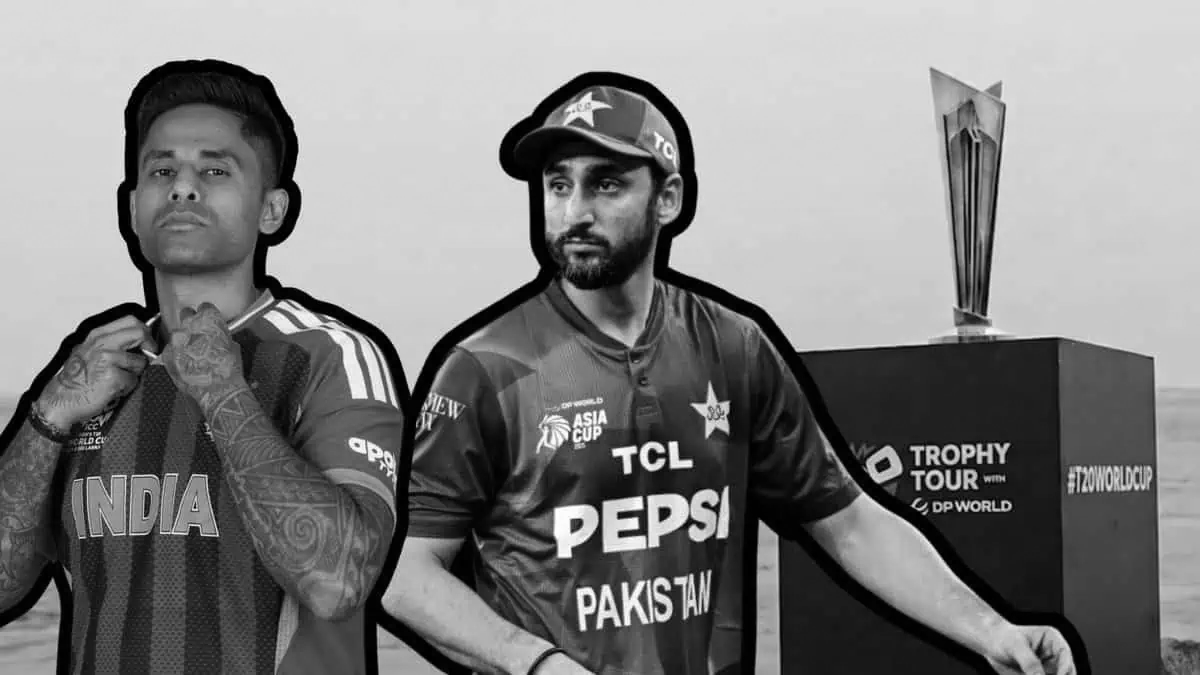
Pakistan backs down: T20 match against India back on the table
Pakistan has withdrawn its T20 World Cup boycott, confirming that the high-profile India match on February 15 in Colombo will go ahead as scheduled. The sudden U-turn ends a controversy that threatened the tournament and left Pakistan looking weak, performative, and embarrassingly indecisive on the global stage.
The saga began after Bangladesh refused to play its World Cup matches in India over security concerns, prompting the ICC to replace them with Scotland. Pakistan opposed this decision in solidarity with Bangladesh and initially announced a boycott of its marquee fixture against India, putting one of the tournament’s most-watched matches at risk. Behind the scenes, high-level talks in Lahore involved ICC deputy chairman Imran Khawaja , PCB chief Mohsin Naqvi , and BCB president Aminul Islam . Pakistan presented three key demands: that Bangladesh not face sanctions , the resumption of India-Pakistan bilateral cricket, and a tri-nation series including Bangladesh. While the ICC agreed to shield Bangladesh from penalties, including financial, sporting, and administrative consequences, the other two demands were outside its control.
Bangladesh Cricket Board president Aminul Islam personally appealed to Pakistan to reverse the boycott “for the benefit of the entire cricket ecosystem,” while Sri Lanka’s President Anura Kumara Dissanayake also urged Prime Minister Shehbaz Sharif to allow Pakistan to play. Pakistan’s PCB chief Mohsin Naqvi briefed Sharif, who approved the decision. BCCI vice-president Rajeev Shukla praised the ICC for “finding a very good solution,” saying the outcome balanced the interests of all parties and ensured the tournament’s integrity .
The ICC’s decision to avoid punishing Bangladesh and guarantee them future hosting rights for an ICC event between 2028-2031 has been widely noted. While this may appear as a “reward” for withdrawing from India, the ICC emphasized that the gesture was to protect Bangladesh as a valued Full Member, maintain cricket development in South Asia, and safeguard the sport’s long-term ecosystem - a strategic choice that Pakistan used to dramatize solidarity.
The India-Pakistan fixture is also hugely commercial . It draws over 20 crore (200 million) TV viewers in India alone , with hundreds of millions more globally on digital platforms. Broadcasters and advertisers prize the match, and its absence could have slashed total tournament ad revenue by 15-20 % , translating into hundreds of millions of dollars in lost income. Direct revenue from broadcasting and sponsorships for the match alone is estimated at USD 250 million or more , with total global earnings even higher. For Pakistan, boycotting risked financial loss, ICC sanctions, and potential future bans or denial of hosting rights .