
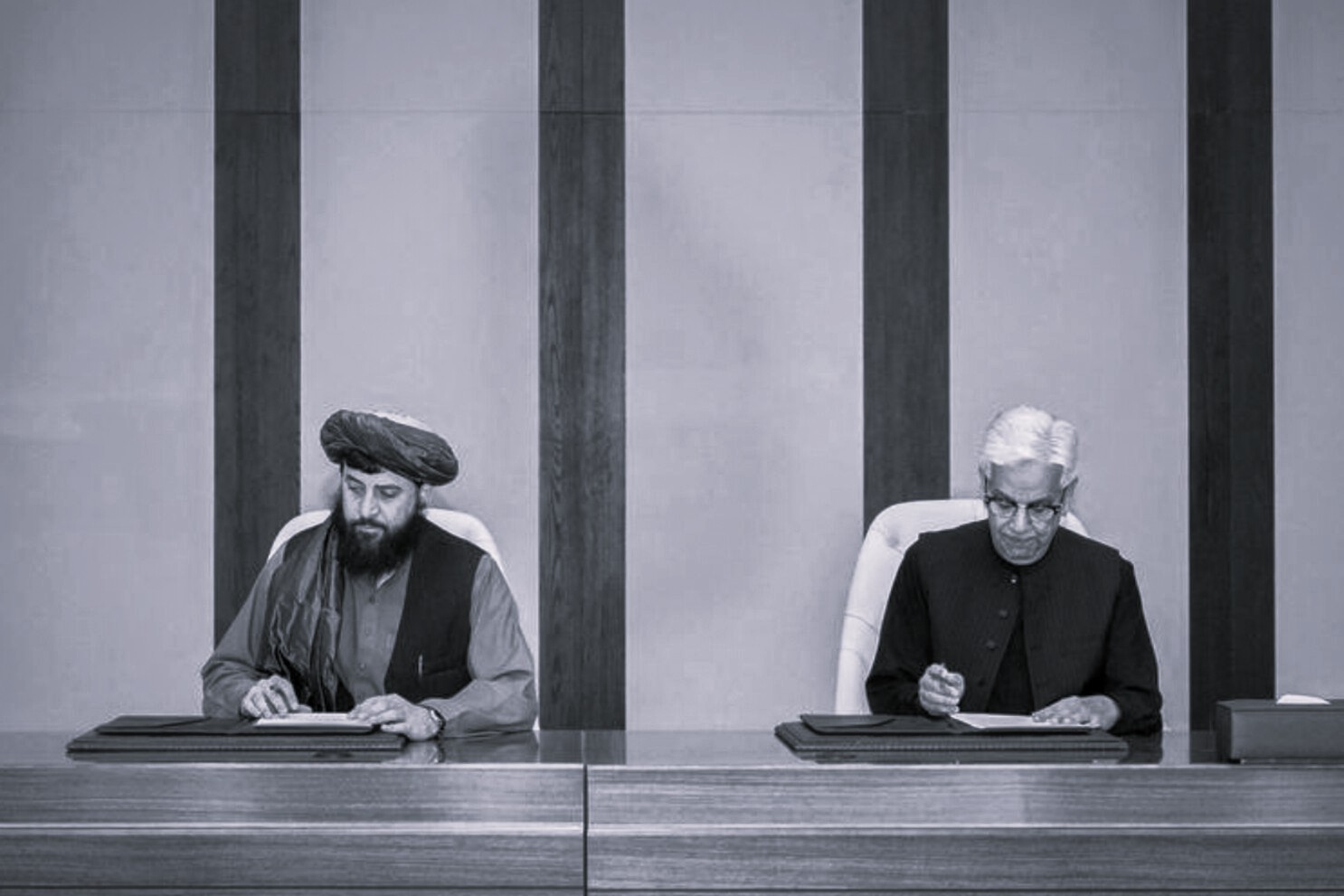
Pakistan, Afghanistan agree to maintain ceasefire after Istanbul peace talks
Pakistan and Afghanistan have agreed to maintain a fragile ceasefire following peace talks in Istanbul, the Turkish Foreign Ministry announced on Thursday. The agreement comes after earlier negotiations between the two sides collapsed earlier in the week amid rising border tensions.
According to a joint statement released by Turkey’s Foreign Ministry on behalf of Pakistan, Afghanistan, and mediators Turkey and Qatar, all parties have committed to establishing a “monitoring and verification mechanism” to ensure compliance with the ceasefire and to impose penalties on any violators.
The two delegations will reconvene in Istanbul on November 6 for a higher-level meeting aimed at finalising the terms of the ceasefire’s implementation, officials confirmed.
The recent talks, facilitated by Turkey and Qatar, follow a period of heightened tension between the neighbouring nations. Earlier this month, cross-border shelling and airstrikes left dozens of soldiers, civilians, and militants dead on both sides. Although the previous round of talks ended without resolution, the ceasefire has largely held, with no major clashes reported this week. However, key border crossings remain closed, leaving hundreds of trucks and refugees stranded.
Pakistan’s Defence Minister Khawaja Mohammad Asif told Geo News that Islamabad agreed to extend the talks “at the request of Qatar and Turkey,” noting that Pakistan’s delegation was initially scheduled to return home on Wednesday but stayed in Istanbul to continue the dialogue.
Pakistan has reiterated its demand that Afghanistan take “clear, verifiable, and effective action” against militant groups operating from its soil, particularly the Tehrik-e-Taliban Pakistan (TTP). Two senior Pakistani security officials told the Associated Press that Islamabad remains committed to a peaceful resolution but insists that Afghan territory must not be used for terrorism against Pakistan.
Tensions between the two nations escalated after explosions in Kabul earlier this month, which Afghanistan’s Taliban government blamed on Pakistani airstrikes. Afghan officials claimed to have retaliated by targeting Pakistani military posts, resulting in heavy casualties on both sides.
The clashes prompted Qatar to mediate emergency talks that led to an initial ceasefire on October 19. The recent Istanbul dialogue, lasting four days, concluded inconclusively on Tuesday, prompting renewed diplomatic efforts by Turkey and Qatar.
Addressing tribal elders in Peshawar on Thursday, Pakistan’s Army Chief Field Marshal Asim Munir said Islamabad seeks peaceful relations with all its neighbours, including Afghanistan, but warned that Pakistan “will not tolerate cross-border terrorism.”
Munir criticised the Taliban government for allegedly supporting the Pakistani Taliban (TTP), which has been designated a terrorist organisation by both the United Nations and the United States. Pakistan has witnessed a sharp rise in militant attacks in recent months, most of them claimed by the TTP, whose fighters are believed to be sheltering in Afghanistan since the Taliban’s return to power in 2021.
Meanwhile, Pakistan’s military reported that 18 militants were killed in two separate operations in Balochistan, and four Pakistani Taliban, including a high-value target, were eliminated while attempting to infiltrate Bajaur, near the Afghan border.