
Padmakshi Temple: A spiritual and Architectural Gem in Warangal
In the history of Telangana, Warangal holds a special place. The city is renowned for its rich historical and cultural heritage. Magnificent sites like the Thousand Pillar Temple, Ramappa Temple, and Bhadrakali Temple attract tourists from all over. Along with these, there is another ancient temple deeply connected with the Kakatiya dynasty - the Padmakshi Temple. Let’s learn about its unique features.
Historical Significance
Origins & Transformation:
The temple site began as a Shaivite cave shrine, possibly predating the 5th century CE, and later included a Jain shrine constructed in 1117 CE during the reign of Kakatiya chief Prola II Eventually, as the Kakatiya rulers embraced Veerashaivism, the Jain shrine was converted into a Hindu temple dedicated to Goddess Padmakshi (also known as Padmavathi or Padmakshamma).A dispute in the 19th century resulted in a commission by the Nizam of Hyderabad affirming the temple’s Hindu origins.
Architecture & Design
Annakonda Pillar:
The entrance is guarded by an impressive quadrangular, four faced black granite pillar known as the “Annakonda Pillar” adorned with intricate Jain carvings on each side.
Cave Shrine & Carvings:
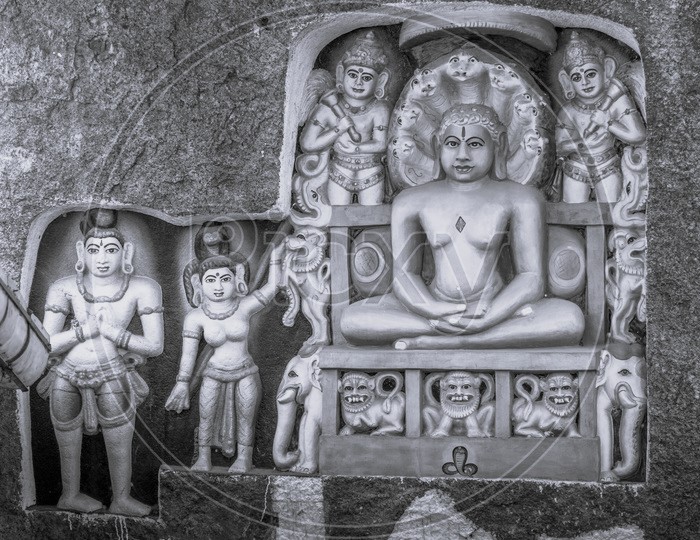
The temple is carved from a natural cavern perched on a hill. Inside, the garbhagriha (sanctum) and main shrine are north-facing, consistent with early temple design.The interior is richly embellished with sculptures of Jain Tirthankaras, along with depictions of Parshvanatha, Yaksha Dharanendra, and Padmavati all reflecting its dual religious heritage.
Vyasapitha Carving & Pond:
Another distinct feature is the Vyasapitha (book rest) carving. Steps carved into the rocky hill lead down to a sacred pond situated at the temple’s base, used for ritual immersion during festivals.
Spiritual & Festivals
Deity & Local Reverence:
Goddess Padmakshi is revered locally as “Amma” (Mother), regarded deeply as the “Mother of Mothers.” She is the chief deity of the temple, and devotees often seek her blessings for prosperity, protection, and well being.
Bathukamma Festival:
The temple hosts vibrant celebrations of Bathukamma, a colorful floral festival held during Navratri (September to October).Thousands of women participate, creating floral arrangements, singing, dancing, and later immersing the decorated pots in the pond creating mesmerizing, culturally rich visuals.
Visitor Experience
Scenic Views & Tranquility:
Perched atop Padmakshi Gutta (hill), the site offers panoramic views of Hanamkonda and its surroundings, an ideal spot for photography and reflection.
Access & Atmosphere:
Visitors climb 50 to 70 steps through a rocky, ascetic style path to reach the temple, evoking a sense of spiritual journey.The peaceful ambiance, combined with its architectural and cultural depth, makes the temple a cherished stop for pilgrims and heritage visitors alike.
Timings & Entry:
Open daily from 6 AM to 6 PM. There is no entry fee .
Location & Connectivity:
Situated in Meerpet, Hanamkonda, Warangal district just 3 km from Hanamkonda Bus Stand and 6 km from Warangal railway station.Adequate road connectivity via auto rickshaws, buses (including TSRTC), and private vehicles. The nearest airport is Hyderabad International Airport (150 km).
Nearby Attractions:
It pairs well with visits to Bhadrakali Temple, Warangal Fort, Thousand Pillar Temple, and Ramappa Temple for a full heritage experience.
Why Visit Padmakshi Temple?
A living canvas of history, illustrating an intriguing blend of Jain and Hindu (Veerashaiva) traditions.Architectural highlights like the Annakonda Pillar, cave architecture, and ancient carvings offer profound cultural insight.The spiritual ambiance, hilltop location, and panoramic views make it a tranquil retreat.Cultural vibrancy during festivals like Bathukamma adds depth to the visit.