
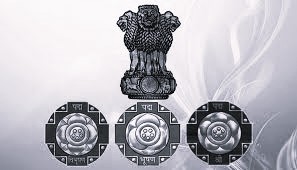
Padma Awards: Celebrating India’s Unsung Heroes and National Achievers
The Padma Awards are among India’s most prestigious civilian honours, recognising individuals who have made outstanding contributions in various fields that shape the nation’s progress. Instituted in 1954 , these awards celebrate excellence and dedication across sectors such as arts, literature, education, science, medicine, sports, public affairs and social service. Over time, the Padma Awards have evolved into a powerful symbol of national gratitude, honouring both celebrated personalities and ordinary citizens whose work has created a lasting impact on society.
Every year, the Government of India announces the Padma Award recipients on the eve of Republic Day, January 26 . The awards reflect the country’s appreciation for individuals whose contributions have strengthened India’s cultural, intellectual and social foundations. Beyond recognition, they also inspire citizens to dedicate their efforts to the nation’s development and welfare.
Origins of the Awards
The Padma Awards were introduced soon after India gained independence as part of an effort to honour individuals who played a significant role in building the young nation. The honours were instituted during the presidency of Dr. Rajendra Prasad , with the government led by Prime Minister Jawaharlal Nehru recognising the need to celebrate distinguished service in different areas of public life.
Initially, the awards were introduced in the form of Padma Vibhushan , which had three classes. In 1955, these classes were reorganised into the present structure of Padma Vibhushan, Padma Bhushan and Padma Shri , forming three tiers of national recognition for exceptional service.
Categories of Padma Awards
The Padma Awards are presented in three categories based on the level of service rendered to the nation.
The Padma Vibhushan is the second-highest civilian award in India after the Bharat Ratna. It is given for exceptional and distinguished service of the highest order.
The Padma Bhushan is the third-highest civilian honour and recognises distinguished service of a high order in any field of activity.
The Padma Shri , the fourth-highest civilian award, honours individuals who have made notable contributions in various fields including arts, sports, literature, education, science and social work.
Together, these three awards represent some of the most respected forms of recognition for public service and achievement in India.
First Recipients and Early Honours
When the Padma Awards were first presented in 1954 , several distinguished personalities were honoured for their contributions to India’s intellectual and cultural life.
Among the earliest recipients were Satyendra Nath Bose , the renowned physicist whose work in quantum mechanics led to the development of Bose–Einstein statistics, and Nandalal Bose , a legendary artist who played a major role in shaping modern Indian art. Another early awardee was Zakir Husain , a prominent educationist who later became the President of India. Leaders and administrators such as B. G. Kher and V. K. Krishna Menon were also among the first honourees for their contributions to governance and diplomacy.
These early recipients reflected the broad vision behind the Padma Awards to recognise excellence in science, culture, education and public affairs.
Fields Most Frequently Recognised
Over the decades, Padma Awards have been presented across a wide range of fields. However, certain sectors have consistently featured prominently among awardees.
Arts and culture including music, cinema, dance, theatre and visual arts have received a large number of honours due to their role in preserving India’s rich cultural heritage.
Literature and education are also frequently recognised, celebrating writers, scholars and teachers who contribute to intellectual development.
Science and engineering , medicine , civil service , sports and social work are other major areas where individuals have been honoured for their contributions.
In recent years, greater attention has also been given to individuals working in environmental conservation, rural innovation and community development , reflecting changing national priorities.
Recognising Unsung Heroes
One of the defining features of the Padma Awards is that they honour not only famous personalities but also ordinary citizens who dedicate their lives to serving society .
Many awardees come from remote villages and underserved communities where they work quietly to improve people’s lives. Teachers transforming education in rural schools, artisans preserving traditional crafts, doctors providing healthcare in tribal areas and environmental activists protecting forests have all received national recognition through these awards.
Such recognition highlights the idea that impactful service often happens away from public attention, and the Padma Awards aim to bring these inspiring stories to the national stage.
“People’s Padma” Initiative
In recent years, the Government of India has emphasised the concept of “People’s Padma” to make the awards more inclusive and participatory.
Under this initiative, citizens are encouraged to nominate deserving individuals who have made significant contributions at the grassroots level. The government has particularly encouraged nominations of women, members of Scheduled Castes and Scheduled Tribes, rural innovators and persons with disabilities who have dedicated themselves to social service.
This initiative aims to ensure that the awards reflect the diversity of Indian society and recognise contributions from all sections of the population.
Nomination and Selection Process
The nomination process for the Padma Awards is conducted entirely online through the Rashtriya Puraskar Portal . Individuals can nominate themselves or recommend others by submitting detailed information about their achievements and contributions.
Every year, thousands of nominations are received from across the country. These nominations are examined by a Padma Awards Committee , which includes senior government officials and eminent personalities from different fields.
The committee carefully evaluates each nomination and prepares a recommended list of awardees. The final approval is granted by the President of India , and the awards are presented at a ceremonial event held at Rashtrapati Bhavan in New Delhi.
Padma Awards 2026
The Padma Awards for 2026 recognised outstanding individuals from diverse sectors of society. A total of 131 awards were approved, including five Padma Vibhushan, thirteen Padma Bhushan and 113 Padma Shri honours .
Among the recipients were 19 women , highlighting the growing recognition of women’s contributions to national life. The list also included six foreigners or members of the Indian diaspora , reflecting the global influence of individuals connected to India. Several awards were conferred posthumously in recognition of the lasting impact of individuals who had served the nation during their lifetime.
Prominent personalities among the awardees included actor Dharmendra (posthumously), actor Mammootty, singer Alka Yagnik, cricketer Rohit Sharma, cricketer Harmanpreet Kaur and hockey player Savita Punia , along with many grassroots contributors from different parts of the country.
Honour Without Monetary Reward
An important aspect of the Padma Awards is that they are purely honorary recognitions . The awards do not carry any cash prize or financial benefit. Recipients are presented with a medallion and a certificate signed by the President of India.
According to Article 18 of the Indian Constitution , these awards cannot be used as titles before or after a person’s name. They are intended purely as symbols of honour and respect for exceptional service.
A Tribute to Service and Excellence
Over the decades, the Padma Awards have grown into one of India’s most respected platforms for recognising service, talent and dedication. By honouring individuals from diverse backgrounds from internationally known artists and scientists to grassroots workers who transform communities the awards highlight the spirit of service that strengthens the nation.
As nominations for the Padma Awards 2027 have already begun, the honours continue to encourage citizens to identify and celebrate those whose contributions make a meaningful difference to society. In doing so, the Padma Awards remain a powerful reminder that true national progress is built on the dedication and achievements of individuals committed to the welfare of others.