
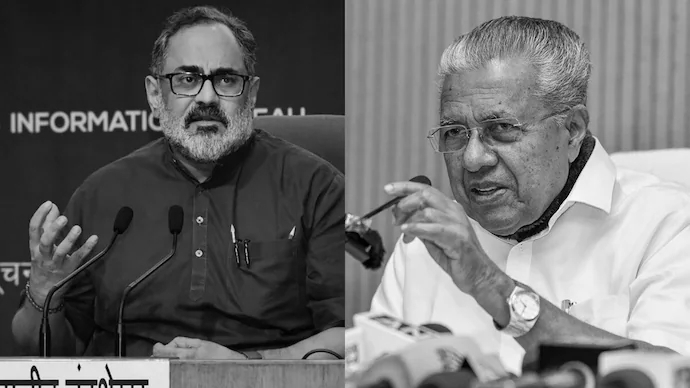
Paddy Bonus Row Deepens as Kerala BJP, LDF Push Back on Centre Advisory
Kerala’s paddy procurement policy has come under renewed spotlight after Kerala BJP president Rajeev Chandrasekhar wrote to Union Finance Minister Nirmala Sitharaman , seeking withdrawal of a direction issued by the Union Ministry of Finance to discontinue the additional bonus given to paddy farmers in the state.
The communication from Chandrasekhar follows a formal advisory sent earlier by the Centre. On January 9, V. Vualnam, Secretary (Expenditure) in the Union Finance Ministry, wrote to Kerala Chief Secretary A. Jayathilak asking the state to review its existing bonus policy and consider stopping the additional incentive paid over and above the Minimum Support Price . The letter cited that national rice stocks had exceeded the requirement for the Public Distribution System , resulting in a significant and recurring burden on the public exchequer.
The advisory has already drawn strong criticism from the Left Democratic Front government in Kerala. Chief Minister Pinarayi Vijayan termed the move an expression of the Centre’s hostile attitude toward both farmers and the state. The state government maintains that the additional bonus is crucial to sustaining paddy cultivation in Kerala, where farming is largely carried out on small holdings and under conditions that differ from surplus-producing regions.
Chandrasekhar, in his letter to the Finance Minister, has argued that Kerala should not be treated on par with major surplus rice-producing states while framing procurement-related decisions. He has sought reconsideration of the directive in view of the state’s specific agricultural and ecological conditions. His intervention places the Kerala BJP alongside the state government in opposing the discontinuation of the incentive, even as he has separately raised concerns about how the state manages support for farmers.
The issue has thus evolved into a wider Centre–state policy debate, balancing concerns of fiscal management and national stock levels with regional agricultural realities and farmer welfare .