
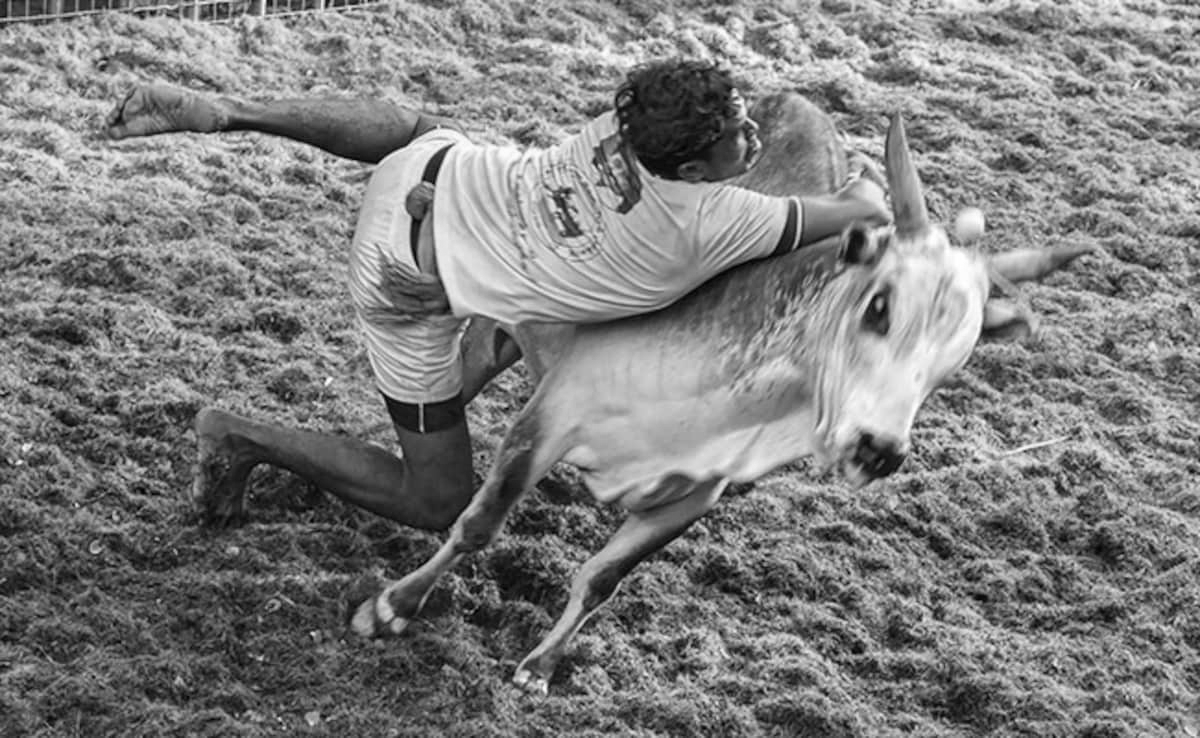
Over 900 Bulls, 300 participants mark Tamil Nadu’s first Jallikattu event of the year
Tamil Nadu’s first Jallikattu event of the year was held on Saturday at Thachankurichi village in Pudukkottai district, with over 900 bulls and nearly 300 registered bull-tamers taking part as part of the ongoing Pongal celebrations.
Bulls from neighbouring districts such as Tiruchirappalli, Dindigul and Sivaganga were brought to the venue, where a large crowd gathered to witness the traditional bull-taming sport. Ministers S Regupathy and Siva V Meyyanathan , along with District Collector M Aruna , formally inaugurated the event, which was organised under the banner of the ‘Punitha Vinnerppu Annai Alaya Thiruvizha’ .
Bull-tamers, wearing prescribed uniforms, attempted to control bulls charging into the arena from the Vadivasal, or entry point . Winners were decided based on the duration for which a participant managed to hold the bull’s hump, with the same standard applied to determine the winning bull owner. Organisers announced prizes including motorcycles, bicycles and traditional cooking and storage vessels for successful tamers and owners.
Jallikattu is closely linked to Mattu Pongal, the day dedicated to honouring cattle during the harvest festival. The event is seen by many as a celebration of agrarian life, bravery and community identity. Supporters argue that the sport plays a role in preserving indigenous cattle breeds and reinforces rural traditions passed down through generations.
Major Jallikattu events held annually at Alanganallur and Avaniyapuram in Madurai district attract visitors from across the country and abroad, making the sport a prominent cultural symbol of Tamil Nadu.
Despite its cultural importance, Jallikattu has long been contested by animal welfare activists, who argue that the sport exposes bulls to stress, injury and cruelty. These concerns culminated in a Supreme Court ban in 2014, citing violations of animal protection laws.
The ban sparked widespread public protests across Tamil Nadu in 2017, with demonstrators asserting that the sport was being misunderstood and that it formed an integral part of Tamil cultural heritage. The protests, particularly visible in Chennai and several rural centres, led to intense public and political debate.
In response to the protests, the Tamil Nadu government amended the Prevention of Cruelty to Animals Act at the state level, creating a legal framework to allow Jallikattu under regulated conditions. Animal rights groups challenged the amendment, arguing that it diluted national animal welfare protections.
In 2023, a Constitution bench of the Supreme Court upheld the validity of the Tamil Nadu law, recognising Jallikattu as a cultural practice while emphasising that events must follow strict safety and animal welfare guidelines. The ruling allowed the sport to continue, provided that regulatory measures are enforced to minimise harm to both animals and participants.
While Jallikattu events continue to draw large participation and public support, animal welfare organisations maintain their call for stronger oversight. Authorities have reiterated their commitment to ensuring that events are conducted within the legal framework, balancing cultural traditions with concerns for animal safety.
As the Pongal season progresses, Jallikattu remains both a celebration of Tamil Nadu’s rural heritage and a reminder of the ongoing debate between cultural preservation and animal welfare in modern India.