
Over 6,000 killed in three-day RSF October assault on Sudan’s el-Fasher: UN report
More than 6,000 people were killed in just three days during a brutal assault by Sudan’s Rapid Support Forces on the Darfur city of el-Fasher in late October, according to a United Nations report that details mass killings , possible crimes against humanity , and systematic sexual violence . The findings come as UN agencies warn that Sudan’s humanitarian crisis is worsening rapidly, with over 107,000 newly displaced , collapsing healthcare services, and deepening famine risks.
The 29-page report by the UN Human Rights Office said RSF fighters and their allied Arab militias, known as the Janjaweed, unleashed a wave of intense violence as they overran el-Fasher on October 26 after more than 18 months of siege. The city had been the Sudanese army’s last remaining stronghold in Darfur. The assault involved mass killings, summary executions, rape and gang rape, abductions for ransom, torture, ill-treatment, enforced disappearances, and widespread destruction of civilian infrastructure, many of them driven by ethnic motives. UN High Commissioner for Human Rights Volker Türk said the atrocities underscore how persistent impunity fuels violence across Sudan.
The UN documented at least 4,400 deaths inside el-Fasher between October 25 and 27, while more than 1,600 others were killed as they tried to flee. Investigators based their findings on interviews with 140 victims and witnesses, supported by satellite imagery and video evidence. In one of the deadliest incidents, RSF fighters fired heavy weapons into a crowd of about 1,000 people sheltering in a university dormitory, killing around 500. In another, nearly 600 people, including 50 children, were executed inside university facilities. The report warned that the actual toll from the week-long offensive is likely far higher.
The death toll does not include at least 460 people killed when RSF fighters stormed the Saudi Maternity Hospital on October 28, nor about 300 people killed earlier in shelling and drone attacks on the Abu Shouk displacement camp. Witnesses described scenes of extreme brutality, with one survivor saying bodies were thrown into the air by explosions, “like a scene out of a horror movie.” The UN said the pattern of violence mirrored earlier RSF attacks in Darfur, including operations in the Zamzam displacement camp, the city of Geneina, and the nearby town of Ardamata in 2023.
The conflict between the RSF and the Sudanese military erupted in April 2023 after a power struggle, plunging the country into what the UN has described as the world’s worst humanitarian crisis . Millions have been displaced, healthcare systems have collapsed, and parts of Sudan have slipped into famine. The International Criminal Court is investigating alleged war crimes and crimes against humanity, while the United States administration has accused the RSF of committing genocide.
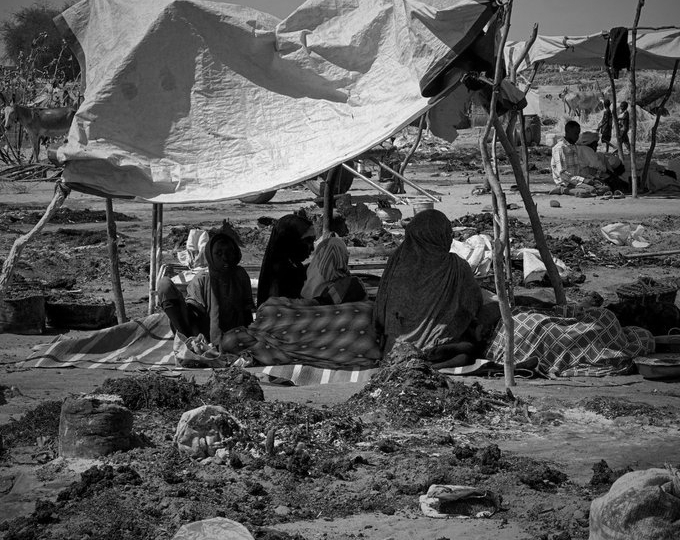
Recent UN field access to el-Fasher for the first time since its fall revealed deserted neighbourhoods, large-scale destruction, and evidence of mass violence, with investigators describing the city as “a crime scene” . Humanitarian agencies said more than 107,000 people have been newly displaced from el-Fasher and surrounding areas, with severe shortages of food, clean water, and medical care. Hospitals are barely functioning, and aid access remains heavily restricted.
Beyond Darfur, the UN has documented continued RSF drone strikes on civilian areas and medical facilities in Sudan’s Kordofan region, killing dozens in recent weeks. The attacks have raised fears that other regions could face devastation similar to that suffered by el-Fasher.
The report said women and girls sexually assaulted during the offensive were largely from the African Zaghawa non-Arab tribes and were targeted over alleged links to the Sudanese military. Türk, who visited Sudan last month, said survivors described how sexual violence was systematically used as a weapon of war. Thousands of civilians were also abducted while trying to flee, with many detained in at least 10 makeshift centres, including the city’s Children’s Hospital, which was converted into a detention facility. Several thousand people remain missing and unaccounted for.
RSF leader Gen. Mohammed Hamdan Dagalo has previously acknowledged abuses by his fighters but disputed the scale of the atrocities. The RSF did not respond to requests for comment on the UN findings. Türk called for strict enforcement of international sanctions, stronger arms embargo implementation, and credible accountability mechanisms, warning that without justice, Sudan risks sinking deeper into a prolonged cycle of mass violence.