
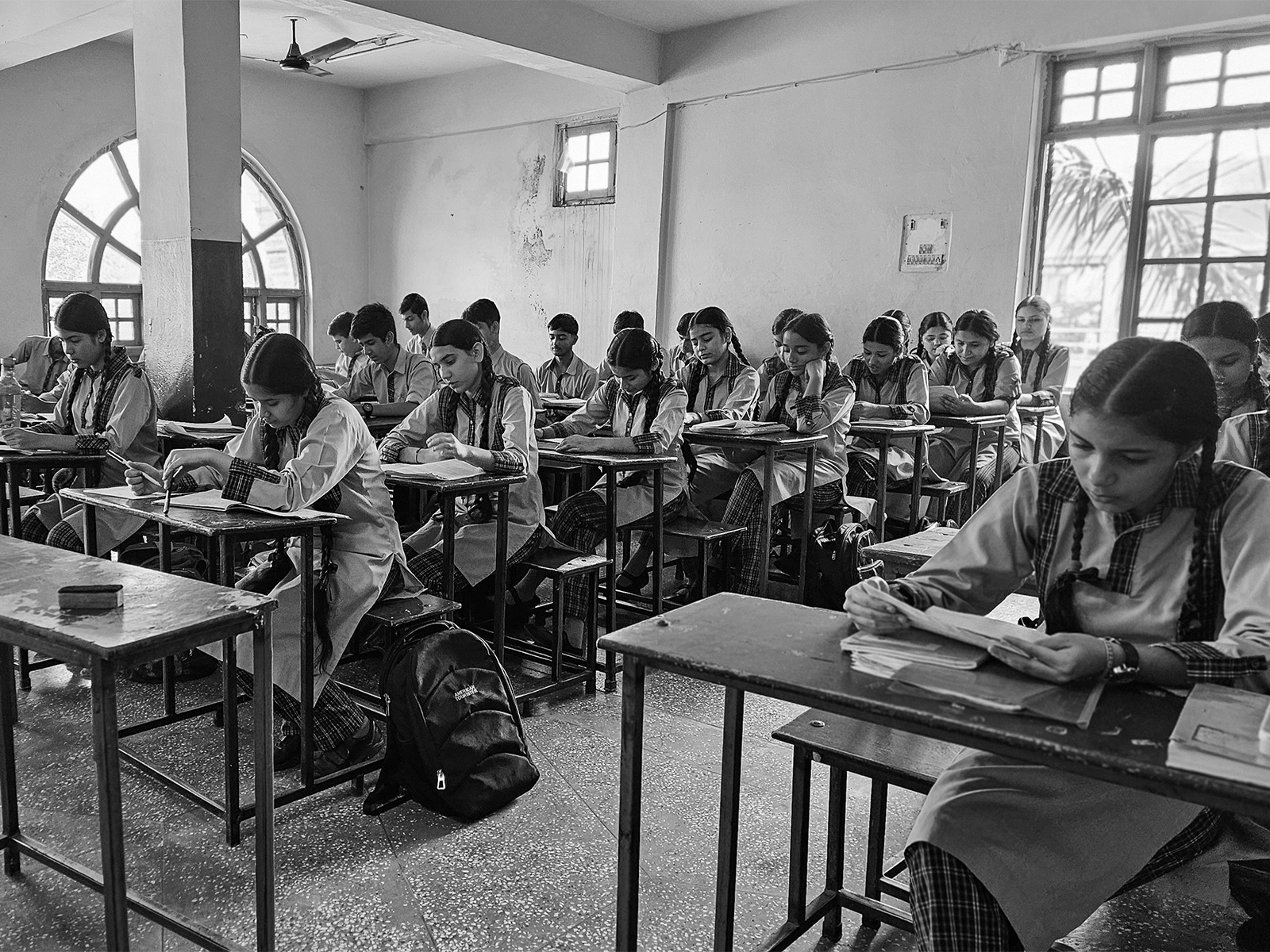
Over 5,100 Govt schools have zero enrolment: Centre
According to data released by the Ministry of Education more than 65,000 government schools across India are functioning with fewer than 10 students, while 5,149 schools reported zero enrolment in the 2024–25 academic year.
The figures highlight stark regional disparities, with over 70 per cent of zero-enrolment schools concentrated in Telangana and West Bengal. The data was shared by the Ministry last week in a written reply to questions raised by MPs Karti P. Chidambaram and Amrinder Singh Raja Warring in the Lok Sabha and is based on information compiled through the Unified District Information System for Education Plus (UDISE+).
Beyond schools with no students, the Ministry recorded a sharp rise in institutions with critically low enrolment. The number of government schools with fewer than 10 or zero students increased by 24 per cent over the last two academic years, from 52,309 in 2022–23 to 65,054 in 2024–25. Such schools now account for 6.42 per cent of all government schools in the country, reflecting a widening mismatch between school infrastructure and actual student presence.
Infrastructure and technology gaps further weaken these institutions. UDISE+ data and audits show that many low- or zero-enrolment government schools lack functional computers or have only a few outdated systems, often without reliable internet connectivity or electricity, particularly in rural and tribal areas. Smart classrooms, digital boards, tablets and AI-enabled learning tools remain largely confined to urban or model schools. In addition, many teachers posted in such schools are not trained in digital or AI-based teaching, limiting the effective use of technology. Although schemes such as Samagra Shiksha, PM e-Vidya and DIKSHA aim to promote digital education, their reach remains uneven and largely benefits bigger schools.
Education experts say these deficiencies directly influence parental choices. With growing emphasis on digital literacy and technology-driven learning, parents are increasingly reluctant to enrol their children in schools that struggle to offer basic facilities, let alone modern classrooms suited for an AI-driven education ecosystem.
The data also show that more than 1.44 lakh teachers were posted in schools with fewer than 10 or no students during the same period, raising concerns over inefficient deployment of staff and suboptimal use of public resources.
Experts argue that stronger government intervention is needed, drawing lessons from reforms undertaken in Andhra Pradesh during the tenure of former Chief Minister Y S Jagan Mohan Reddy. His government focused on school consolidation, infrastructure upgrades under the Nadu-Nedu programme, introduction of digital classrooms, improved teacher training and student-focused incentives to boost enrolment and attendance, which helped restore confidence in government schools.
Clarifying its role, the Ministry of Education said education falls under the Concurrent List of the Constitution, and the administration, recruitment and deployment of teachers rest with State governments and Union Territory administrations. The Centre supports States and UTs through the Samagra Shiksha scheme to maintain prescribed pupil-teacher ratios and improve school infrastructure.