
Over 300 academics urge SAARC to intervene in ‘Unjust Dismissal’ of SAU professor
More than 300 academicians from universities across the world have written to SAARC Secretary-General Golam Sarwar, seeking his intervention in what they termed the “unjust and punitive dismissal” of Dr. Snehashish Bhattacharya, Associate Professor of Economics at the South Asian University (SAU), New Delhi.
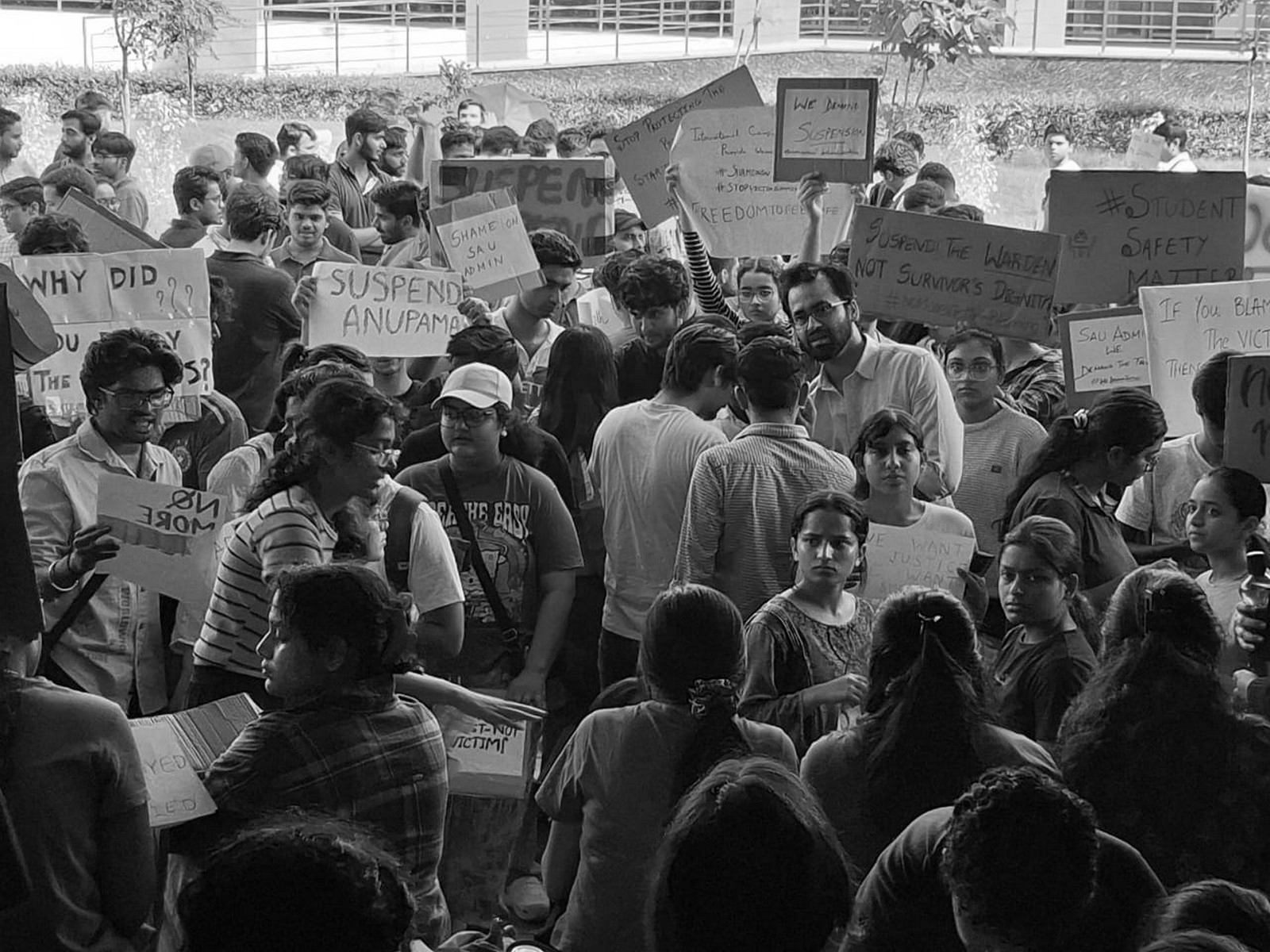
SAU, a postgraduate university jointly established by the South Asian Association for Regional Cooperation (SAARC) member states, has been embroiled in controversy since the suspension of Bhattacharya and three other faculty members in June 2023. The four were accused of “inciting students against the interest of the university” during stipend protests in late 2022. Bhattacharya’s services were formally terminated on September 11, 2025, with retrospective effect from June 2023.
In their letter, the signatories expressed deep concern over the dismissal, pointing out that students had peacefully protested for representation in university bodies dealing with gender sensitisation and sexual harassment, and for the reversal of stipend cuts. Instead of engaging in dialogue, they said, the administration responded with student expulsions, suspensions, and police intervention.
“Faculty members, including Bhattacharya, called for dialogue and constructive engagement. However, the administration chose to suspend them and reduce their salaries to 25 per cent without any statutory basis,” the letter stated. Bhattacharya, who has consistently denied all charges, also refused to submit the letters of regret demanded by the university.
The academics urged the SAARC Secretary-General to press the university to rescind Bhattacharya’s termination, arguing that the action violated the founding principles of collegiality, dialogue, and academic freedom that underpin SAU. They also criticised the university’s assertion that it lies beyond the jurisdiction of Indian courts, calling it a stance that “undermines the rule of law and accountability.”
The signatories contended that although SAU was created through an intergovernmental agreement, it operates within Indian territory and therefore cannot function outside the purview of Indian law. Such a claim of immunity, they warned, creates a legal vacuum as SAARC lacks its own judicial mechanism, thereby eroding transparency, fairness, and institutional accountability.
Among the prominent signatories are Ha-Joon Chang (SOAS University of London), Jayati Ghosh (University of Massachusetts Amherst), Amit Bhaduri, Prabhat Patnaik (Jawaharlal Nehru University), Partha Chatterjee (Columbia University), Rathin Roy, former member of the Prime Minister’s Economic Advisory Council, and Guy Standing (SOAS University of London).
“This is not merely a case concerning one individual,” the letter concluded, “but a test of whether SAU can still uphold the principles of openness, dialogue, and mutual respect on which it was founded.”