
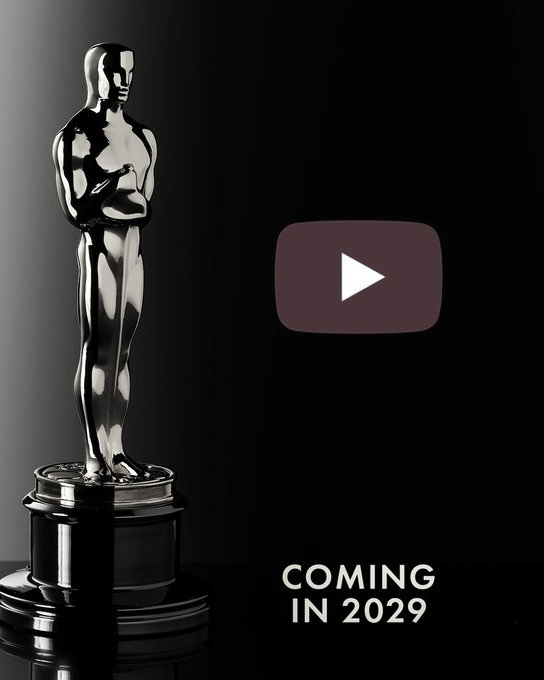
Oscar Awards to stream free on YouTube from 2029 as ABC retains historic 100th ceremony in 2028
In a historic shift for one of television’s marquee events, the Academy of Motion Picture Arts and Sciences announced that the Oscars will leave ABC and begin streaming on YouTube starting in 2029. ABC will continue to broadcast the annual ceremony through 2028, a landmark year that will mark the 100th Academy Awards, which will be telecast on the network as usual, serving as a centennial celebration on broadcast television.
From 2029 to 2033, YouTube will hold global streaming rights to the Oscars, effectively becoming the central platform for all Academy programming. This includes the main awards ceremony, red carpet coverage, the Governors Awards, and the Oscar nominations announcement. The Oscars will stream free worldwide on YouTube, with additional availability for YouTube TV subscribers. Streams will feature closed captioning and multiple audio tracks to cater to international audiences. Financial terms of the deal were not disclosed, but unverified industry reports suggest the agreement could be valued at more than $100 million annually , although these figures have not been confirmed by YouTube, or the Academy.
Academy chief executive Bill Kramer and academy president Lynette Howell Taylor described the partnership as a transformative step for the organization. They highlighted that the Academy is an international institution and that YouTube’s vast global reach would allow unprecedented access to the Oscars and year-round Academy programming, benefiting both members and the broader film community. YouTube chief executive Neal Mohan emphasized that the Oscars are an essential cultural institution that honors excellence in storytelling and artistry, and that streaming the ceremony free worldwide will inspire a new generation of filmmakers and film lovers while preserving the Oscars’ legacy.
This five-year term from 2029 through 2033 reflects standard practice for high-profile media rights agreements. Fixed-term contracts allow both parties to evaluate viewership, engagement, and revenue, while retaining the flexibility to renegotiate terms, adapt to evolving technologies, or consider competitive bidding at the end of the term. It also enables the Academy and YouTube to explore innovations in streaming formats, interactive experiences, multilingual access, and other audience engagement tools over time.
The move makes the Oscars the first of the major award shows, alongside the Grammys, Emmys, and Tonys to completely leave traditional broadcast television. It places one of the most-watched non-sports broadcasts under Google’s umbrella, with YouTube reaching an estimated two billion users globally. Industry analysts believe that free global streaming could dramatically increase viewership, especially in international markets where access was previously limited, potentially setting new records for the Oscars . The deal also signals YouTube’s increasing dominance in the media industry , leveraging its global platform, live streaming capabilities, and monetization opportunities to reach broader audiences than conventional broadcast networks.
The arrangement is expected to generate substantial value for YouTube. Free streaming of a globally iconic event can attract premium advertisers, sponsorships, and brand integrations. Increased traffic to Academy-related content year-round may boost watch time, enhance platform engagement, and drive subscriptions for YouTube TV. Analysts suggest the combination of live viewership, global reach, and ancillary programming could make the Oscars one of YouTube’s most profitable and culturally significant events.
ABC, owned by The Walt Disney Company, has been the broadcast home of the Oscars for most of the ceremony’s history. NBC first televised the awards in 1953 , but ABC acquired the rights in 1961 and has maintained them except for a brief period between 1971 and 1975. In a statement, ABC said it has been proud to host the Oscars for more than half a century and looks forward to airing the next three ceremonies, including the historic 100th Oscars in 2028, while wishing the Academy continued success.
The most recent ceremony in 2025 drew 19.7 million viewers on ABC, a modest increase from the previous year, even as traditional television faces long-term declines. While the YouTube agreement currently runs through 2033, media experts note that future renewals or adjustments will depend on performance, audience reception, and evolving industry trends. For now, the Oscars’ transition to free global streaming represents a bold experiment that could reshape the future of major live cultural events, potentially setting new standards for accessibility, audience reach, and monetization in the digital era.