
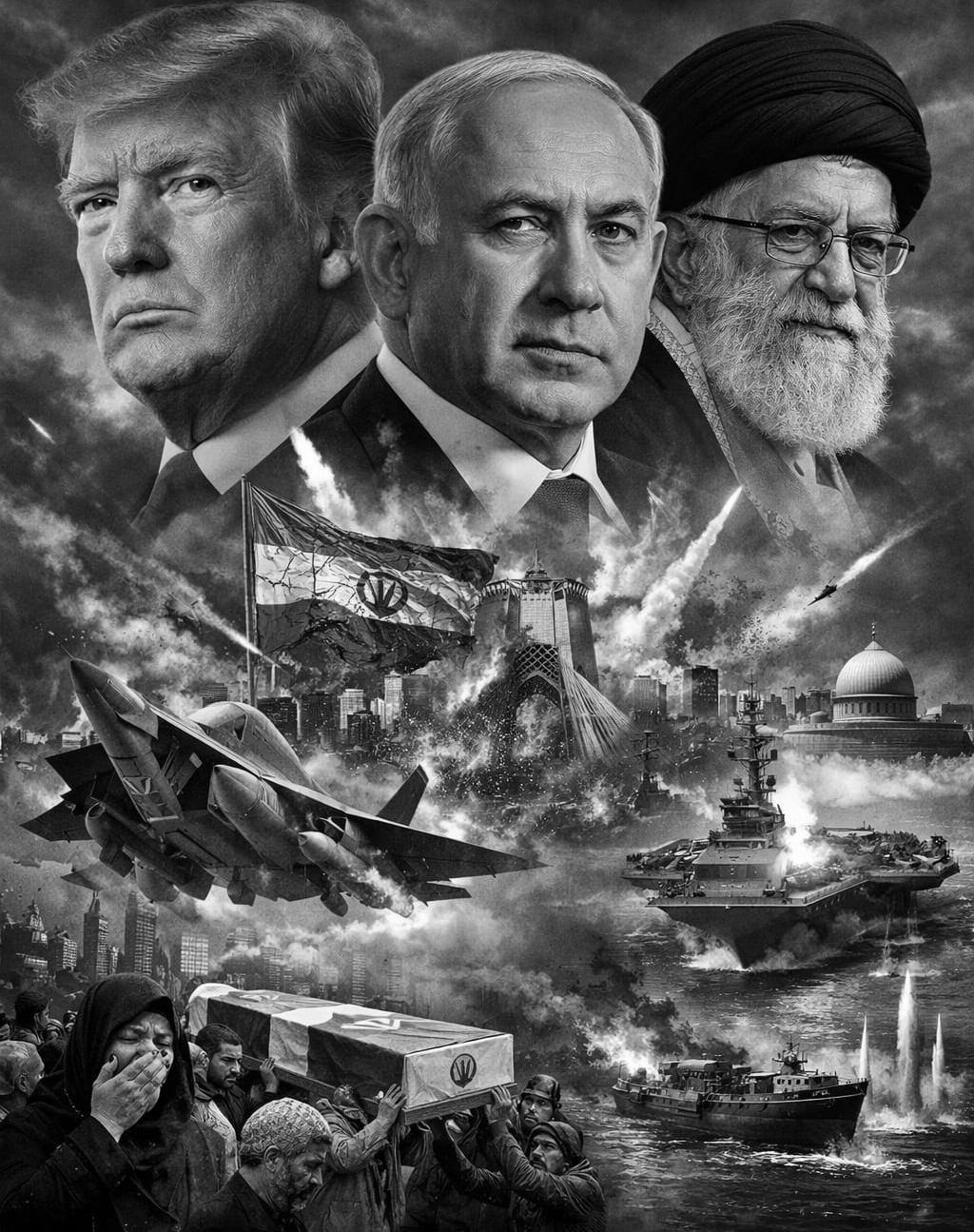
Operation Epic Fury: U.S. and Israel hit Iran as war nobody could stop edges the region to the brink
The world knew this war was coming. For months, the signs were impossible to ignore - a massive military buildup in the Persian Gulf, failed diplomatic talks, seized oil tankers, drones shot down over international waters, and a U.S. president threatening military action with increasing bluntness. The only question was: when? That question was answered on the morning of Saturday, February 28, 2026. The United States and Israel launched a coordinated strike against Iran, a massive offensive the U.S. military named Operation Epic Fury , aimed at crippling Iran’s military infrastructure and degrading its ability to project power across the region.
Explosions rocked Tehran and other cities including Isfahan, Qom, Karaj, and Kermanshah. Government buildings, military installations, and intelligence sites were hit, and smoke plumes rose over the capital. Panic spread as citizens scrambled for safety, with long queues at petrol stations and schools and universities closing. Reports suggested several high-ranking Iranian military figures were killed, including IRGC commander General Mohammad Pakpour and Iran’s defense minister Amir Nasirzadeh , though Tehran has not confirmed the full casualty list. Supreme Leader Ayatollah Ali Khamenei and President Masoud Pezeshkian survived, reportedly moved to secure locations. Despite months of preparation, Iran’s Russian- and Chinese-supplied air defense systems failed to intercept a single missile .
President Donald Trump described the operation as essential to eliminating threats from Iran’s regime and called on Iranian forces to lay down arms or face “certain death,” urging citizens to take control of their government once military objectives were complete. Israeli Prime Minister Benjamin Netanyahu stated the strikes aimed to neutralize an existential threat and pledged that operations would continue “as long as necessary.”
Civilian casualties were reported, including at least 40 killed, many of them schoolgirls, in a strike on a girls’ elementary school in Minab, Hormozgan province. Internet and communications across Iran largely collapsed as the offensive continued. Within hours, Iran launched a sweeping retaliatory barrage of missiles and drones against U.S. bases and allied facilities across the Gulf, including Bahrain, Qatar, Kuwait, the UAE, Jordan, Saudi Arabia, and also Israel. Many missiles were intercepted, though debris caused injuries and minor damage in Abu Dhabi. Israel deployed its Iron Dome and Arrow systems to counter Iranian attacks.
The strikes drew widespread international reactions. Russia condemned the U.S.-Israeli action as “unprovoked aggression” , while European nations called for urgent diplomacy and civilian protection. Airspace closures disrupted flights across Iran, Israel, and neighboring states. Global markets reacted sharply, fearing disruptions to energy flows through the Strait of Hormuz . India and other nations issued advisories urging citizens in the region to stay close to shelters.
The escalation came after recent nuclear negotiations had failed, with Iran refusing strict limitations on its nuclear and missile programs. The destruction of key command centers and the deaths of senior commanders raised questions over the stability of Iran’s leadership and potential succession. Speculation focused on Parliamentary Speaker Mohammad Bagher Ghalibaf and other senior officials stepping into decision-making roles if the top leadership was incapacitated.