
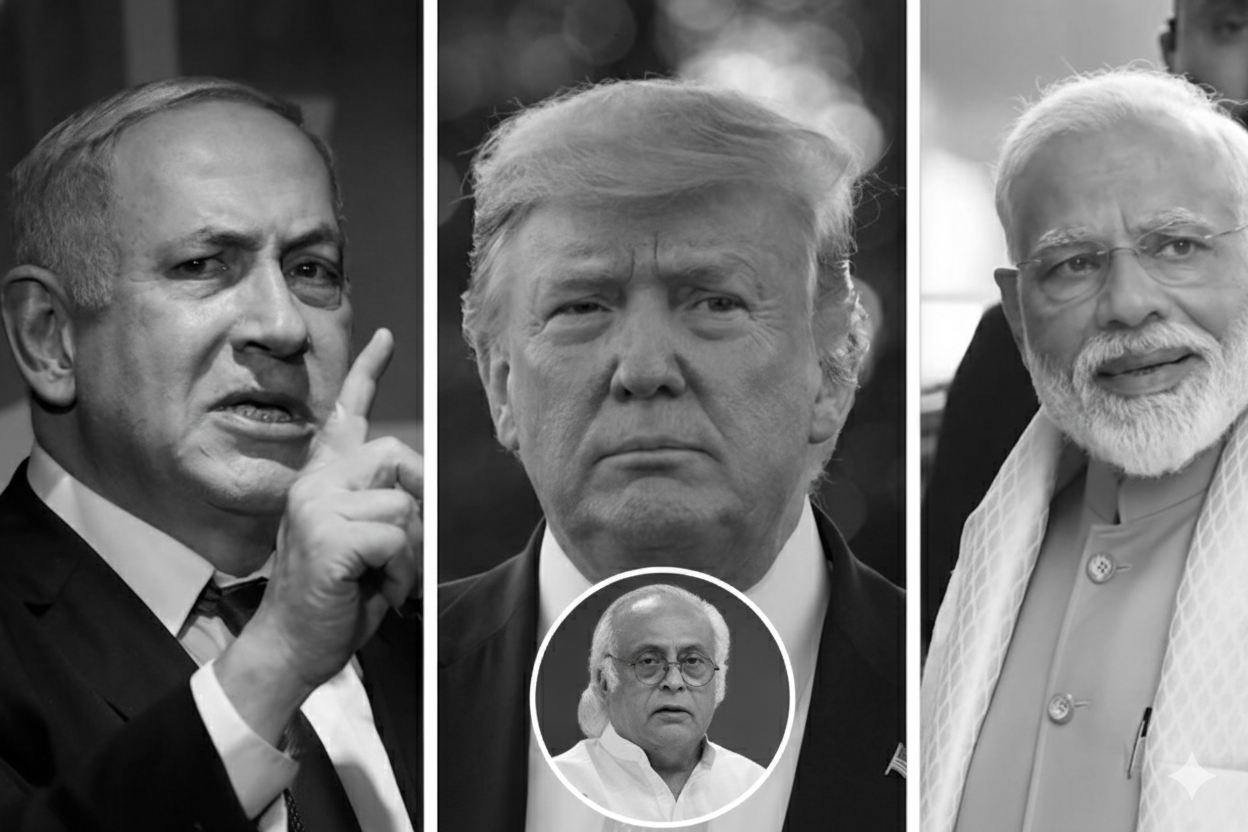
Op Sindoor, Gaza, and praise: Ramesh calls out Modi’s diplomatic choices
Congress MP and General Secretary in-charge Communications, Jairam Ramesh, sharply criticised Prime Minister Narendra Modi on Friday for lauding former US President Donald Trump, as Trump reached what Jairam Ramesh described as a “half-century mark” of claims that he used trade and tariffs as a “brahmastra” to halt Operation Sindoor and bring about a ceasefire between India and Pakistan after the Pahalgam attack.
Ramesh, in a post on X, highlighted the seemingly endless nature of Trump’s self-claims. “President Trump, during his meeting with President Alexander Stubb of Finland, reached the half-century mark on his claim that he stopped Operation Sindoor using trade and tariffs as his brahmastra. In this, President Trump has been consistent, insistent, and persistent. And it won’t be long before he scores a century,” the Congress leader wrote.
The Congress MP did not stop at mocking Trump but used the opportunity to take a pointed jab at PM Modi’s diplomatic engagements. Ramesh criticised the Prime Minister for spending the day praising Trump while also engaging with Israeli Prime Minister Benjamin Netanyahu, who has been accused of unleashing a genocide in Gaza. “Prime Minister Modi spent all day yesterday talking to UK Prime Minister Keir Starmer and sending message after message of praise and admiration to President Trump. He did not, of course, forget to speak to the man who had unleashed the genocide on Gaza, the Israeli PM Benjamin Netanyahu, also during this time,” Ramesh wrote.
This is not the first time the Congress leader has expressed his disapproval. On October 9, he had called PM Modi’s “unqualified” praise of Netanyahu following the first phase of Trump’s Gaza peace plan “shocking, shameful, and morally atrocious.” Ramesh emphasised that while welcoming new developments on Gaza is understandable, the Prime Minister’s overt admiration for Netanyahu, amidst ongoing humanitarian concerns, raises serious questions about India’s moral positioning.
Meanwhile, PM Modi’s official post on X welcomed the agreement on the first phase of Trump’s peace plan. He noted, “This is also a reflection of the strong leadership of PM Netanyahu. We hope the release of hostages and enhanced humanitarian assistance to the people of Gaza will bring respite to them and pave the way for lasting peace.” The Prime Minister’s comments focus on humanitarian relief and hostage release, but critics argue they gloss over broader ethical concerns regarding ongoing civilian suffering in Gaza.
Jairam Ramesh’s remarks highlight two key aspects, global leaders’ tendency to claim personal credit in complex geopolitical events, and India’s careful diplomatic balancing. While Trump’s repeated claims of stopping “Operation Sindoor” drew criticism, India has officially maintained that the U.S. played no direct role in ending hostilities, apart from routine diplomatic calls to Pakistan urging restraint.
Ramesh’s criticism, though politically charged, touches on a deeper theme: India’s diplomacy often walks a fine line between pragmatism and moral responsibility. Prime Minister Modi’s expression of support for peace efforts, including in Gaza, aligns with India’s long-standing policy of advocating peace and a two-state solution. Yet, as Ramesh points out, such gestures deserve scrutiny, not for opposing peace, but for understanding how symbolic praise can shape perceptions of India’s moral and strategic positioning on the global stage.