
One Year of Pahalgam: India Will Never Forget, India Will Never Forgive
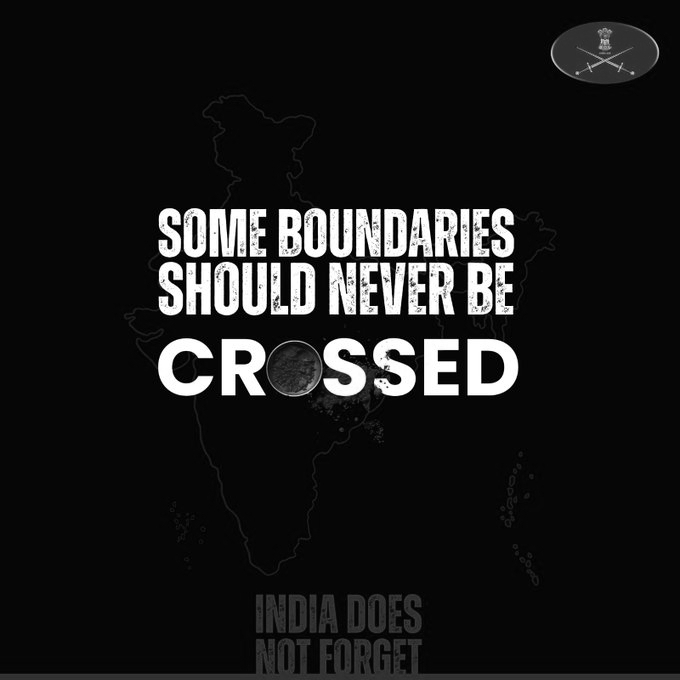
Some boundaries should never be crossed, and India does not, and will never, forget when they are. On April 22, 2025 , those boundaries were crossed in the most brutal way possible, in a sun drenched meadow in Kashmir that millions had known only as a place of beauty. Twenty six people were killed in Pahalgam , not in a war zone, not on a battlefield, but on a holiday. Tourists, husbands, fathers. Gone in under an hour.
The attackers were brazen. A young man carrying an AK 47 walked into a crowd of families and asked people their religion before opening fire. In a single hour, lives that had been full of laughter and travel plans were extinguished completely. It was not random violence. It was targeted, communal, and deliberate , designed to tear India apart from the inside. It did not succeed.
A year later, the meadow of Baisaran, once celebrated as the mini Switzerland of Kashmir , remains closed, sealed off by security cordons. In its place, near the bend of the Lidder River in the heart of Pahalgam town, a memorial wall now stands . Twenty six names etched in stone . Tourists pause at it. Locals bow their heads. The river flows beside it, steady and indifferent to grief.
India's response to the attack was neither immediate nor impulsive, it was calculated. On May 7, 2025, India launched Operation Sindoor , striking nine major terror launchpads across Pakistan and Pakistan occupied Kashmir, dismantling infrastructure belonging to Lashkar e Taiba, Jaish e Mohammed, and Hizbul Mujahideen . Over 100 terrorists were killed in the strikes. Pakistan hit back with drones and shelling, targeting places of worship across Jammu. India countered every move. After nearly 88 hours of conflict between two nuclear armed neighbours , Pakistan's DGMO reached out to his Indian counterpart. A ceasefire was agreed on May 10 . The message had been delivered, loud, precise, and unmistakable.
On the eve of the first anniversary, the Indian Army posted a stark, symbolic reminder on X, a silhouette of India's map, a bowl of sindoor, and words printed in crimson: "India does not forget." The caption read: "When boundaries of humanity are crossed, the response is decisive. Justice is Served. India Stands United." It was not a threat. It was a statement of record.
But beyond the military might and the national resolve, there are quieter, more personal reckonings happening across the country. Priyadarshini Acharya, whose husband Prasanta Kumar Satapathy was killed that day, says not a single day has passed without her thinking of him. A temporary job she once held casually is now her family's only means of survival. She is still waiting for the government job promised to victim families . Pragati Jagdale, another widow, says the government kept most of its promises, but urges that more youth be recruited into the armed forces, so no family endures what hers did. Her daughter Asavari, who was present during the attack, frames justice in simple, unflinching terms: India will truly have justice the day it becomes a terrorism free country .
In Pahalgam itself, daily life has resumed its rhythm, ponies carry tourists along the riverbank, shops have reopened, children play in the streets again. But beneath it all runs a quiet, persistent ache that locals say does not fade with time. India's military leadership has since described Operation Sindoor not merely as a strike, but as a redefinition of India's strategic posture , a signal to the world that terrorism will be met with precision, resolve, and consequence .
One year on, 26 names remain on that wall by the Lidder . The meadow stays closed. The families carry on. And India carries the memory, not as a wound that weakens, but as a resolve that holds firm. Some boundaries should never be crossed. They were. And India answered.