
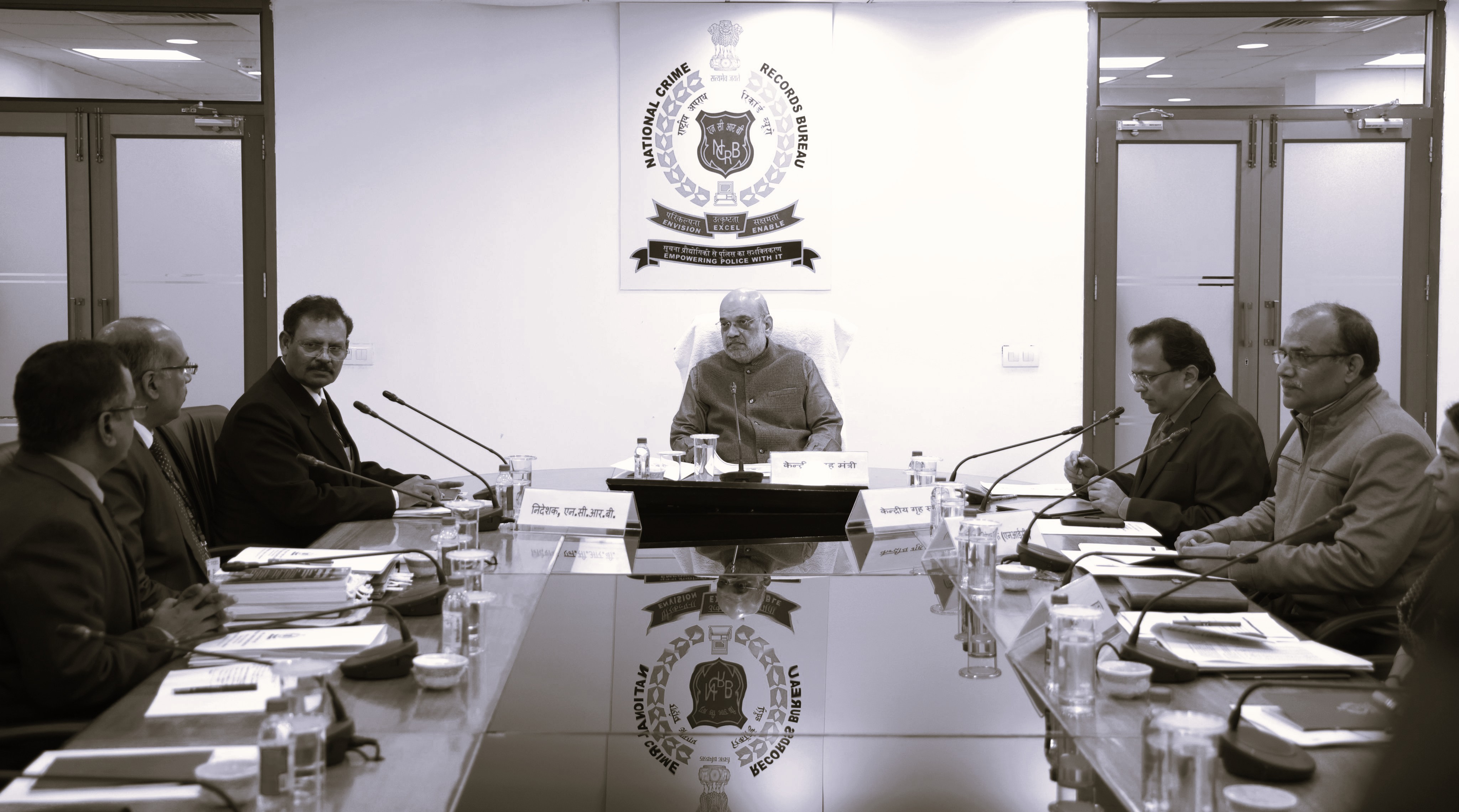
One year of new criminal laws - Amit Shah to launch awareness exhibition in Jaipur
Union Home Minister Amit Shah will inaugurate an exhibition in Jaipur on October 13 to mark one year since the three new criminal laws Bharatiya Nyaya Sanhita (BNS), Bharatiya Nagarik Suraksha Sanhita (BNSS), and Bharatiya Sakshya Adhiniyam (BSA) came into effect on July 1, 2024. The six-day event, to be held at the Jaipur Exhibition and Convention Centre (JECC) in Sitapura, will run from October 13 to 18 and showcase India’s major transition from colonial-era criminal legislation to a modern, citizen-centric justice system. Rajasthan Chief Minister Bhajanlal Sharma and Acting Chief Justice of the Rajasthan High Court Sanjeev Prakash Sharma will also attend the inaugural ceremony.
A curtain-raiser event was held on Saturday at the Rajasthan Police Headquarters, attended by Chief Secretary Sudhansh Pant, Additional Chief Secretary (Home) Bhaskar A Sawant, and DGP Rajeev Kumar Sharma. Speaking on the occasion, Pant highlighted that the new laws embody the democratic spirit of “for the people, by the people” and mark a historic transition from punitive colonial structures to justice-oriented reforms. DGP Sharma added that the reforms are designed to ensure timely and transparent justice, particularly for women, children, and vulnerable groups.
What the three new laws replace
The three new criminal laws replace the Indian Penal Code (IPC) of 1860, the Code of Criminal Procedure (CrPC) of 1898, and the Indian Evidence Act of 1872—all legacies of British rule. These colonial-era laws were largely drafted to protect imperial interests rather than citizens’ rights. The new legislations aim to modernise legal language, eliminate outdated provisions, and align India’s criminal justice system with present-day social realities. They also seek to make justice more accessible, technology-driven, and time-bound, reflecting the needs of a rapidly changing society.
Bharatiya Nyaya Sanhita (BNS) - Background and key changes
The Bharatiya Nyaya Sanhita (BNS) serves as the country’s new penal law, consolidating the IPC’s offences into fewer, more concise sections while retaining most substantive provisions. It introduces new offences related to organised crime, mob lynching, terrorism, and crimes against women and children. The law also introduces community service as a new form of punishment for minor offences marking a shift towards rehabilitative justice. Importantly, the controversial sedition law has been repealed and replaced with a provision that specifically targets acts threatening India’s sovereignty, unity, and integrity, removing vague colonial terminology.
Bharatiya Nagarik Suraksha Sanhita (BNSS) - Background and key changes
Replacing the CrPC, the Bharatiya Nagarik Suraksha Sanhita (BNSS) focuses on procedural reforms to make justice delivery speedier and more transparent. It introduces time-bound investigations and trials, ensuring accountability across all stages of criminal proceedings. The law empowers police to use technology-based tools, including video recording of statements and digital filing of charge sheets, to improve efficiency. It also expands custody provisions for serious crimes while strengthening safeguards for the accused. BNSS encourages the use of forensic and electronic evidence and streamlines case management to reduce trial delays and backlog.
Bharatiya Sakshya Adhiniyam (BSA) - Background and key changes
The Bharatiya Sakshya Adhiniyam (BSA), replacing the Indian Evidence Act, updates India’s rules of evidence for the digital era. It broadens the definition of admissible evidence to include electronic records, metadata, and digital communications, which were not recognised under the old law. The BSA also establishes stronger witness protection measures and introduces stricter chain-of-custody protocols to maintain integrity in evidence handling. These provisions aim to ensure fair trials and encourage witness participation while enhancing the reliability of electronic and forensic evidence in courts.
Major shifts compared with the old laws
The transition from the old colonial framework to the new system represents a foundational change in India’s approach to justice. The focus has moved from punishment to protection and participation, aiming to create a justice system that prioritises citizens over procedures. The new codes replace archaic British-era language with simplified and gender-neutral terminology, making laws easier to interpret and apply. They also introduce community-based rehabilitation, time-bound justice, and technology integration in trials and investigations. While certain punishments have been intensified for heinous crimes, the laws provide alternatives like community service for minor offences, encouraging restorative justice.
Another key transformation is the emphasis on digital governance. By institutionalising electronic evidence, online filing, and video hearings, the new system aligns with India’s Digital India initiative. The shift aims to build speed, transparency, and inclusivity in justice delivery. However, legal experts and civil society groups have called for careful implementation to ensure that expanded police powers do not compromise citizens’ rights.
Implementation and early impact
Since their enforcement on July 1, 2024, central and state governments have launched training programmes, awareness drives, and digital upgrades to support the transition. Police and judicial officers have undergone workshops to familiarise themselves with the procedural and technological reforms. Initial reports suggest a faster turnaround in investigations and greater use of digital tools for documentation and evidence management. However, experts stress that the long-term success of these reforms will depend on effective implementation, judicial oversight, and public awareness.
Why the Jaipur exhibition matters
The Jaipur exhibition aims to educate citizens, police personnel, legal professionals, and students about the new laws and their impact on justice delivery. It will feature interactive displays, multimedia presentations, and panel discussions highlighting the reforms’ objectives and early outcomes. Officials said such exhibitions play a crucial role in promoting legal literacy and fostering confidence among citizens about India’s shift from colonial control to democratic justice.
Chief Secretary Sudhansh Pant remarked that these reforms embody the principle of governance “for the people, by the people,” while DGP Rajeev Kumar Sharma underlined the importance of ensuring timely and transparent justice for vulnerable sections. With the new laws completing their first year, the Jaipur exhibition stands as a symbol of India’s determination to make its criminal justice system fair, efficient, and future-ready.