
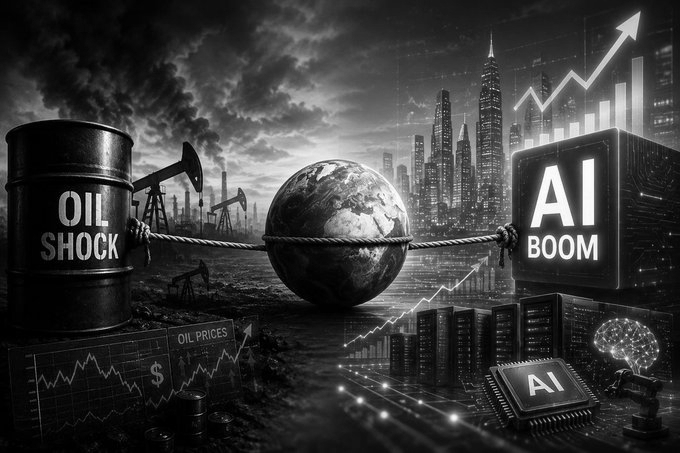
Oil Shock vs AI Boom: IMF Warns Global Economy Is Caught In A Tug-of-War
The global economy is facing a rare balancing act as the fallout from the Strait of Hormuz closure collides with a powerful wave of investment in artificial intelligence, IMF Managing Director Kristalina Georgieva said.
Georgieva said the world economy had absorbed the energy shock from the West Asia crisis “better than we feared”, helped by withdrawals from oil and gas reserves and increased supplies from outside the Gulf region. At the same time, the rapidly expanding AI industry is providing an important boost to global demand and investment.
“What started out as a US phenomenon with AI is now becoming a growth engine for the global economy,” Georgieva told reporters ahead of next week’s G20 finance ministers’ meeting in Asheville, North Carolina. Countries are increasingly investing in data centres and related infrastructure, extending the AI boom beyond the United States.
But the IMF chief warned that the two forces are pulling the global economy in opposite directions. The West Asia energy shock represents a negative supply shock, while AI investment is creating a positive demand shock. Their combined impact will vary significantly depending on how exposed individual countries are to energy disruptions, economic vulnerabilities and their position in the AI supply chain.
The risks, however, remain tilted to the downside. Georgieva pointed to rising bond yields, mounting fiscal pressures and stalled disinflation as growing concerns for policymakers and financial markets.
She also cautioned that the energy crisis may not be over. With oil and gas reserves declining and the northern hemisphere winter approaching, another surge in energy prices could reignite inflation and force central banks to maintain restrictive monetary policies. That could increase debt-servicing costs and weaken economic activity.
The AI boom itself carries uncertainties, including potential financial stability risks. Developing and low-income economies face an additional challenge: falling behind in AI adoption while remaining vulnerable to expensive fuel, fertiliser and commodity imports.
For poorer countries, prolonged disruptions could worsen food insecurity, particularly when combined with extreme weather.
The IMF had cut its 2026 global growth forecast to 3 per cent in July, citing risks from the West Asia conflict, trade fragmentation and uncertainty surrounding AI. Its next outlook revision is expected in mid-October during the IMF-World Bank annual meetings in Bangkok.