
Odisha’s Nuagaon Anganwadi dispute ends as children return, Dalit helper welcomed
A three‑month-long caste dispute that paralysed an Anganwadi centre in Nuagaon village of Odisha’s Kendrapara district has been resolved, as children returned to the facility and parents agreed to accept food prepared by a Dalit helper, restoring normal operations to the rural childcare and nutrition centre.
Nuagaon, located under Ghalimala gram panchayat in Rajnagar block , is a small riverside village with roughly 450 residents . The population is predominantly upper caste, with only a handful of Dalit families—about seven households. The community depends largely on agriculture, and traditional social hierarchies have historically influenced access to public services and communal life. The village anganwadi serves about 20 children , providing early education, supplementary nutrition, and support to pregnant and lactating women under India’s Integrated Child Development Services (ICDS) scheme.
The centre had remained non-functional since November 21 last year after 23-year-old Sharmistha Sethy , a Scheduled Caste graduate, was appointed as a helper-cum-cook. Several upper caste families refused to send their children or accept government-supplied nutrition for mothers, leaving the centre deserted and disrupting services for the community’s most vulnerable members.
The standoff drew national attention, with Congress president and Leader of the Opposition in Rajya Sabha, Mallikarjun Kharge , raising the issue in Parliament. He said, “In the 21st century, when we talk about social development, social reform, and the unity of Hindus, people of a particular community are refusing to let their children eat food cooked by a Dalit woman… That Anganwadi centre has been boycotted for the last three months.” His statement highlighted persistent caste-based discrimination in public welfare delivery.
To resolve the deadlock, the district administration , Odisha State Commission for Women, the State Commission for Protection of Child Rights (SCPCR) , and local leaders engaged with the community. Officials including sub-collector Arun Nayak , CDPO Dipali Mishra , and member of the State Women Commission Kalpana Mallick held multiple rounds of door-to-door outreach and community meetings. Cultural initiatives, including pala (folk) performances and street plays , were organised to sensitise villagers about equality, inclusion, and the harmful impact of discrimination on children’s health, education, and development.
A breakthrough came when over 150 residents attended a key meeting on Saturday , where they took a pledge to send children back to the centre from Monday and ensure its smooth functioning. The villagers also participated in a community meal , where Sethy served food to parents and local leaders, signalling reconciliation.
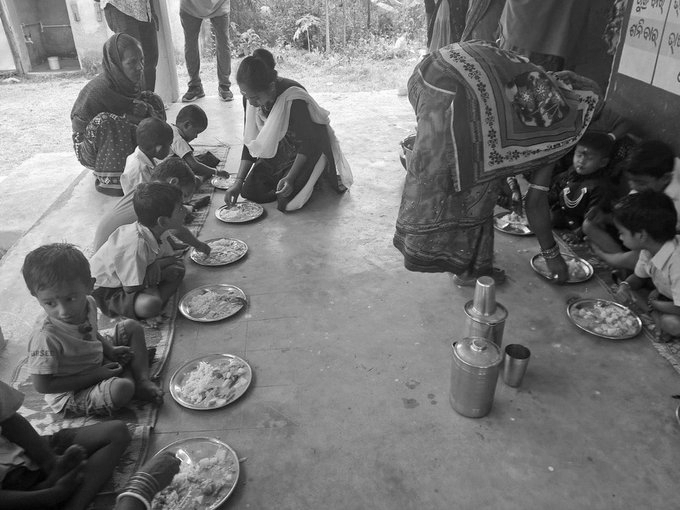
On Monday, 16 of the 20 enrolled children returned with their parents and consumed meals prepared by Sethy, while four were absent due to illness. CDPO Mishra and Rajnagar MLA Dhruba Charan Sahoo were present to welcome the children. Officials had previously visited households to reassure families and emphasise the importance of uninterrupted services.
Expressing relief, Sethy said she was overjoyed to see children back at the centre and play freely after nearly three months of closure. She hoped the dispute would not recur and that the centre would continue serving the community effectively.
Kendrapara MP and BJP national vice president Baijayant Panda , a member of the Brahmin community, visited the village on Sunday, shared a meal prepared at the Anganwadi, and lauded the community and administration for coming together to prioritise children’s welfare. Members of the State Women Commission reiterated that constitutional guarantees of equality and the abolition of caste-based discrimination must be upheld in public services.
Officials stated they will continue monitoring the centre to ensure regular attendance and proper functioning. Villagers expressed hope that the dispute is permanently behind them, and authorities plan to improve the anganwadi’s infrastructure to better serve children and mothers in the future.