
Odisha Welcomes New Year with Maha Bishuba Sankranti’s Rich Traditions and Spiritual Fervour
Odisha marked its traditional New Year, Maha Bishuba Sankranti , with vibrant rituals, spiritual fervour, and a renewed sense of cultural pride, as communities across the state came together to celebrate one of the region’s most significant festivals. Popularly known as Pana Sankranti , the occasion signifies the beginning of the Odia calendar and reflects a deep connection between nature, spirituality, and seasonal transition.
Observed annually around mid-April, the festival coincides with the Sun’s transition into the Aries zodiac, symbolizing cosmic balance and the onset of warmer days. The term “Bishuba” denotes the idea of equal day and night, while “Sankranti” marks a celestial shift, making the day both astronomically and culturally important. Rooted in agrarian traditions, the festival underscores the importance of water, harvest cycles, and harmony with nature.
At the heart of the celebrations are rituals performed at the revered Jagannath Temple, where priests ceremonially read the new almanac (Panji) before the deities, signalling the beginning of a new year. Devotees throng temples across the state, offering prayers, donning new clothes, and seeking blessings for prosperity and well-being. The spiritual significance of the day is closely associated with Lord Jagannath, whose blessings are considered central to the festival.
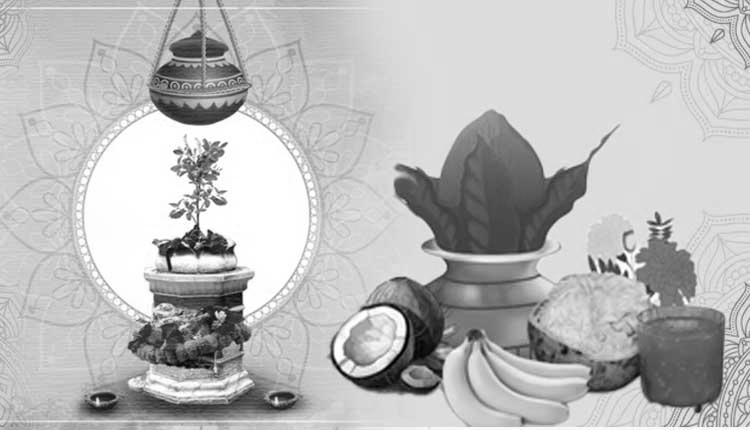
A defining feature of Maha Bishuba Sankranti is the preparation and offering of the traditional drink ‘pana’ , a cooling mixture made of water, jaggery, yoghurt, fruits, and spices. The drink is first offered to deities and later shared among people, symbolizing nourishment, relief from the summer heat, and communal harmony. Complementing this is the Basundhara Theki ritual, where a water-filled earthen pot is suspended above a Tulsi plant, allowing water to drip slowly throughout the day an act that reflects reverence for nature and the life-sustaining role of water.
In several parts of Odisha, the festival is marked by intense expressions of faith such as Jhamu Jatra , where devotees walk barefoot over burning charcoal as an act of penance and gratitude. These rituals, though physically demanding, highlight unwavering devotion and spiritual discipline. Regional variations further enrich the festival’s diversity, with it being observed as Chadak Parva in northern Odisha and Danda Nata in southern regions, each featuring unique performances and traditions rooted in local culture.
Beyond Odisha, the festival aligns with a broader cultural phenomenon across India, coinciding with regional New Year celebrations such as Baisakhi, Vishu, Bohag Bihu, and Puthandu. This convergence reflects a shared civilizational rhythm where diverse communities celebrate renewal, harvest, and hope during the same seasonal transition.
In contemporary times, Maha Bishuba Sankranti has evolved into more than a religious observance. It stands as a powerful symbol of Odia identity , cultural continuity, and community bonding. With participation from the global Odia diaspora and increased digital engagement, the festival continues to gain wider recognition while preserving its traditional essence.
As Odisha steps into a new year, the celebration of Maha Bishuba Sankranti reaffirms the enduring values of faith, resilience, and harmony with nature principles that remain central to the state’s cultural fabric.