
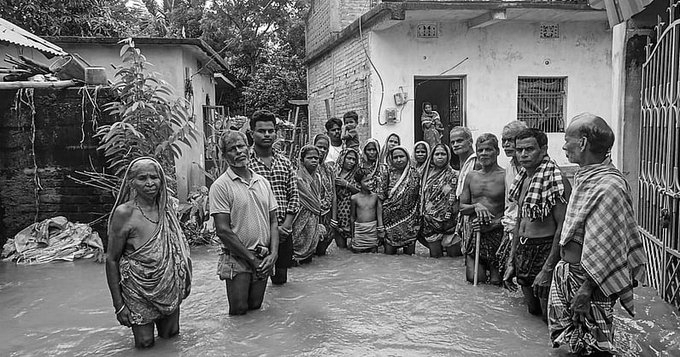
Odisha Flood Crisis Deepens, 5.15 Lakh Affected, 2.37 Lakh Evacuated
The flood crisis in Odisha intensified on Sunday as heavy rain continued across the state, with around 5.15 lakh people affected and 2.37 lakh evacuated to safer locations, officials said. The latest situation has prompted the state government to place the administration on high alert.
The flooding has affected 49 blocks, 331 gram panchayats, 947 villages and five urban areas. A total of 293 relief camps are currently providing cooked food, dry rations and other essential supplies to displaced residents.
Chief Secretary Anu Garg reviewed the situation on Sunday and directed district Collectors and departments to intensify rescue, relief and restoration operations. Leave of government employees has been cancelled, with personnel asked to remain available for emergency duties. Senior officers have also been deployed to Balasore, Bhadrak and Jajpur, among the worst-affected districts.
The state has deployed 36 ODRAF teams, seven NDRF teams and 43 Fire Services teams in vulnerable areas. Water Resources officials are monitoring embankments, while health teams have been deployed with essential medicines and anti-snakebite injections. Flooding has also disrupted electricity supplies to around 75,000 consumers, with restoration planned as water levels recede.
The weather situation has added to concerns. The India Meteorological Department (IMD) said a fresh low-pressure area has formed over the northwest Bay of Bengal and adjoining West Bengal-North Odisha coasts. The system is expected to intensify and could concentrate into a depression within the next 24 hours.
The IMD has issued red warnings for Balasore, Bhadrak, Jajpur, Mayurbhanj and Keonjhar, with heavy to very heavy rainfall expected through August 18 and isolated extremely heavy rain likely on August 17. Fishermen have been advised not to venture into the sea along the Odisha and adjoining coasts.
Odisha has received 953 mm of rainfall since June 1, 27% above normal, underscoring the continued risk of further flooding.