
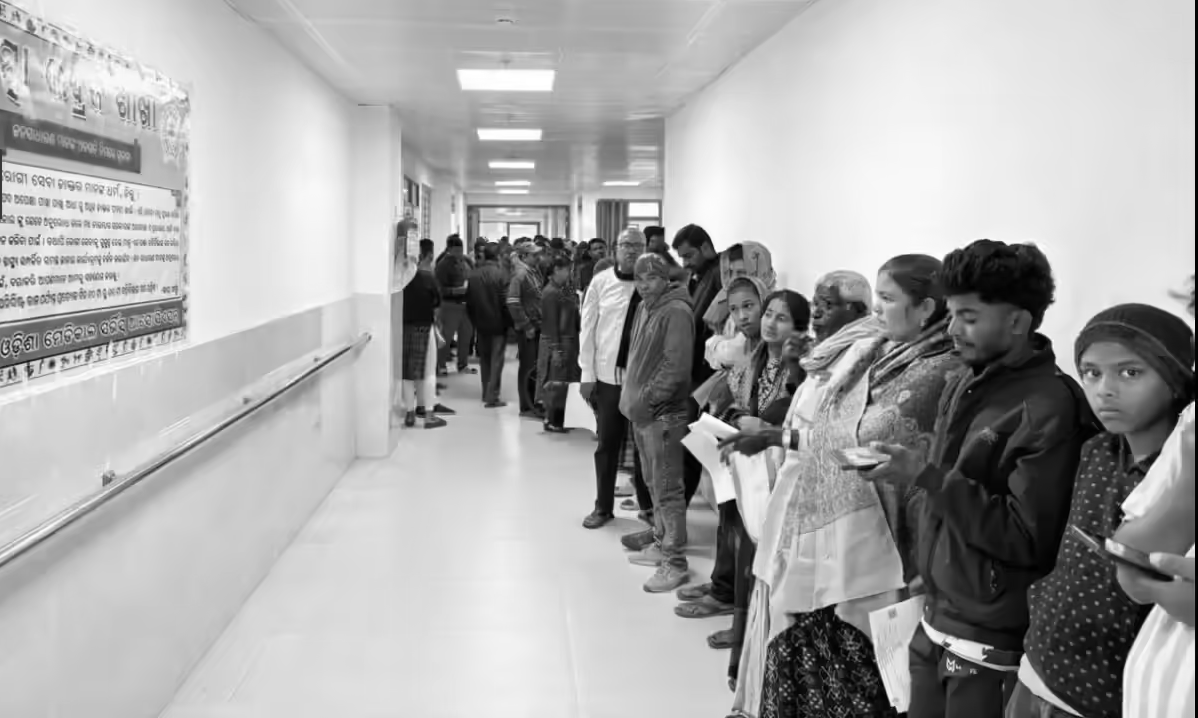
Odisha Doctors Boycott OPD services for 2 hours, demand filling of vacant posts
Outpatient department (OPD) services across state-run hospitals in Odisha were partially disrupted on Monday morning after government doctors boycotted work for two hours, pressing the state government to address long-pending service-related demands.
Members of the Odisha Medical Service Association (OMSA) stayed away from OPD duties between 9 am and 11 am, demanding the implementation of their 10-point charter, chief among them the filling up of more than 50 per cent vacant doctor posts in government hospitals. The association said the acute shortage of manpower has placed excessive workload on existing doctors, affecting both service delivery and their working conditions.
OMSA president Kishore Mishra said the agitation began on November 20, initially in a symbolic form with doctors wearing black badges while attending duty. “From December 26, we started a one-hour OPD boycott, which has now been extended to two hours daily,” Mishra said. He added that the protest would continue every day from 9 am to 11 am at all levels of public healthcare facilities, from primary health centres to district headquarters hospitals.
Emergency services, inpatient care and surgical procedures remained unaffected during the protest, the OMSA clarified, stating that no patient would be denied essential healthcare as doctors would resume work after the boycott hours.
According to OMSA, Odisha currently has a little over 6,000 government doctors against a sanctioned strength of 15,776, leaving more than half the posts vacant. The association said the shortage has resulted in longer working hours, increased patient load and professional burnout among doctors.
Health Minister Mukesh Mahaling appealed to the protesting doctors to withdraw the agitation, stating that the government was “sympathetically considering” their demands. He said an inter-departmental committee has been constituted to examine the issues raised by OMSA.
However, Mishra expressed scepticism over such assurances, noting that a similar ministerial committee was formed by the previous BJD government without any concrete outcome. “We have no faith in committees. We urge the Chief Minister to intervene directly and resolve the problem,” he said.
In addition to filling vacant posts, OMSA’s demands include pay parity with central government doctors, proportional restructuring of medical cadres across all levels, enhanced financial incentives for super-specialists, specialists and diploma medical administrators, postmortem allowance, and performance-based incentives.