
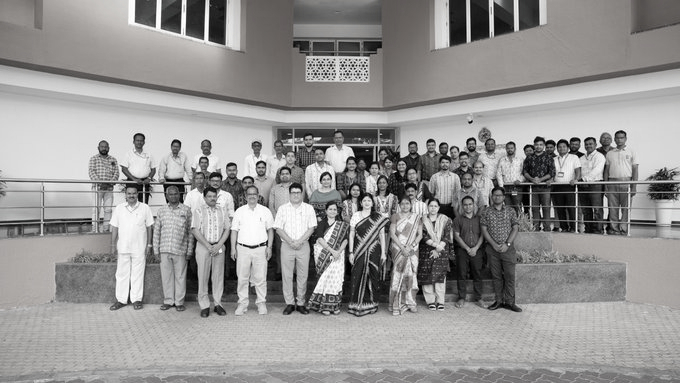
Odisha celebrates ‘Ama Poshak Ama Parichaya’ Day, showcasing handloom heritage
People across Odisha on Thursday celebrated Ama Poshak Ama Parichaya Day, donning traditional handloom attire to highlight the state’s rich cultural identity and textile heritage.
The observance forms part of the ongoing Odia Pakhya, a 14-day cultural initiative being held from April 1 to 14 under the aegis of the state’s Odia Language, Literature and Culture Department.
On the second day of the celebrations, participation was witnessed across districts, with citizens, students and government officials wearing indigenous garments as a mark of pride. Offices, including the Lok Seva Bhawan, saw employees turning up in traditional attire in support of the initiative.
The phrase “Ama Poshak Ama Parichaya,” which translates to “Our Attire, Our Identity,” reflects the central theme of the day linking clothing with cultural expression. Handloom products, long regarded as symbols of Odisha’s heritage and diversity, remained at the core of the celebrations.
Officials said discussion sessions and awareness programmes were organised in several districts on the theme “Handloom and Weaving Industry of Odisha,” focusing on the significance of preserving traditional weaving practices and supporting artisans.
The initiative also seeks to boost the state’s handloom sector, known for distinctive weaves such as Sambalpuri, Bomkai and Ikat. By encouraging people to wear locally produced fabrics, the campaign aims to generate demand and provide economic support to weavers.
Beyond its economic dimension, the observance carries cultural importance, reinforcing regional identity in an era of rapid modernisation. It promotes awareness among younger generations about Odisha’s traditions and encourages continued engagement with indigenous art forms.
Odia Pakhya, which celebrates various aspects of Odia language, culture, cuisine and heritage, will culminate on April 14 with Odia New Year (Pana Sankranti).
The celebrations underline a broader effort by the state to preserve its cultural legacy while ensuring the continued relevance of traditional industries in a changing socio-economic landscape.