
Oceans of opportunity - India’s next growth frontier
Waves crashing against the Kovalam shore will serve as the backdrop to one of India’s most significant maritime gatherings in recent years. On September 18, the two-day Blue Economy Conclave titled “Blue Tides - Two Shores One Vision” will begin at The Leela Raviz, bringing together over 500 delegates, ministers, investors, and global experts to chart a sustainable ocean future for India.
The conclave, organized by the Kerala Department of Fisheries in partnership with the Government of India and the European Union (EU), aims to unlock the vast economic and ecological potential of India’s seas. Chief Minister Pinarayi Vijayan will inaugurate the event on September 19, with Fisheries Minister Saji Cherian presiding. EU Ambassador Hervé Delphin will deliver the keynote, signaling the strong role Europe is expected to play in shaping India’s maritime future.
High-profile attendees include Union Fisheries Minister Rajiv Ranjan Singh, Union Ports Minister Sarbananda Sonowal, Kerala Finance Minister K.N. Balagopal, and industry leaders such as Lulu Group chairman M.A. Yusuff Ali. Delegates from 29 European nations including Germany, France, and the Netherlands will explore partnerships spanning marine logistics, fisheries, aquaculture, renewable energy, coastal tourism, and green technologies.
For Kerala, with its 590-km coastline and centuries-old fishing heritage, the conclave is both a stage and a statement. It positions the state as a model for resilient coastal development and places India firmly in the conversation on global ocean governance.
Understanding the Blue Economy
At its heart, the blue economy is about using the ocean not as an exhaustible frontier but as a renewable engine of growth. Coined by Belgian economist Gunter Pauli in the early 1990s and later popularized by the World Bank, the concept emphasizes sustainable use of marine resources for economic growth, improved livelihoods, and environmental health.
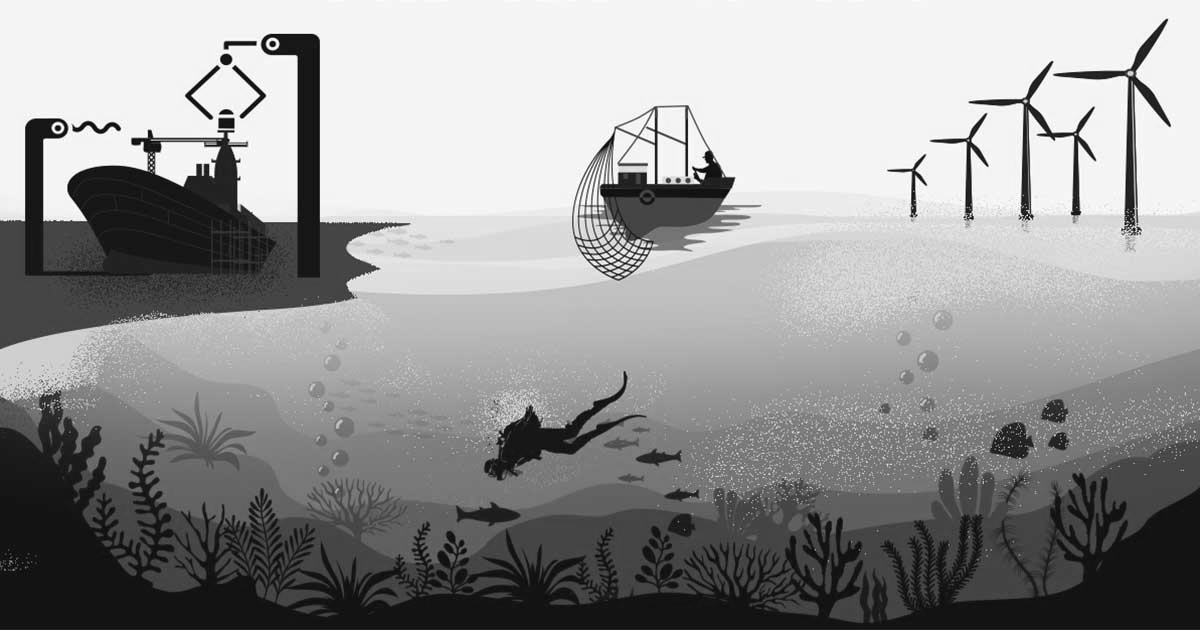
It covers a wide range of sectors: fisheries, aquaculture, shipping, coastal tourism, marine biotechnology, offshore wind, tidal power, and even deep-sea mining. Unlike traditional exploitation, which often resulted in overfishing, pollution, and habitat destruction, the blue economy insists on regenerative practices. Its framework aligns closely with the UN’s Sustainable Development Goal 14: Life Below Water.
Globally, the ocean economy is valued at over $1.5 trillion annually, providing food, jobs, and stability to 3 billion people and generating 350 million jobs. For India with its 7,500-km coastline, 2 million sq km Exclusive Economic Zone (EEZ), and prime location in the Indian Ocean the stakes are massive. Analysts project the blue economy could be worth $100 billion by 2025 and five times that by 2030 if sustainability and innovation remain at its core.
Why India must lead
India’s demographic and geographic realities leave it little choice but to embrace the blue economy. With a population of 1.4 billion and mounting pressure on land resources, the ocean is a natural frontier for growth.
The sector already contributes around 4% to India’s GDP and provides direct or indirect employment to nearly 30 million people. Maritime trade is the backbone of the economy, with 95% of cargo by volume moving through sea routes. Expanding ocean-based industries can diversify exports, enhance food and energy security, and create up to 10 million new jobs by 2030.
There is also a strategic imperative. The Indian Ocean carries 80% of the world’s oil shipments and nearly half of container traffic. India’s location astride these lanes gives it natural leverage, but also responsibilities. China’s aggressive expansion in the Indo-Pacific from port projects to aquaculture dominance has made it clear that maritime leadership is a contest India cannot afford to lose.
India’s ocean harvest
India today ranks as the world’s second-largest fish producer, with output reaching 18.4 million metric tons (MMT) in FY 2023-24 almost double what it produced a decade ago. The bulk of this comes from inland fisheries, which contribute nearly three-quarters of total production. Andhra Pradesh alone produces over 5.1 MMT, riding high on its shrimp aquaculture boom. Marine capture fisheries, though smaller at 4.5 MMT, remain vital for states like Gujarat, Kerala, and Tamil Nadu.
Yet the trends reveal a challenge. Growth in marine catch has slowed, even declining in recent years, while inland aquaculture continues to expand. Overfishing, habitat loss, and climate-induced migration of species are eroding traditional livelihoods along the coasts. This is precisely why the Kerala conclave will focus on sustainability, ecosystem-based management, and EU-style traceability systems.
State champions of the Blue economy
The story of India’s blue economy is being written state by state along its coastline:
• Andhra Pradesh is the undisputed leader, producing over a quarter of the nation’s fish and powering 40–50% of shrimp exports. With mega-ports at Visakhapatnam and Kakinada and over a lakh shrimp farms, the state has become the poster child of aquaculture-driven growth.
• West Bengal , with its vast riverine and mangrove ecosystems, contributes 8% of production, focusing on hilsa and freshwater prawns. Its export share may be modest, but initiatives like women-led processing clusters show its inclusive potential.
• Gujarat dominates in marine capture fisheries, landing around 0.7 MMT annually, especially sardines and squid. Its massive ports Mundra and Deendayal double up as seafood export hubs, sending over $1.5 billion worth of marine products abroad each year.
• Kerala shines in high-value exports like cuttlefish, squid, and prawns, accounting for nearly a fifth of India’s seafood export earnings. Its backwaters and natural harbors make it a natural hub for marine tourism and processing industries.
• Tamil Nadu combines aquaculture with strong port logistics, exporting $800–900 million in marine products while pioneering ornamental fish clusters and mangrove restoration projects.
Marine exports - Shrimp nation
India ranks fourth globally in marine exports, shipping 1.78 MMT worth $7.38 billion in FY 2023-24. Frozen shrimp is king, contributing three-fourths of the value. The United States buys 40% of Indian shrimp, followed by the EU and China.
But experts warn of over-dependence. Price volatility, disease outbreaks in shrimp farms, and trade barriers make diversification urgent. Fish fillets, cuttlefish, squid, and value-added products are promising areas. The Marine Products Export Development Authority (MPEDA) has set a bold target of $14 billion by 2025, hinging on traceability, eco-labels, and EU collaborations.
India’s maritime strength also rests on its ports. Thirteen major and over 200 minor ports together handle 819 million metric tons annually, with capacity exceeding 2.6 billion tons. Sagarmala, the flagship modernization program, has already reduced turnaround times and expanded container capacities. New projects like Vadhavan in Maharashtra, Vizhinjam in Kerala, and Galathea Bay in the Andamans will transform India into a true transshipment hub, reducing dependence on Singapore or Colombo.
Yet challenges remain: logistics costs are 14% of GDP, nearly double China’s; many ports lack deep drafts for mega-ships; and green port initiatives are still in infancy.
Closing gaps - The road ahead
For India to lead in the blue economy, experts point to five urgent priorities:
• Modern Ports – Expand capacity to 3,500 MMT by 2030 and invest in green energy-based infrastructure.
• Sustainable Fisheries – Combat illegal and unregulated fishing, adopt AI-based monitoring, and expand aquaculture responsibly.
• Renewables & R&D – Harness offshore wind (target: 30 GW by 2030), invest in marine biotech, and double research spending.
• Climate Resilience – Restore mangroves, tackle plastic waste, and integrate ocean policy with climate adaptation.
• Skill Development – Train 1 million coastal workers in modern aquaculture, logistics, and marine technologies.
The Draft National Policy on Blue Economy (2021) and Maritime Amrit Kaal Vision 2047 provide the framework. But much will depend on states like Kerala and their ability to partner globally.
Kerala’s moment on the global stage
As Chief Minister Pinarayi Vijayan prepares to open the conclave, Kerala has a chance to showcase its dual identity, a state deeply rooted in traditional fishing communities yet eager to embrace green technologies and global partnerships. By bringing Europe to Kovalam’s shores, the conclave represents more than just a conference. It is a signal that India, standing at the crossroads of trade, climate action, and sustainable growth, intends to lead the global conversation on oceans. As Vijayan put it: “Kerala’s coasts hold immense potential, let's tide together for a sustainable future.” If India seizes this moment, the blue economy could be more than a buzzword; it could be the anchor of a $10 trillion economy by 2047.