
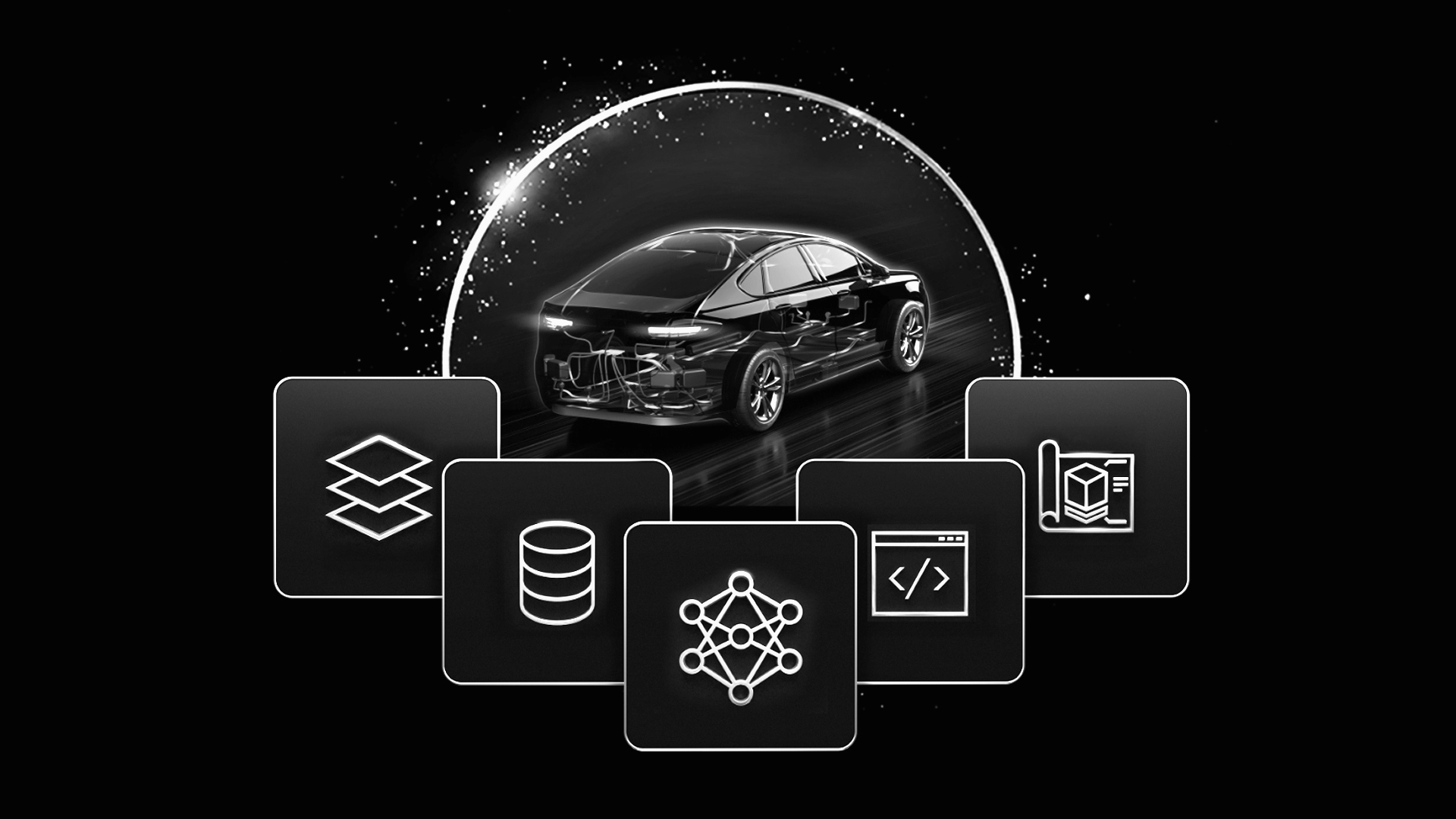
NVIDIA’s Alpamayo 1 signals new push into self-driving software
NVIDIA marked a major expansion of its ambitions in autonomous driving at CES 2026 in Las Vegas , unveiling Alpamayo 1 , its flagship artificial intelligence model designed to power next-generation self-driving vehicles. The announcement underscores NVIDIA’s shift beyond its traditional role as a chipmaker, positioning the company as a serious software player in the fast-evolving mobility and autonomous vehicle ecosystem.
Alpamayo 1 is built on Vision-Language-Action (VLA) technology, an emerging AI approach that allows vehicles to interpret visual inputs from cameras, understand context using language-based reasoning, and translate that understanding into driving actions. Notably, the model operates solely on camera data , mirroring a strategy popularised by Tesla, and does not depend on LiDAR( it is a sensing technology that uses laser pulses to measure distances and create detailed 3D maps of surroundings) or radar sensors.
The model has been trained on more than 1,700 hours of driving data , complemented by advanced simulation tools that expose the system to a wide range of driving conditions and edge cases. These simulations are designed to accelerate learning in scenarios that are rare or difficult to capture in real-world driving, such as unusual road layouts, erratic driver behaviour, or extreme weather conditions.
In a move aimed at encouraging industry adoption and developer collaboration, NVIDIA has made Alpamayo 1 open-source on Hugging Face , a widely used platform for AI models. By opening access to its core technology, NVIDIA is betting that transparency and ecosystem development will accelerate innovation and position its DRIVE platform as a standard for autonomous vehicle development.
The commercial rollout of the technology is already underway. Mercedes-Benz plans to deploy Alpamayo 1 in its CLA sedans , which are expected to hit U.S. roads in the near future. The vehicles will run on NVIDIA’s DRIVE AV stack , a full-stack autonomous driving solution that integrates AI models, simulation, and in-vehicle computing hardware.
The announcement has drawn attention from across the industry, including from Tesla CEO Elon Musk , whose company has pursued a similar camera-only approach through its Full Self-Driving (FSD) system. Musk acknowledged the parallels between NVIDIA’s strategy and Tesla’s own work, while underscoring the core challenge facing all autonomous driving systems: handling rare and unpredictable “long-tail” events are rare, unusual situations that occur infrequently but are hard to predict and difficult for systems to handle safely.
“These edge cases are what ultimately determine safety and reliability,” Musk has previously argued, pointing out that real-world deployment at scale is critical for collecting the data needed to address them. While wishing NVIDIA success, Musk also highlighted Tesla’s perceived advantages, particularly its vast fleet-generated data and its ability to deploy frequent over-the-air software updates to vehicles already on the road.
For NVIDIA, the push into autonomous driving software represents a broader strategic shift. The company has long dominated the AI hardware market, but Alpamayo 1 signals its ambition to become a central software platform provider for the automotive industry. By combining open-source AI, simulation-driven training, and partnerships with established automakers, NVIDIA is positioning itself at the intersection of artificial intelligence, transportation, and real-world deployment.
As competition intensifies among technology firms and automakers alike, the success of Alpamayo 1 will depend not only on technical performance but also on how effectively NVIDIA can scale adoption, navigate safety regulations, and prove its systems in everyday driving conditions. With production vehicles already planned, the next phase of the autonomous driving race is set to move from research labs to public roads.