
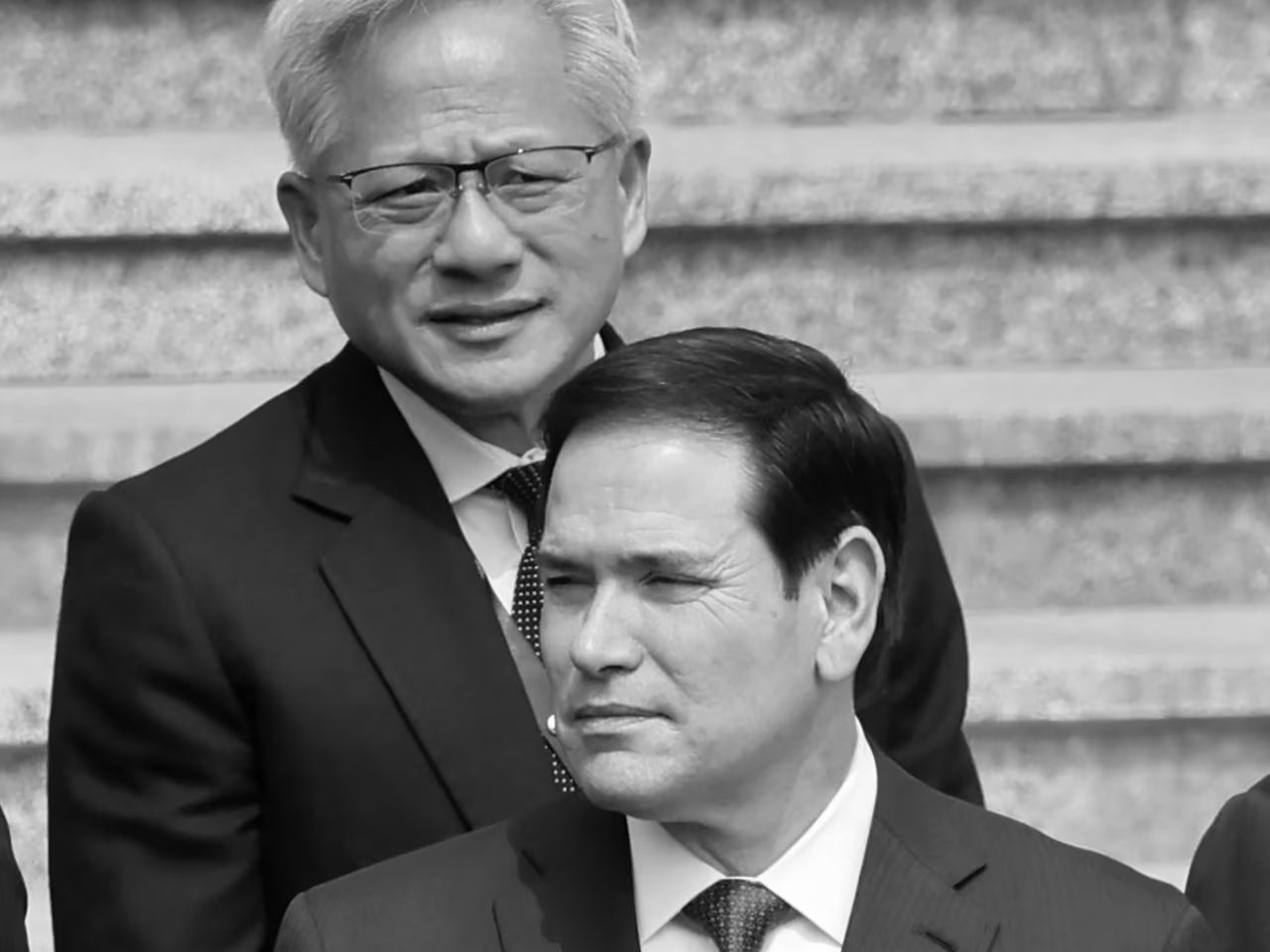
Nvidia Row: Hegseth Pitched Wartime Law To Bring Jensen Huang Back As Rubio Raised China Fears
US President Donald Trump’s intervention to reinstate Jensen Huang as Nvidia CEO has exposed divisions within his administration over national security, China and the semiconductor industry. The controversy widened after a report revealed that Defence Secretary Pete Hegseth and senior Pentagon officials considered using a Cold War-era law to pressure Nvidia into bringing Huang back.
According to The Washington Post, Hegseth and Deputy Defence Secretary Steve Feinberg discussed invoking the Defense Production Act (DPA), which allows the president to prioritize or redirect private-sector production during national emergencies. The proposed strategy involved pushing Nvidia to divert more manufacturing towards military projects, potentially hurting its commercial production and profits. However, the law does not provide a clear route to force a private company to appoint a particular CEO.
The discussions came as Trump and Vice President JD Vance worked to secure Huang’s reinstatement. Nvidia’s board restored him on November 23, after he stepped aside on November 12 amid revelations about his relationship with Alice Huang, a former Megaspeed executive suspected of having links to Chinese intelligence.
The controversy has also exposed differences between Vance and Secretary of State Marco Rubio, who reportedly prepared a classified intelligence memorandum warning that Alice Huang had been recruited by China. Rubio's assessment drew on intelligence about her contacts with individuals associated with China's Ministry of State Security. He had also briefed Trump about the concerns during their May trip to China. Rubio was reportedly caught off guard by Huang's reinstatement.
Vance, however, said on Wednesday that Attorney General Todd Blanche and other officials had assured him Huang was not under investigation. He dismissed the allegations against the Nvidia chief as claims based on anonymous sources rather than established evidence. Trump has similarly defended Huang, saying his administration had found no national security threat from his return.
US intelligence agencies have not reached a common conclusion about Alice Huang. The FBI reportedly found insufficient evidence to establish that she was a Chinese intelligence officer or asset, while CIA assessments remained inconclusive about whether she accessed or transferred sensitive information. Investigators are also examining whether Megaspeed diverted Nvidia chips to China in violation of US export controls.
Huang's return also carries economic significance for Israel, where Nvidia operates seven research centres employing around 6,000 people. Its planned multibillion-shekel campus in Kiryat Tivon is expected to accommodate 10,000 employees. Israeli Prime Minister Benjamin Netanyahu and President Isaac Herzog welcomed Huang's comeback, highlighting the company's deep technological and economic ties with the country.
Meanwhile, Nvidia's board has said its internal investigation will continue. The episode has raised wider questions about corporate independence, political influence and whether America's dependence on Nvidia's AI technology is increasingly shaping national security decisions.