
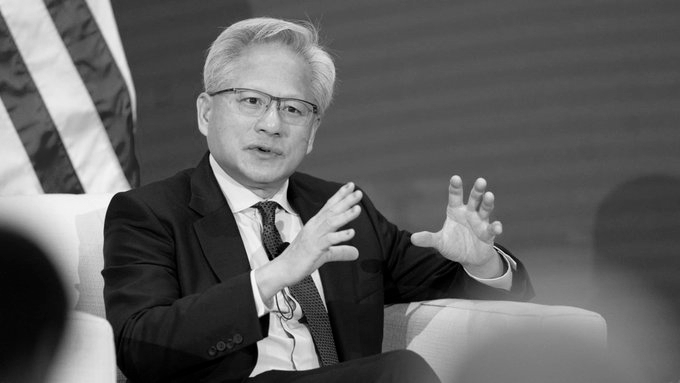
NVIDIA Buys Hugging Face for $12.9 Billion, Deepens Push Into AI
NVIDIA has agreed to acquire AI startup Hugging Face for $12.9 billion, marking one of the technology industry’s largest deals and deepening the chipmaker’s push to expand its presence across the rapidly growing artificial intelligence ecosystem.
Founded in 2016 by French entrepreneurs Clement Delangue, Julien Chaumond and Thomas Wolf, New York-based Hugging Face has emerged as a major platform for the global open AI community. NVIDIA CEO Jensen Huang said the acquisition will help scale Hugging Face’s platform, strengthen its infrastructure and broaden access to AI for developers and institutions worldwide.
Huang described Hugging Face as a “vibrant home for the open model developer community.” More than 18 million developers, researchers and creators use the platform to share over 3 million models, 500,000 datasets and 1 million applications. More than 200,000 companies also rely on Hugging Face to discover, evaluate, customise and deploy AI technologies.
Despite the acquisition, NVIDIA said Hugging Face will remain an open platform for the wider AI ecosystem. Developers will continue to have the freedom to choose their preferred models, frameworks, cloud providers, inference services and computing platforms. Importantly, Huang said NVIDIA computing will not be mandatory for building or deploying applications through Hugging Face.
The platform will also continue supporting open-source and open-weight AI models developed across the industry. Huang said such models allow startups, businesses, universities and public institutions to use advanced AI capabilities without having to train every model from scratch.
According to Huang, open models can help organisations select the right technology for specific applications while supporting innovation, cybersecurity and technological sovereignty.
He said the partnership could accelerate the adoption of AI across sectors including factories, hospitals, farms, classrooms and small businesses.
“AI advances faster when people can build together,” Huang said, adding that the combined companies aim to make AI more open, capable and accessible worldwide.