
Nvidia at the Centre of U.S. Review Over Resuming Advanced AI Chip Exports to China
The United States has begun a formal review that could reopen the door for Nvidia’s advanced artificial intelligence chips to be sold to China, signalling a major shift in Washington’s technology and national security strategy. The move, initiated under President Donald Trump’s administration, places the world’s most valuable chipmaker at the heart of a renewed debate over economic power, military risk, and the future of artificial intelligence.
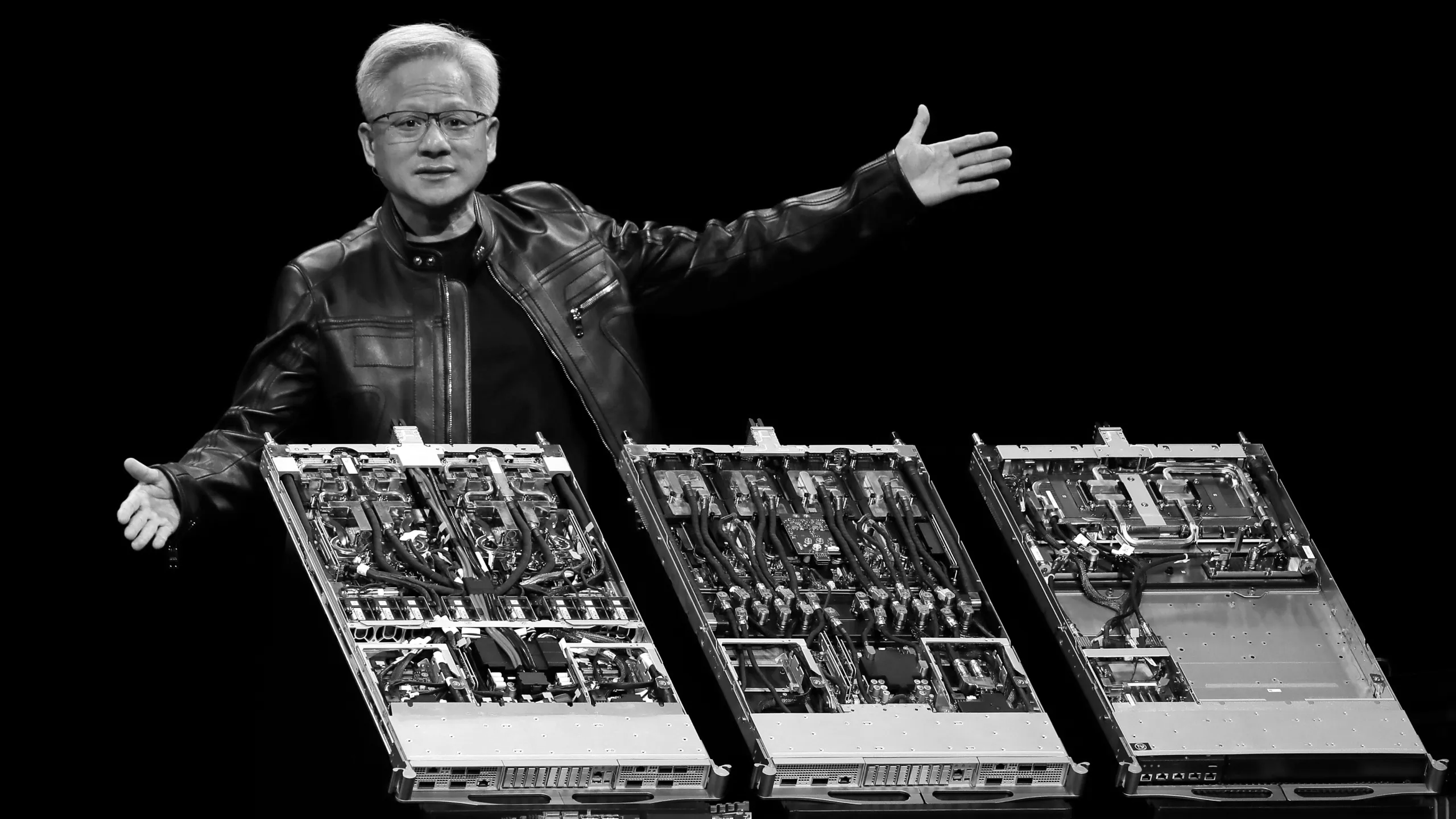
According to a Reuters report, the U.S. Commerce Department has launched an inter-agency licensing review for Nvidia’s H200 AI chips, circulating export applications to the State, Energy, and Defense Departments. These agencies have 30 days to weigh in, though the final decision rests with the president. If approved, it would mark the first time Nvidia’s second-most powerful AI chips are allowed into China since strict export controls were imposed under the Biden administration.
President Trump has publicly defended the move, arguing that permitting controlled sales while charging a 25 percent fee to the U.S. government would keep American firms ahead of Chinese competitors by discouraging Beijing from accelerating domestic chip development. The administration maintains that U.S. dominance in the global “tech stack” can be preserved without compromising national security.
Sharp political and security backlash
The proposal has drawn fierce criticism from China hawks across the U.S. political spectrum. Former national security officials argue that even “second-tier” AI chips such as the H200 can significantly boost China’s computing power when deployed at scale, potentially strengthening its military and surveillance capabilities.
Chris McGuire, a former White House National Security Council official under President Joe Biden, called the move a “significant strategic mistake,” warning that advanced AI chips are among the few remaining constraints on China’s AI ambitions. Lawmakers in Congress have also demanded briefings, raising concerns that the policy could undermine years of export-control efforts aimed at slowing Beijing’s technological rise.
Complicating the picture further is uncertainty on the Chinese side. Even if Washington approves exports, Beijing may quietly discourage or restrict domestic firms from buying U.S. chips as part of its broader push for semiconductor self-reliance. This creates a dual-gate scenario in which approval by the U.S. does not automatically translate into adoption in China.
The cloud loophole and the limits of export controls
Adding to the debate is growing evidence that physical export bans alone may no longer be sufficient. Recent reporting has shown that Chinese firms can access cutting-edge Nvidia chips through overseas cloud data centres, effectively renting advanced computing power without importing hardware into China. This “compute-as-a-service” model is increasingly seen as a loophole that weakens traditional export-control regimes focused on shipment and ownership.
In this context, critics argue that allowing H200 sales may be less consequential than policymakers assume, while supporters counter that controlled exports are preferable to driving China entirely toward domestic alternatives.
Nvidia’s massive U.S. investment footprint
Behind the policy battle lies Nvidia’s extraordinary economic weight. Chief Executive Jensen Huang has said the company plans to invest and procure several hundred billion dollars potentially up to $500 billion within the United States over the next four years . This investment spans AI servers, data-centre infrastructure, electronics manufacturing, and partnerships across the U.S. supply chain.
Separately, Nvidia has also committed $5 billion to a strategic investment in Intel , underscoring its role in reshaping America’s semiconductor ecosystem. Combined, these moves make Nvidia one of the largest private contributors to U.S. technology manufacturing and AI infrastructure development. The scale of this investment strengthens Nvidia’s influence in Washington, as policymakers weigh national security risks against economic growth, jobs, and global competitiveness.
A truly global company
Nvidia’s reach extends far beyond the United States. Headquartered in Santa Clara, California, the company operates an estimated 65 to 70 offices and facilities worldwide , including major research, engineering, and operations hubs in India, Japan, Germany, France, the Netherlands, Finland, and Israel.
In the U.S. alone, Nvidia has offices and development centres in California, Texas, Oregon, North Carolina, Virginia, New Jersey, New York, and several other states. This global footprint allows the company to shape AI development across industries ranging from defence and healthcare to finance and autonomous vehicles.
What comes next
As the inter-agency review unfolds, the Nvidia H200 decision will serve as a test case for a new phase of U.S. China tech relations one that blends selective engagement with strategic caution. Whether the administration ultimately approves the licenses or imposes strict conditions, the debate highlights a deeper reality: in the age of artificial intelligence, control over computing power has become as geopolitically significant as control over oil once was.
For Nvidia, the outcome will not only affect its access to one of the world’s largest markets but will also define how the world’s leading AI company navigates an increasingly fragmented and politicised global technology order.