
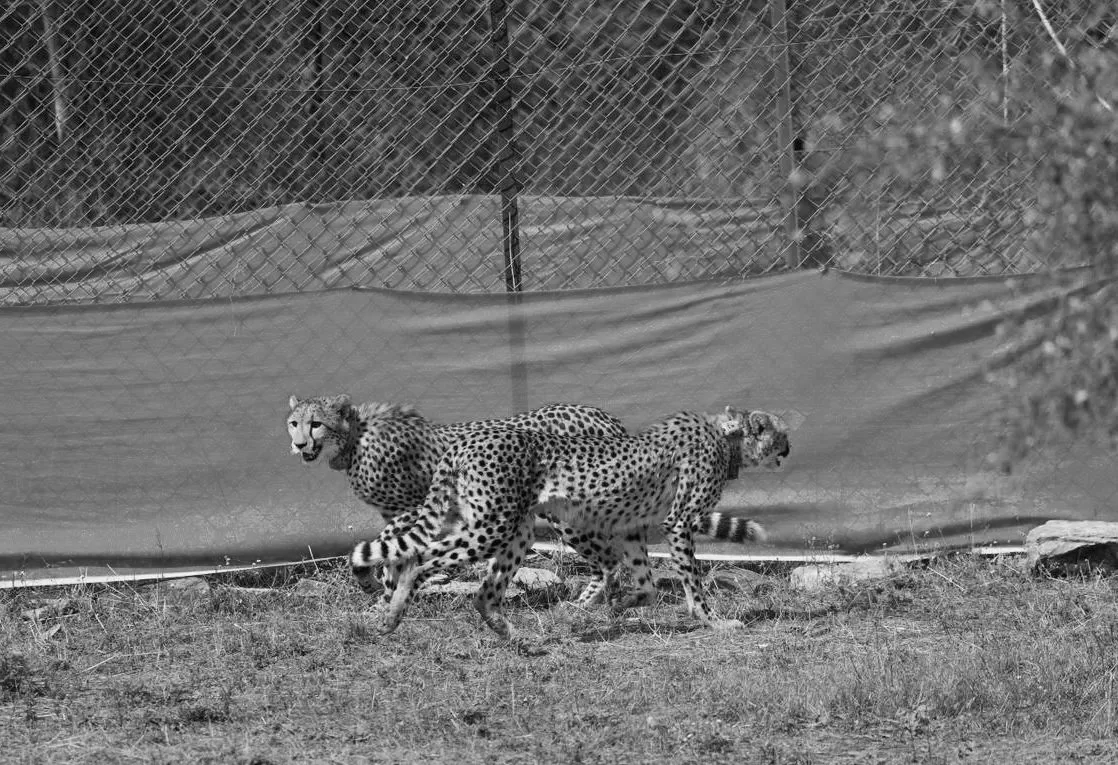
Not Just Conservation, Project Cheetah Correcting a Historic Wrong: Environment Minister
Calling Project Cheetah a moral and ecological responsibility rather than just a wildlife programme, Union Environment Minister Bhupender Yadav said the initiative represents an attempt to correct a “historical wrong” committed by humanity against nature.
Speaking at the launch of the book Bringing the Cheetah Back to India in New Delhi , Yadav stressed that the planet was never designed for the dominance of a single species and that coexistence remains essential for survival. The book, authored by Ambassador Prashant Agrawal , documents the diplomatic and conservation efforts that made the return of cheetahs to India possible after more than seven decades.
In a deeply reflective address, the minister said humans have no right to drive any species into extinction, warning that the disappearance of even one species weakens the delicate ecological chain built over millions of years. He underlined the need for nature based solutions and sustainable lifestyles to preserve ecological balance in the face of growing environmental threats.
The cheetah, once an integral part of India’s grassland ecosystem, was officially declared extinct in 1952 due to rampant hunting and habitat destruction. Decades later, India launched the ambitious Project Cheetah in 2022 , bringing African cheetahs from Namibia and South Africa to Kuno National Park in Madhya Pradesh . The initiative became the world’s first intercontinental translocation project involving a large wild carnivore.
The programme has since emerged as one of the most closely watched conservation experiments globally. According to official figures, the cheetah population at Kuno currently stands at 53 , including 33 India born cubs , a milestone conservationists view as a positive sign for the project’s long term future.
Yadav also revealed that the Environment Ministry is in talks with the West Bengal government to establish an elephant rescue centre in North Bengal and explore a tiger reintroduction programme in Buxa , signalling a broader push towards ecological restoration across India.
Author Prashant Agrawal noted that several countries are now studying India’s cheetah initiative as a possible model for their own species reintroduction programmes. What began as a bold conservation gamble, he said, is gradually evolving into a global example of wildlife restoration driven by political will, diplomacy, and scientific planning.