
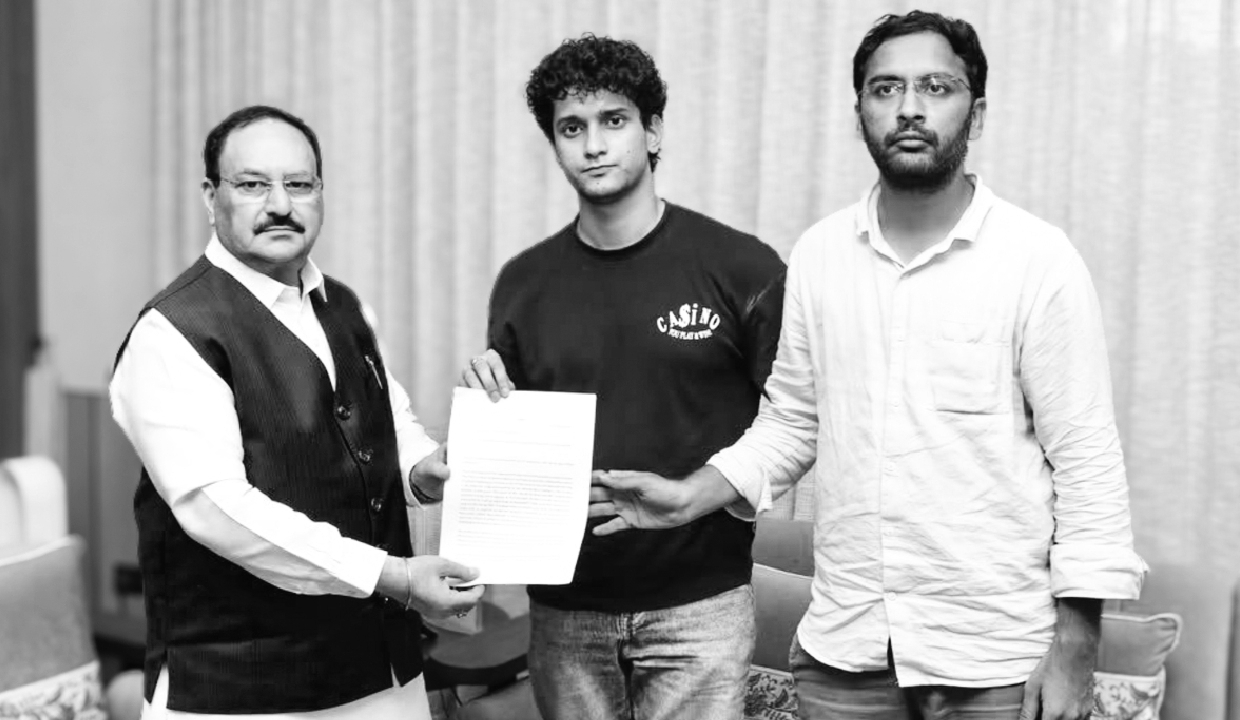
Not Amit Shah, Not Rajnath Singh... Here's Why BJP Turned to JP Nadda to Defuse the CJP Protest Crisis
As the Cockroach Janta Party (CJP) protests gathered momentum and mounted pressure on the Centre, the BJP made a calculated political decision: it entrusted Union Minister JP Nadda with leading the government's engagement with protesters instead of deploying senior heavyweights such as Amit Shah or Rajnath Singh.
Unlike leaders known for taking hard political positions, Nadda has built a reputation within the BJP as a patient consensus-builder who avoids confrontation. Party insiders believe his calm approach, coupled with his experience in organisational matters and governance, made him the most suitable face for sensitive negotiations during one of the government's most challenging protest movements in recent years.
His role extended beyond formal meetings. Nadda personally met representatives of the CJP, visited injured protesters in hospital and reached out to activist Sonam Wangchuk during his hunger strike. These gestures were widely viewed as an attempt to signal empathy without immediately conceding to the protesters' central demand for the resignation of Education Minister Dharmendra Pradhan.
Within the BJP, leaders reportedly felt that assigning a more politically aggressive figure could have further escalated tensions. By placing Nadda at the forefront, the government sought to create space for dialogue while maintaining its broader political position on the protests. His relatively non-confrontational image also made it easier to reassure protesters that the Centre was willing to listen.
Despite several rounds of discussions, the government's core stance has remained unchanged. Protest leaders have continued to insist that Dharmendra Pradhan's resignation, withdrawal of police cases against peaceful demonstrators and compensation for affected families remain non-negotiable demands. The Centre has asked for time to consider these issues, even as negotiations continue.
Political observers believe Nadda's emergence as the government's chief interlocutor highlights the BJP's preference for a softer political approach during periods of heightened public unrest. Whether that strategy succeeds now depends on whether continued dialogue can bridge the gap between the government's position and the protesters' demands.