
Not A Spectator To Global Crises: Jaishankar Pushes For UN Reforms On UN Day
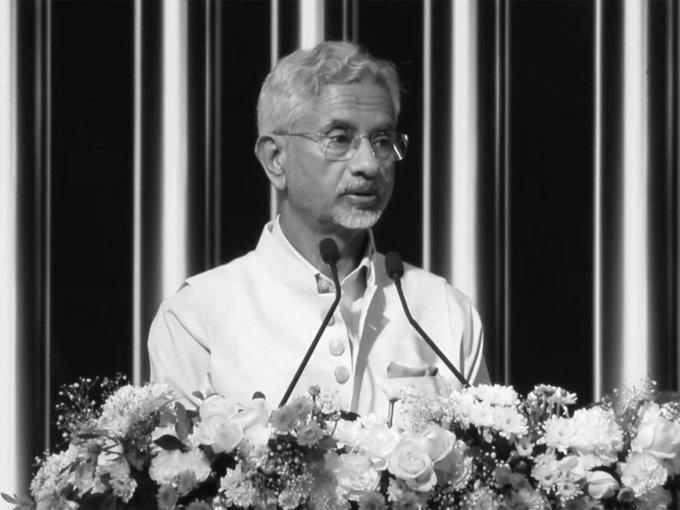
External Affairs Minister S Jaishankar on Sunday urged the United Nations (UN) to take a stronger leadership role in tackling global crises, calling for reformed multilateralism, greater international cooperation and a firm commitment to combating terrorism. Speaking at the Chinmaya Amrit Mahotsav Global Sammelan at Bharat Mandapam in New Delhi on the occasion of UN Day, he said the world body could no longer remain a spectator to conflicts and challenges affecting countries worldwide.
“The UN must show leadership, not be a spectator to global crises,” Jaishankar said, arguing that the case for reforming international institutions was growing stronger. He stressed that large parts of the world, particularly developing nations, could not continue to be excluded from global decision-making.
Reflecting on the principles behind the UN’s establishment eight decades ago, Jaishankar said international challenges and opportunities could be addressed most effectively through collective action. Referring to Article 1 of the UN Charter, he recalled that the organisation was created to harmonise the actions of nations towards common objectives.
Highlighting the consequences of ongoing conflicts in Ukraine and West Asia, Jaishankar said countries and populations far removed from the fighting were also bearing the economic costs. He reiterated India’s position that dialogue and diplomacy remained the way forward and said New Delhi was making efforts to promote peace while remaining open to working with other partners.
Jaishankar also described terrorism as a major threat to international peace, rejecting its use as an instrument of statecraft. “It can never be justified, it can never be rationalised,” he said, warning that the threat persisted because some countries did not demonstrate zero tolerance towards it. He added that political calculations continued to take precedence over the fight against terrorism in certain cases, without naming any country.
Turning to economic challenges, the minister said the Global South was facing a “4F crisis” involving finance, fuel, food and fertiliser. He called on developed countries to recognise their equal stake in resolving these interconnected problems and urged governments to reduce vulnerabilities in the international economy by providing nations with more diversified options.
“Market distortions through constriction and choke points only add to suffering. A genuine dialogue in this regard is overdue,” he said.
On technology, Jaishankar described artificial intelligence (AI) as a transformative force but cautioned against allowing its development and impact to be controlled by a few. India, he said, supported a responsible, inclusive and human-centric approach to AI, given its far-reaching consequences for societies worldwide.
He concluded by stressing that progress and prosperity were inseparable, saying the world could not advance while large sections of humanity continued to face deprivation.