
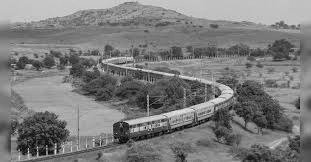
North-East sees major push in connectivity as roads, railways and digital networks expand
The North Eastern Region (NER) is witnessing a sustained transformation in connectivity, with significant expansion of highways, rural roads, railway lines and digital infrastructure, backed by rising public investment and coordinated policy planning, according to information shared by the government in Parliament.
Data provided by the Ministry of Road Transport and Highways shows that the total length of National Highways in the NER has increased from 10,905 km in 2014 to 16,207 km as of April 1, 2025 , marking nearly a 50 per cent expansion over a decade. At present, 177 highway projects spanning 3,635 km, with an investment of ₹87,119 crore, are at various stages of implementation across the region.
Rural connectivity has also improved substantially under the Pradhan Mantri Gram Sadak Yojana (PMGSY). Since the scheme’s inception, 17,666 road projects covering 89,503 km and 2,396 bridges have been sanctioned in the North-East. Of these, over 16,500 road works and more than 2,100 bridges have already been completed, involving an expenditure of ₹53,353.49 crore, including state contributions. Officials note that the high completion rate is significant given the region’s difficult terrain.
Under various schemes of the Ministry of Development of North Eastern Region (DoNER), 647 road and bridge projects worth ₹8,260.88 crore have been approved, with 500 projects already completed. These region-specific interventions aim to plug local infrastructure gaps not fully covered by national programmes.
Railway connectivity is also expanding, with 12 railway projects, eight new lines and four doubling projects covering a total length of 777 km , sanctioned in the NER at an estimated cost of ₹69,342 crore . As of April 2025, 278 km of railway lines have been commissioned , improving integration with the national rail network and lowering logistics costs.
Digital connectivity has seen parallel growth. Under the BharatNet project , 6,355 Gram Panchayats in the NER have been made service-ready with high-speed broadband as of December 2025. Additionally, 3,718 mobile towers have been commissioned under government-funded 4G saturation and other mobile projects, covering 5,366 villages and locations .
The government has acknowledged that project timelines in the North-East are influenced by factors such as challenging geography, land acquisition issues, statutory clearances and financial constraints. However, officials maintain that steady progress reflects a strong policy push rather than delays in intent.
Beyond connectivity, public investment in the region has risen sharply. Since 2021, the DoNER Ministry alone has spent ₹9,195.65 crore across sectors including roads, healthcare, education, civil aviation and power. In addition, under the 10 per cent Gross Budgetary Support (GBS) mechanism , all non-exempt central ministries are mandated to allocate at least 10 per cent of their budgets to the NER. Over the past four financial years, cumulative expenditure in the region has reached ₹3.46 lakh crore , exceeding the allocated ₹3.20 lakh crore .
To strengthen coordinated planning, the Centre has also constituted eight High-Level Task Forces (HLTFs) following the 72nd plenary meeting of the North Eastern Council in December 2024 . One such task force, the North-East Economic Corridor (NEEC) , led by the Chief Minister of Mizoram, is assessing infrastructure gaps and investment potential to position the region as a growth hub.
Complementing this effort is the PM-DevINE scheme , under which 48 projects worth ₹6,044.36 crore have been sanctioned so far. These projects focus on infrastructure, social development, livelihood generation for youth and women, and addressing critical development gaps.
Together, these initiatives signal a shift towards corridor-based planning, stronger Centre–State coordination, and technology-driven monitoring, as the government seeks to integrate the North-East more closely with national and regional economic networks.