
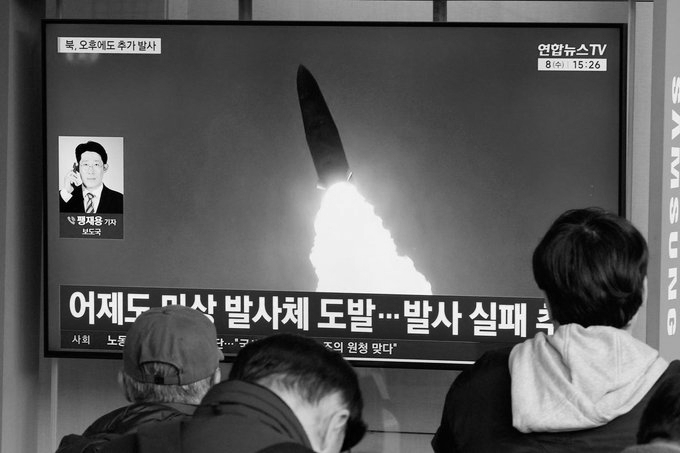
North Korea tests Cluster-bomb missiles, signals sharp military escalation
North Korea has claimed that its latest round of weapons tests involved ballistic missiles equipped with cluster-bomb warheads , marking a significant escalation in its military capabilities and reinforcing its focus on expanding its nuclear and tactical arsenal amid rising tensions with South Korea.
State media, including the Korean Central News Agency (KCNA), said the tests were conducted over three days starting Monday and included short-range ballistic missiles, anti-aircraft systems, and other advanced weapons . South Korea’s military detected multiple launches from the North’s eastern coast, with missiles travelling 240 to 700 kilometres before landing in the sea. Additional activity was also recorded near Pyongyang, indicating a sustained testing effort.
A key highlight was the reported use of cluster-munition warheads mounted on nuclear-capable missiles resembling Russia’s Iskander systems, designed to evade missile defences through low-altitude manoeuvres. North Korea claimed these weapons could devastate targets over a wide area.
Cluster bombs, which disperse multiple submunitions, are highly controversial due to their indiscriminate impact and long-term risks to civilians from unexploded ordnance. Their potential use with ballistic missiles raises serious concerns about escalation and regional security.
While Japan confirmed that none of the missiles entered its waters, the US said the launches posed no immediate threat. However, the tests underscore deepening hostility between the Koreas , with diplomatic efforts remaining stalled.
Under leader Kim Jong Un , Pyongyang has accelerated weapons development since the collapse of talks with Donald Trump in 2019. Analysts warn that such advancements could fuel an arms race in East Asia , heightening risks to regional stability.