
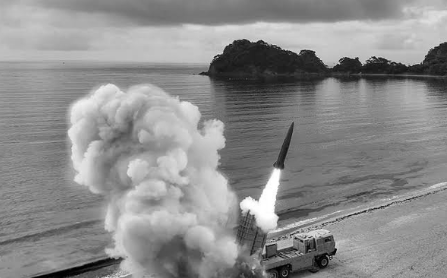
North Korea Launches 700 Km Missile Ahead Of Annual US-South Korea Drills
North Korea has launched a suspected ballistic missile into the East Sea, also known as the Sea of Japan, just days before the United States and South Korea begin their major annual military exercise. The launch has added fresh tension to an already difficult security situation in Northeast Asia.
The missile reportedly travelled more than 700 kilometres before falling into the sea. Japan also detected the launch and identified the object as a suspected ballistic missile. South Korean and US forces are now analysing the test, with its timing seen as especially important.
The allies are preparing to begin their annual joint military exercises on Monday. The drills are designed to prepare US and South Korean forces for a possible conflict with North Korea and are a regular part of their summer military calendar.
The upcoming field training is expected to involve around 18,000 South Korean troops, along with US forces based in South Korea. The United States has around 28,000 service members stationed in the country. US and South Korean commanders have said their training must reflect the changing threat from North Korea.
That includes lessons from the war in Ukraine. Last month, US and South Korean troops rehearsed fighting scenarios based on the conflict. The two militaries say they are using lessons from the war to improve their own training and prepare for new forms of warfare.
North Korea views the exercises very differently. Pyongyang has long accused Washington and Seoul of using their joint drills as rehearsals for an invasion. North Korea also has a history of conducting missile tests around the time of US South Korean military exercises.
The latest launch is therefore being seen as a possible warning to Seoul and Washington that Pyongyang is closely watching the upcoming drills. Experts believe the missile test could be intended to send a strong political and military signal.
North Korea's wider military posture has also become more complicated. Pyongyang has been moving away from its earlier nuclear posture and taking a more direct approach to its security and military strategy. At the same time, its military cooperation with Russia has grown. North Korea has provided support to Moscow during the war in Ukraine, raising concerns about the transfer of battlefield experience and closer defence ties between the two countries.