
North Korea fires ballistic missile amid renewed talk of possible dialogue
North Korea on Friday fired a ballistic missile towards waters off its east coast, South Korea and Japan said, marking its latest weapons test in recent weeks and coming shortly after U.S. President Donald Trump reiterated openness to meeting leader Kim Jong Un.
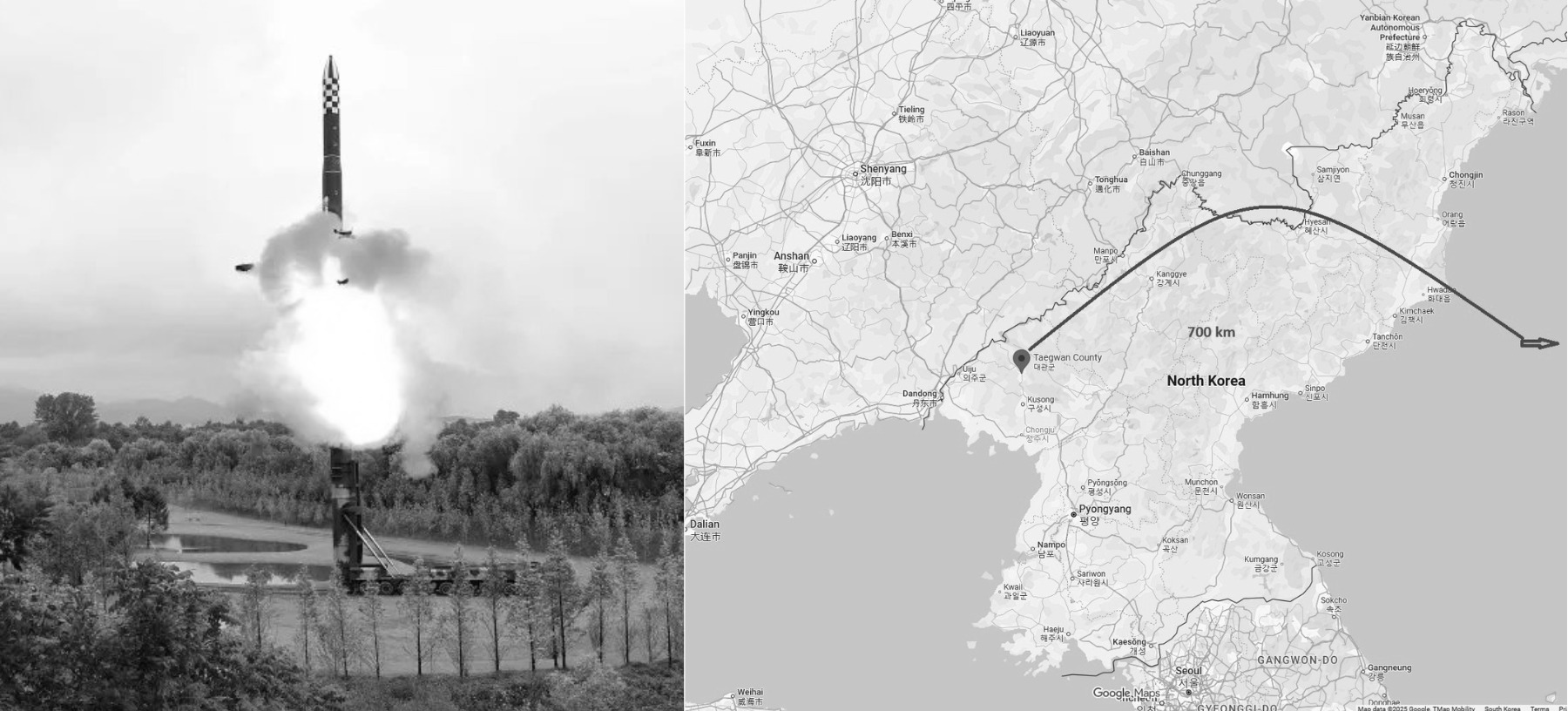
South Korea’s Joint Chiefs of Staff said the projectile, believed to be a short-range ballistic missile, was launched from North Korea’s northwest region near the Chinese border and flew about 700 km before landing in the sea. Surveillance systems in South Korea and the United States had detected preparations ahead of the launch, officials said.
Japan also confirmed the launch, saying the missile likely fell outside Japan’s exclusive economic zone. Prime Minister Sanae Takaichi said there were no reports of damage or threats to vessels or aircraft.
The launch follows a series of missile tests by Pyongyang over the past month, including what it claimed were hypersonic and sea-to-surface cruise missiles. These tests have historically served as political signals: North Korea has repeatedly conducted missile launches at moments of diplomatic negotiation or tension, both to demonstrate military capability and to increase its leverage. Similar patterns were seen in 2017 and during the Trump-Kim summit period in 2018-2019.
During his visit to Seoul last week, Trump said he was willing to hold talks with Kim, even suggesting a possible return trip to the inter-Korean border village of Panmunjom, where the two leaders last met in 2019. However, no meeting took place, and Pyongyang has not publicly responded to the latest outreach.
On Thursday, North Korea accused Washington of “antagonism” over newly imposed U.S. sanctions targeting its officials and institutions for alleged money laundering, and vowed to respond.
Meanwhile, U.S. Defense Secretary Pete Hegseth, visiting Seoul this week, reaffirmed the U.S. commitment to the security alliance with South Korea. He said American forces stationed on the peninsula remain focused on deterring Pyongyang, while allowing for greater strategic flexibility in responding to wider regional threats.