
North Korea escalates missile and nuclear program as Seoul and Beijing seek peace talks
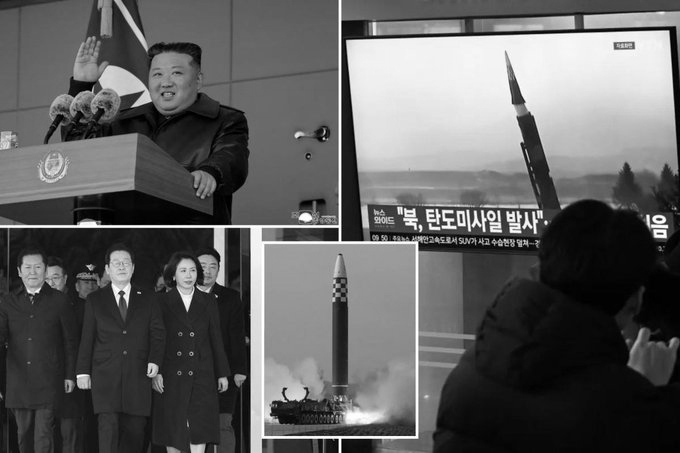
As South Korean President Lee Jae Myung traveled to China on Monday to strengthen diplomatic ties with President Xi Jinping and promote peace and stability on the Korean Peninsula , North Korea conducted another hypersonic missile test, underscoring a widening divide between diplomatic efforts and Pyongyang’s drive to expand its weapons capabilities. This latest launch comes amid a sustained surge in missile and weapons tests since 2025, deepening regional anxieties.
North Korean state media reported that leader Kim Jong Un personally oversaw Sunday’s test of a hypersonic weapons system, designed to assess combat readiness and enhance missile troops’ skills as part of the country’s nuclear war deterrent. The missiles struck targets about 1,000 kilometers away over the sea east of the Korean Peninsula, indicating continued refinement of long‑range strike capabilities.
Pyongyang has conducted an unusually high number of missile tests since the start of 2025, launching multiple intermediate‑range, short‑range, strategic cruise, and hypersonic systems throughout the year in drills that South Korea and its allies say violate United Nations Security Council resolutions. Among these, North Korea is believed to have performed at least several dozen ballistic and cruise missile tests since early 2025, including multiple hypersonic attempts and other weapons system launches.
Kim framed the recent launches as necessary to strengthen North Korea’s “nuclear forces” amid what he described as a precarious geopolitical environment. Analysts say the sustained pace of tests is meant to complicate U.S., South Korean, and Japanese missile defenses and cement Pyongyang’s image as a nuclear‑armed power with advanced strike options.
The missile activity comes just days after Seoul’s military detected multiple ballistic missile launches into the sea and condemned them as provocative acts timed before Lee’s departure for Beijing. The security situation on the peninsula, including North Korea’s nuclear and missile programs, was a key item on Lee’s agenda with China. Beijing’s cooperation is seen as crucial because of its influence over Pyongyang and its role as North Korea’s primary diplomatic and economic partner.
In recent months, North Korea has also showcased other military advancements, from tests of long‑range cruise missiles and anti‑aircraft systems to progress on nuclear‑powered submarines. Many observers believe Pyongyang is staging these displays ahead of the Workers’ Party Congress, where Kim is expected to set strategic priorities that may reaffirm the regime’s focus on nuclear and advanced weapons development.
Beyond the immediate region, North Korea has strengthened ties with Russia and shipped large quantities of weapons and ammunition to support Moscow’s war effort in Ukraine, including thousands of containers and possibly millions of artillery shells in recent years. Although shipments declined in 2025 as Pyongyang’s own stockpiles depleted , this exchange has reinforced military cooperation between the two countries and positioned North Korea as a supplier of arms to Russia’s conflict.
While North Korea denies selling weapons, the strategic connection with Russia is widely seen by analysts as mutually beneficial: Russia gains additional supplies for its war, while North Korea obtains political cover, economic support, and possible technological cooperation that could enhance its own weapons programs. These ties may also serve Pyongyang’s narrative that its advanced weapons are worth exporting or sharing with partners facing Western opposition.