
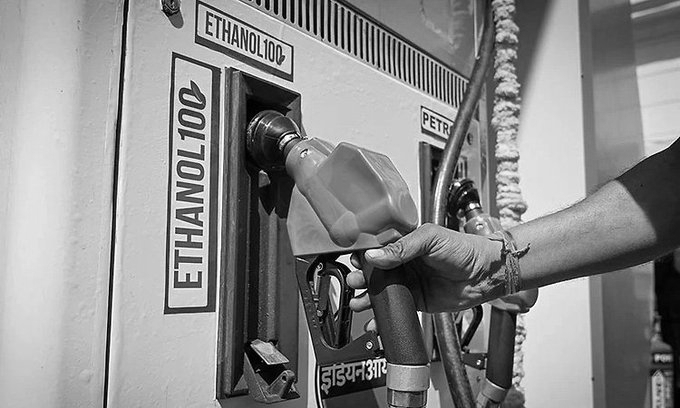
No Sugarcane Juice or Sugar Syrup for Ethanol: India Changes Petrol-Blending Policy
India has barred sugar-based ethanol from its latest petrol-blending procurement tender and reduced the incentive for maize-based ethanol, as the government seeks to protect domestic sugar supplies amid concerns over lower production and rising prices.
The tender, issued on October 16 by Bharat Petroleum Corporation Ltd (BPCL) on behalf of state-run oil marketing companies (OMCs), seeks bids for approximately 11 billion litres of ethanol for the 2026-27 supply year, running from November 2026 to October 2027. The procurement is intended to support the country's 20% ethanol-blending target in petrol, known as E20.
Under the new tender, oil companies will not accept offers for ethanol produced from sugarcane juice, sugar syrup and B-heavy molasses. The government has directed that the diversion of sugar for ethanol production be reduced to zero during the supply year.
The move marks a significant shift in the sourcing of ethanol for India's fuel programme, which has traditionally relied on both sugarcane and grain-based production. Instead, the tender permits ethanol made from maize, broken rice, surplus rice procured by the Food Corporation of India (FCI), and C-heavy molasses.
Alongside the restrictions on sugar-based feedstocks, the government has reduced the procurement price for maize-based ethanol to ₹68.86 per litre from ₹71.86, cutting the incentive by ₹3 per litre. The reduction could put pressure on producers' returns even as maize and other permitted feedstocks become more important for meeting blending requirements.
The policy shift comes amid concerns over domestic sugar availability following poor rainfall in key producing states, including Maharashtra and Karnataka, which has raised the risk of lower output. As the world's largest sugar consumer, India faces the challenge of ensuring sufficient supplies for household consumption and industry while expanding the use of ethanol as an alternative fuel.
The ethanol-blending programme has helped create a major market for domestic distilleries and agricultural producers while supporting efforts to reduce dependence on imported crude oil and curb vehicle emissions. However, using sugarcane for fuel can intensify competition between energy production and food supplies when sugar output is under pressure.
The latest tender highlights the government's attempt to balance energy security, agricultural demand and domestic sugar prices. With sugar-based ethanol excluded from the procurement cycle, the availability and pricing of grain-based feedstocks, along with distillery capacity, will be crucial to sustaining the nationwide E20 programme.