
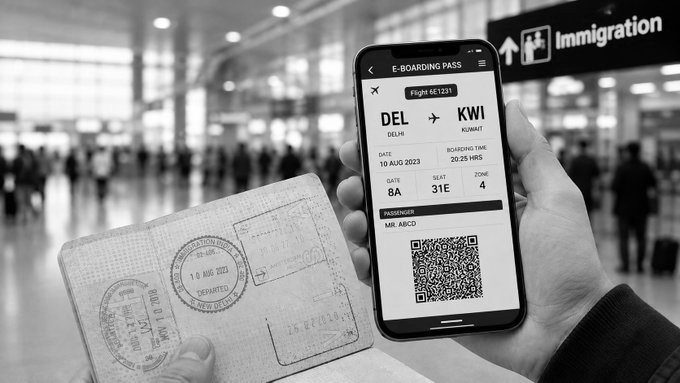
No More Boarding Pass Stamps: India’s New Airport Rule Starts September 1
From September 1, international passengers departing from India will no longer need to get their boarding passes stamped at immigration counters, ending a familiar part of the airport journey and pushing the process further towards digital travel.
The decision followed a review by the Bureau of Immigration (BOI), which found that the existing practice could inconvenience passengers. There were also instances where improperly placed stamps made boarding-pass information difficult to read, potentially creating avoidable problems. Printed boarding passes will remain valid, but neither paper nor e-boarding passes will require an immigration stamp.
The change applies across international airports in India, and passengers will still undergo normal immigration checks. They will continue to present passports and other required travel documents, while boarding details can be shown electronically or through a printed pass.
Yet the move raises an important operational question. For years, the stamped boarding pass served as a simple, visible indication that a passenger had completed immigration formalities. Once that marker disappears, the process will depend more heavily on electronic records and coordination between immigration authorities, airlines and airport personnel.
The government has not publicly detailed the precise backend mechanism through which immigration clearance will be recorded and, where necessary, verified after the stamp disappears. It remains unclear whether officers will scan boarding-pass codes, access airline-linked systems or use existing immigration databases.
That could create confusion during the transition. Some passengers may assume smartphones are compulsory, even though printed passes remain valid. Clear procedures will also be needed when phones run out of battery or airline apps become inaccessible.
The move fits into India's wider shift towards digital and biometric immigration, including the BOI's Fast Track Immigration–Trusted Traveller Programme, which allows eligible registered passengers to use e-gates.
But removing a stamp is only the first step. The real test will be whether India's airports can ensure that passengers, airlines and immigration systems recognise digital clearance seamlessly. India may be removing one small stamp, but the larger transformation of its immigration system is only beginning.