
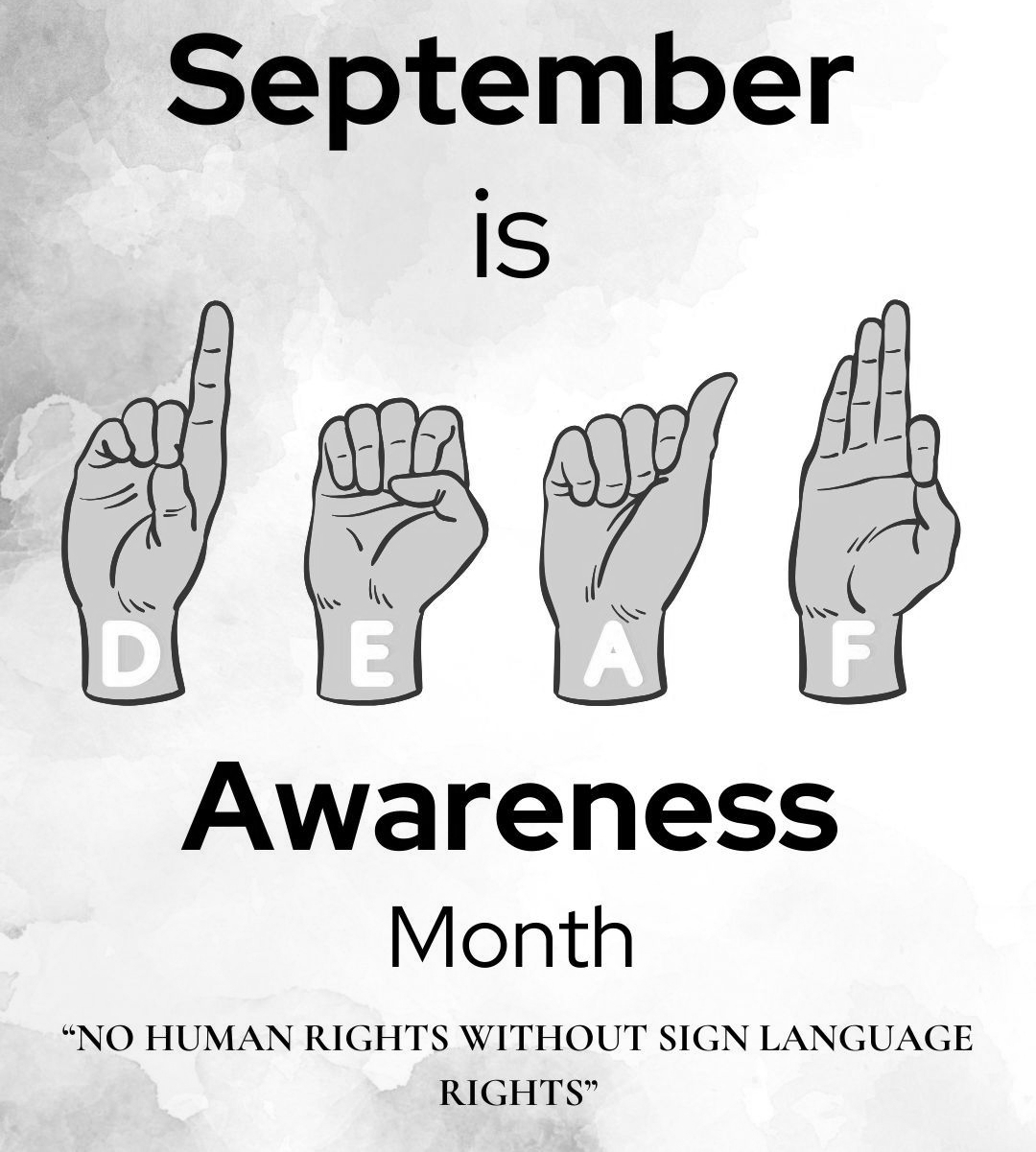
No human rights without sign language rights
The Indian Sign Language Research and Training Centre (ISLRTC), an autonomous body under the Department of Empowerment of Persons with Disabilities (DEPwD), Ministry of Social Justice and Empowerment (MoSJE), is set to host a landmark celebration of International Day of Sign Languages on Tuesday. The event, timed from 11:00 AM to 1:00 PM at the Dr. Ambedkar International Centre (DAIC) on Janpath, underscores the United Nations' proclamation of September 23 as a global day to spotlight sign language's role in upholding human rights for the Deaf community.
This year's theme, "No Human Rights Without Sign Language Rights," resonates deeply with the World Federation of the Deaf's call during the International Week of Deaf People (September 22-28), emphasizing how sign languages unite diverse cultures while fostering equality and dignity. Proclaimed by the UN General Assembly in 2017 to commemorate the World Federation of the Deaf's founding in 1951, the day highlights sign language as a visual, natural medium essential for communication, cultural preservation, and cognitive development among Deaf individuals.
The programme will be inaugurated by Dr. Virendra Kumar, Union Minister for Social Justice and Empowerment, serving as Chief Guest. Shri B.L. Verma, Minister of State, will join as Guest of Honour, alongside other senior MoSJE officials. The gathering will also feature representatives from national Deaf organizations, educators, researchers, students, and stakeholders, promising a collaborative dialogue on empowerment.
A highlight of the event will be the launch of several transformative initiatives by ISLRTC, aimed at bridging educational and accessibility gaps for the Deaf community:
- ISLRTC Bi-Annual Newsletter: A new platform to disseminate research, training outcomes, and community milestones.
- Post Graduate Diploma Courses (PGDISLI & PGDTISL: Specialized programs to train expert teachers and interpreters in Indian Sign Language (ISL).
- Six-Month Online ISL Training Programme: A nationwide, accessible course to connect urban and rural learners.
- Teaching-Learning Materials for DISLI and DTISL Courses: Standardized resources to ensure high-quality education.
- 100 STEM Terms in ISL: Innovative signs to demystify science, technology, engineering, and math for Deaf students.
- English Language Teaching Programme with TEACH: Focused on boosting English skills to enhance employability.
- 3,189 ISL e-Content Videos: Expanding the largest digital ISL repository for educators and learners.
- ISL Integration with 'Project Inclusion App': Tools for seamless inclusion in mainstream classrooms.
- ISL Version of 18 NBT Books: Adapted literature to enrich knowledge access for Deaf children and youth.
Adding flair to the proceedings, winners of the 8th National Indian Sign Language Competition 2025 spanning 13 categories and drawing participants from schools across India will receive felicitations. Cultural performances by Deaf students, including song interpretations, mime, and group dances, are expected to captivate attendees and amplify the day's message.
Established under the Societies Registration Act in the 11th Five-Year Plan era following advocacy from India's Deaf community, ISLRTC has pioneered ISL curricula, workshops, and digital resources to promote linguistic equity. These efforts align with the Rights of Persons with Disabilities (RPwD) Act, 2016, which operationalizes India's 2007 ratification of the UN Convention on the Rights of Persons with Disabilities (UNCRPD), mandating equal access to education, employment, and justice for over 2.68 crore differently abled persons in the country.
Addressing the unaddressed
While progress is evident, the theme's clarion call reminds us of persistent gaps in societal inclusion. For the Deaf community often overlooked in mainstream discourse, sign language rights are not mere linguistic tools but gateways to full human dignity, breaking communication barriers that perpetuate isolation. Research underscores that access to sign language enhances cognitive abilities, preserves cultural heritage, and fosters artistic expression, enabling Deaf individuals to thrive as equals rather than dependents.
In India, the UNCRPD's emphasis on reasonable accommodations, non-discrimination, and participation in cultural life remains a blueprint for action. Yet, challenges like inadequate interpreter services, limited rural access to resources, and employment biases persist, leaving many "unaddressed" in policy implementation. Reserving rights through quotas in education and jobs under the RPwD Act, alongside investments in digital tools like ISLRTC's e-content ensures that differently abled persons, including the Deaf, are not sidelined but empowered as active societal contributors. As the Hon'ble Prime Minister envisions an "Inclusive India," these initiatives signal a commitment to equity, urging collective action to transform awareness into tangible change.