
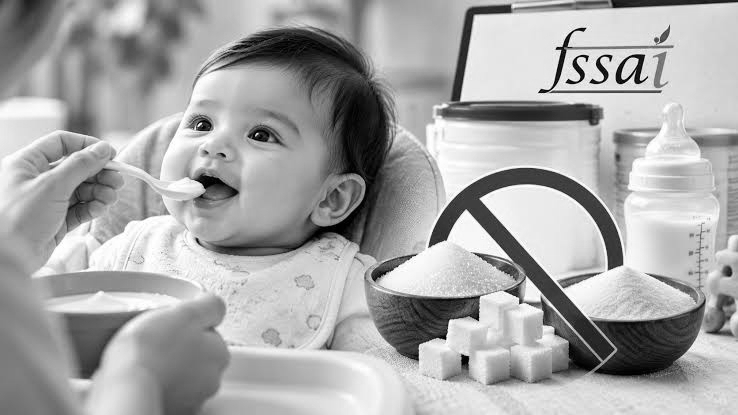
No Added Fructose or Sucrose in Baby Food? FSSAI Proposes Stricter Rules
India’s food regulator has proposed a ban on adding sucrose and fructose to food products intended for infants up to six months old, aiming to strengthen nutritional safeguards and minimise early exposure to added sugars.
The Food Safety and Standards Authority of India (FSSAI) has released a draft amendment to the Food Safety and Standards (Foods for Infant Nutrition) Regulations, 2020, for public consultation. Stakeholders can submit their objections and suggestions within 60 days, after which the regulator will consider the feedback before finalising the rules.
Under the existing regulations, infant nutrition products must meet prescribed nutritional composition, quality and safety standards. Lactose and glucose polymers are the preferred carbohydrate sources, while sucrose and fructose may currently be added when required, subject to specified limits.
The proposed amendment seeks to introduce a stricter restriction for products intended for babies aged up to six months. If finalised, manufacturers will no longer be permitted to add these two sugars to products meant for this age group.
According to the Union Health Ministry, the first six months of life are crucial for healthy growth and development, making appropriate nutrition particularly important. The proposed restriction is intended to ensure that infant food formulations meet babies’ nutritional requirements without unnecessary additions of sucrose and fructose.
The move also forms part of wider public health efforts to address dietary risk factors associated with childhood obesity and related health problems. Early exposure to added sugars is a concern because food preferences and eating habits begin developing during childhood.
The ministry said the proposal complements established public health recommendations promoting exclusive breastfeeding during the first six months of life. Breast milk provides the nutrition infants need during this period, while appropriate feeding practices remain essential for healthy development.
The draft amendment also seeks to encourage manufacturers to develop products tailored to the specific nutritional needs of young infants, with greater emphasis on science-based standards and preventive nutrition.
However, the proposed ban is not yet a final rule. FSSAI will review the representations received during the consultation period before deciding whether to implement the amendment.